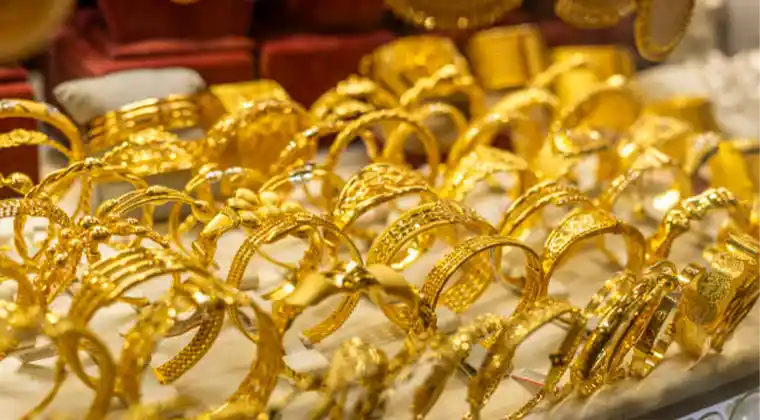
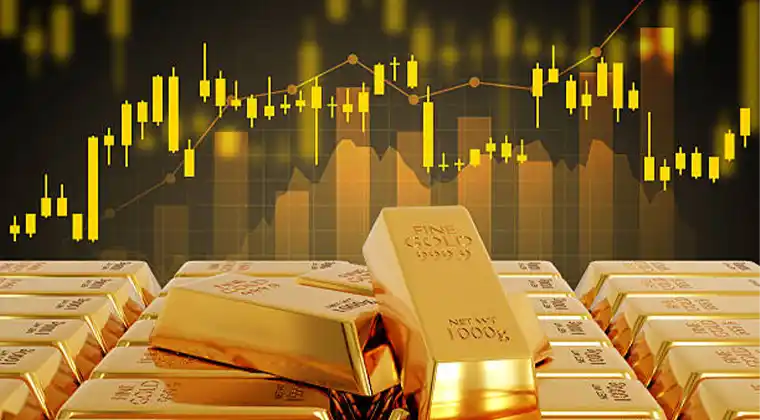
Dubai’s gold sector sees renewed strength as positive market sentiment drives prices higher, placing rates near the Dh500 milestone after recent gains.
Dubai Gold Rates Edge Higher as Market Confidence Returns and Prices Approach Dh500 Mark.

Market experts believe gold sentiment is gradually recovering after a period of weak performance, though limited buying strength is preventing prices from making a significant upward breakthrough.
Gold prices in Dubai extended their upward movement on Wednesday morning, continuing the positive trend seen in recent sessions as the precious metal moved closer to the important Dh500-per-gram level for the highest purity category.
The 24-karat gold rate, which represents the purest form of the metal commonly traded in the UAE retail market, opened at Dh496 per gram on Wednesday. This marked an increase from the previous market closing price of Dh492.25 per gram recorded on Tuesday, reflecting continued buying interest and stronger market sentiment.
The rise in Dubai gold rates follows broader gains in international markets, where investors have been closely monitoring economic conditions, currency movements, and expectations surrounding future monetary policies. The combination of these factors has helped support demand for gold as a traditional safe-haven asset.
Other gold categories in Dubai also recorded increases during Wednesday’s trading session. The 22-karat gold price moved higher to Dh459.25 per gram, while the 21-karat variety reached Dh440.25 per gram. Meanwhile, 18-karat gold was trading at Dh377.50 per gram, and the 14-karat category stood at Dh294.25 per gram.
The movement across different gold categories reflects the broader strength in the precious metals market. While prices vary depending on purity levels, all major gold variants followed the same upward direction as international prices gained momentum.
In global markets, spot gold was trading at approximately $4,134 per ounce, representing a rise of 0.96 per cent. Silver prices also strengthened, reaching $60.73 per ounce after gaining 1.18 per cent during the session.
Market analysts said the recent improvement in gold prices comes after a period of weaker performance, during which the metal struggled to maintain strong upward momentum. Investor sentiment has started showing signs of recovery as market participants reassess the outlook for precious metals.
According to experts, gold continues to benefit from its role as a store of value during periods of economic uncertainty. However, despite improving confidence, prices have not yet experienced a major breakout because strong buying momentum remains limited.
Vijay Valecha of Century Financial said that although sentiment towards gold has become more positive, the market still lacks the strength required for a significant upward move.
He explained that the current environment shows a gradual recovery rather than a sharp rally. While investors remain optimistic about gold’s long-term potential, short-term gains are being restricted by the absence of stronger market drivers.
Valecha noted that several major financial institutions have maintained their positive outlook for gold over the longer term. Leading banks have not reduced their bullish forecasts and continue to expect further gains in the coming quarters.
According to these forecasts, gold could potentially recover towards the $4,500 to $5,000 per ounce range over the next several quarters, supported by factors such as investor demand, economic uncertainty, and expectations of changing interest-rate conditions.
The continued optimism among major institutions highlights the strong position of gold in global investment markets. Despite short-term fluctuations, many analysts believe the metal remains supported by structural factors that could encourage further appreciation over time.
Gold has historically attracted investors during periods of financial uncertainty because it is viewed as a reliable asset when other markets experience volatility. Changes in inflation expectations, currency movements, geopolitical developments, and central bank policies often influence demand for the precious metal.
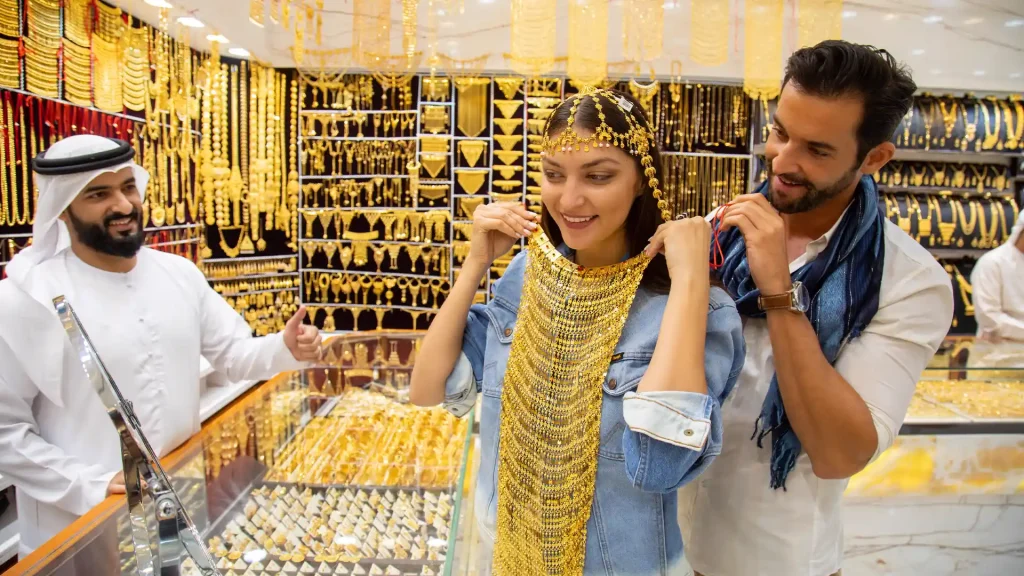
In the UAE, gold remains particularly popular among consumers and investors due to the country’s position as a major global gold trading hub. Dubai’s gold market attracts both residents and international buyers, with prices closely linked to movements in global markets.
The approach towards the Dh500-per-gram level for 24K gold has attracted attention from both consumers and traders. While higher prices may influence buying decisions, gold continues to maintain strong demand because of its cultural importance, investment value, and long-term appeal.
Jewellery buyers often monitor price movements closely, especially during periods when rates rise significantly. Some consumers may adjust purchasing plans based on market conditions, while others continue buying due to gold’s traditional importance in celebrations, gifting, and savings.
Investors, meanwhile, continue watching broader economic developments that could influence future price movements. Factors such as interest-rate decisions, inflation trends, global economic growth, and currency fluctuations are expected to play a key role in determining the direction of gold prices.
Although gold has already recorded strong gains, analysts believe the market may experience periods of consolidation before making another major move. Temporary price adjustments are common in precious metals markets as investors balance profit-taking with expectations of future growth.
The current rise in Dubai gold prices reflects a combination of improving sentiment and continued confidence in the metal’s long-term outlook. However, analysts caution that sustained momentum will depend on whether stronger demand emerges in global markets.
For now, gold remains close to a significant milestone in Dubai, with the 24K category approaching the Dh500-per-gram mark. The coming weeks will likely determine whether prices can move beyond this level or remain within the current range.
As investors and consumers continue monitoring market developments, gold’s performance will remain closely connected to global economic trends and investor confidence. With major financial institutions maintaining optimistic forecasts, the precious metal continues to hold its position as one of the world’s most closely watched commodities.
Analysts believe that while official sector demand, particularly from central banks, continues to provide support for gold prices, it may not be enough on its own to trigger a powerful upward rally in the precious metal. Although central banks around the world have maintained strong interest in increasing their gold reserves, the scale of purchases has slowed compared with the exceptional levels recorded in 2024.
According to market observers, central bank buying remains an important factor supporting gold’s long-term outlook. However, the current pace of accumulation is significantly below the record-breaking demand seen previously, meaning that additional factors are likely to be needed to create a stronger and more sustained price increase.
Experts suggest that a major move higher in gold prices is more likely to occur when financial markets begin to anticipate a more supportive approach from the US Federal Reserve. Expectations of easier monetary policy, such as potential interest-rate cuts, often create favourable conditions for gold because lower rates can reduce the appeal of interest-bearing assets and increase demand for non-yielding investments like bullion.
Vijay Valecha of Century Financial said that future movements in gold prices will largely depend on upcoming economic indicators, particularly data related to the US labour market. One of the key areas investors are watching is the latest information on job openings, which could provide clues about the strength of employment conditions and influence expectations for Federal Reserve policy.
If labour market data shows signs of weakening, it could increase expectations that the Federal Reserve may adopt a more flexible monetary stance. A softer employment environment could encourage policymakers to consider reducing interest rates, a development that would likely support gold prices.
On the other hand, if employment conditions remain stronger than expected, markets may believe that the Federal Reserve has less urgency to loosen monetary policy. A stronger labour market could allow the central bank to maintain higher interest rates for longer, which may support the US dollar and create additional pressure on gold.
A stronger dollar generally makes gold more expensive for buyers using other currencies, which can reduce demand and limit price gains. As a result, movements in the US currency and expectations surrounding Fed decisions remain among the most important influences on the global gold market.
Valecha explained that gold is currently moving within a consolidation phase, with traders attempting to push prices higher but facing resistance at important levels. The market has struggled to establish a clear upward trend despite repeated attempts by buyers to increase prices.
According to his assessment, investors have been trying to move gold above the $4,150-per-ounce level, but the metal has not yet been able to maintain enough strength to create new record highs. The inability to consistently reach higher price levels suggests that buyers are still waiting for stronger market signals before increasing their positions.
Despite this challenge, gold has shown resilience by holding above key support areas. Buyers have successfully defended the $4,000-per-ounce level over several trading sessions, preventing a deeper decline and helping prices recover towards the $4,060 range.
The ability to maintain support near $4,000 indicates that demand remains present among investors who view lower prices as an opportunity to enter the market. However, analysts say stronger momentum will be required before gold can move into a more decisive upward phase.
Valecha noted that a move above the $4,100-per-ounce level would likely be an important technical signal for the market. If prices can break through and remain above this point, it could encourage additional buying interest and potentially open the path towards further gains.
However, failure to maintain support above the $4,000 level could create renewed selling pressure. A decline below this important threshold may lead traders to focus on the next support area around $3,960 per ounce.
Technical levels such as support and resistance points are closely monitored by traders because they help indicate where buying or selling pressure may increase. A sustained move beyond these levels often influences market sentiment and can determine the direction of future price movements.
Beyond technical factors, gold prices will continue to be shaped by broader economic conditions. Inflation trends, geopolitical developments, currency movements, investor demand, and central bank policies all play significant roles in determining the performance of precious metals.
Central bank activity remains one of the major factors supporting gold’s long-term outlook. Many countries have increased their gold holdings in recent years as part of efforts to diversify reserves and reduce reliance on other assets.
However, analysts caution that central bank purchases alone may not create the type of rapid price increase seen during previous gold rallies. For a stronger upward movement to develop, private investor demand and broader market expectations will also need to strengthen.
Interest-rate expectations remain particularly important because gold does not generate income in the same way as bonds or savings instruments. When interest rates are high, investors may prefer assets that provide returns, while lower rates can make gold relatively more attractive.
This relationship explains why markets are closely following signals from the Federal Reserve. Any indication of future rate reductions could provide additional support for gold, while a prolonged period of restrictive policy could limit price growth.
For Dubai’s gold market, international developments remain a major influence because local prices are closely linked to global bullion rates. Changes in international gold prices are quickly reflected in UAE retail markets, affecting jewellery buyers, investors, and traders.
As gold continues to trade near elevated levels, market participants are watching for signs that could determine the next major move. Whether prices break higher or experience further consolidation will depend on a combination of economic data, monetary policy expectations, and investor behaviour.
For now, analysts expect gold to remain sensitive to upcoming developments, particularly US employment figures and Federal Reserve signals. While the precious metal continues to receive support from long-term demand factors, a stronger rally may require clearer evidence of easier monetary conditions.
The current market environment reflects a balance between strong underlying demand and limited short-term momentum. Gold remains supported by investor interest and central bank activity, but traders are waiting for a stronger catalyst that could push prices decisively beyond existing resistance levels.