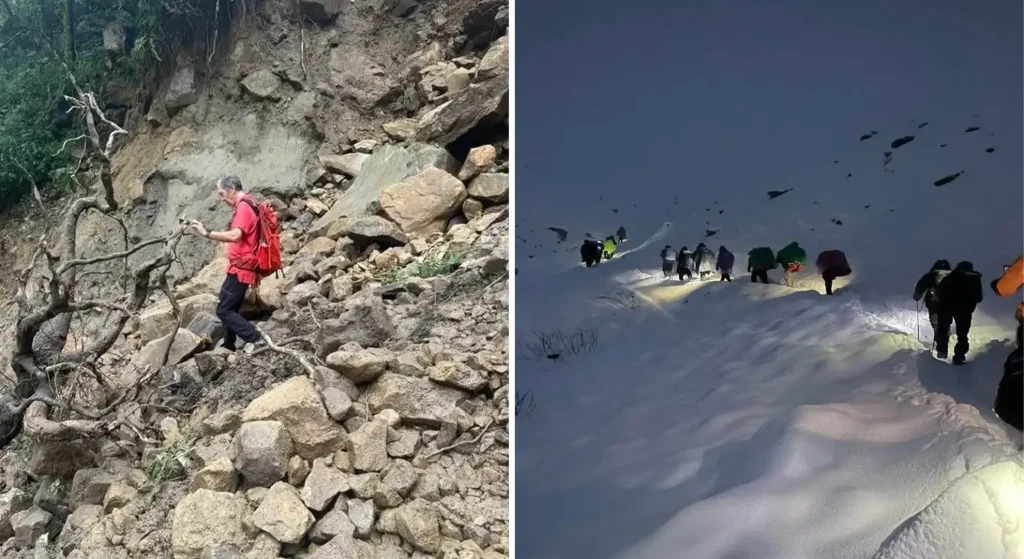
Seven climbers have been located following an avalanche on Broad Peak, while search efforts continue to determine the fate and location of a Pakistani mountaineer who remains missing.
Seven Mountaineers Survive Broad Peak Avalanche, But Pakistani Climber’s Whereabouts Remain Unknown.
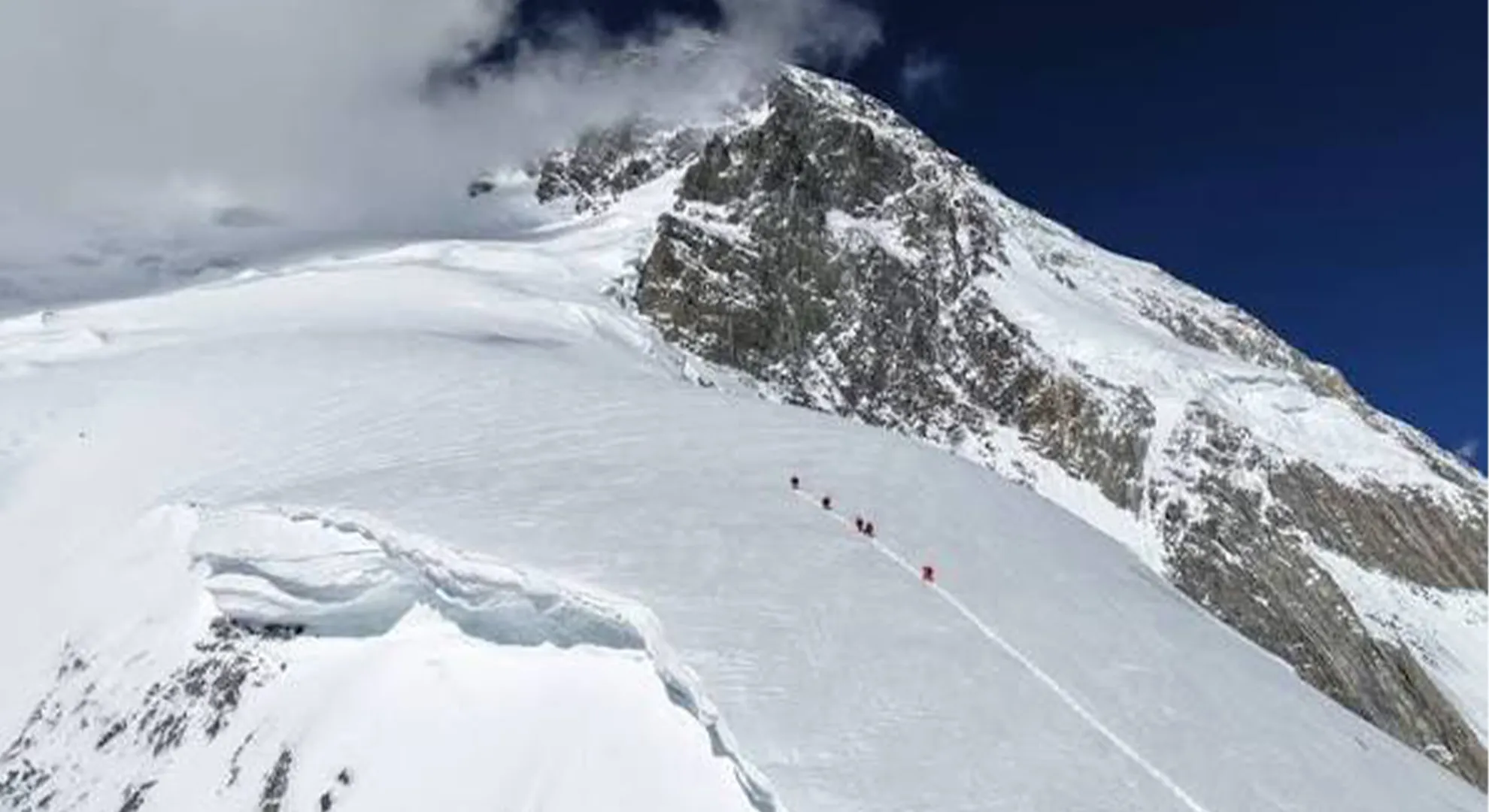
Authorities have not yet revealed the names or health status of the seven climbers, as rescuers await access to the location before providing verified details about their condition.
Rescue teams continue Broad Peak avalanche search as seven climbers spotted from the air
A major rescue operation is underway on Pakistan’s Broad Peak after an avalanche struck the towering mountain in the Karakoram range, with aerial surveillance providing the first signs of several climbers following the incident.
Drone footage captured during the search operation has revealed the presence of seven climbers on the mountain, offering a crucial development in the ongoing rescue efforts. However, officials have not yet confirmed the identities of those spotted or provided details about their medical condition.
Rescue authorities have said that accurate information about the climbers can only be confirmed once ground teams successfully reach the location. The difficult terrain, extreme altitude and challenging weather conditions have made access to the avalanche area extremely complicated.
Broad Peak, which rises to 8,047 metres above sea level, is among the world’s highest mountains and forms part of the Karakoram mountain range in northern Pakistan. The region is known for its demanding climbing conditions, with steep slopes, unpredictable weather and serious risks associated with high-altitude expeditions.
The search operation is being coordinated by experienced mountaineer Mingma Gyalje Sherpa, a highly respected figure in Himalayan and Karakoram expeditions. He is leading the rescue effort alongside the Pakistan Alpine Club, working to locate missing climbers and assess the situation following the avalanche.
Mingma Gyalje Sherpa, known for his extensive experience on some of the world’s most challenging peaks, has been involved in numerous high-altitude expeditions and rescue missions. His expertise in navigating difficult mountain environments has been central to the ongoing operation.
Drone footage provides new information
The latest breakthrough came when drones used by the rescue team surveyed the affected area and detected climbers on the mountain. The aerial images helped rescuers identify possible survivors and provided important information about where teams needed to focus their efforts.
According to updates shared by the Pakistan Alpine Club, two climbers have already been recovered from the avalanche zone. Following this development, additional drone searches carried out by Mingma Gyalje Sherpa’s team located seven more climbers in the area.
Although the discovery of the seven climbers has provided hope during the rescue operation, officials have remained cautious until ground teams are able to physically reach them. At high altitude, visual confirmation from drones alone is not enough to determine whether climbers are safe, injured or require immediate assistance.
The rescue teams are working to establish direct contact and provide support as quickly as possible. Reaching the site remains a major challenge because of the mountain’s extreme conditions and the dangers that rescuers themselves face while moving through avalanche-affected areas.
Search continues for missing Pakistani climber
While several climbers have been located, one Pakistani mountaineer, Sohail Sakhi, remains unaccounted for. Rescue teams are continuing their search efforts to determine his location and assess whether he is still trapped or needs emergency assistance.
The operation remains active, with ground teams preparing to move closer to the avalanche site. The search for missing climbers in high-altitude environments requires careful planning because unstable snow conditions, limited oxygen levels and changing weather can create additional risks.
Rescuers must balance the urgency of reaching missing climbers with the need to ensure the safety of the team members involved. At elevations above 8,000 metres, even experienced mountaineers face significant physical challenges due to reduced oxygen and harsh environmental conditions.
Challenges of a high-altitude rescue
Rescue missions on mountains like Broad Peak are among the most difficult operations in the world. Unlike searches at lower elevations, high-altitude rescues require specialised skills, equipment and experience.
The Karakoram region is known for some of the most demanding climbing routes on Earth. Avalanches are a constant danger, especially when snow conditions become unstable due to changing temperatures, heavy snowfall or movement on steep mountain slopes.
At more than 8,000 metres, the environment presents additional challenges. The thin air makes physical activity extremely demanding, while freezing temperatures and strong winds can quickly affect climbers and rescue personnel.
Communication can also be difficult in remote mountain regions. Rescue teams often depend on satellite devices, drones and specialised equipment to coordinate operations and gather information from difficult-to-reach areas.
Broad Peak’s reputation among climbers
Broad Peak is one of the world’s highest mountains and is part of the famous Karakoram range, which includes several other major peaks. Located near the Pakistan-China border region, it attracts climbers from around the world seeking to complete high-altitude expeditions.
Despite being considered less technically difficult than some neighbouring peaks, Broad Peak remains a serious challenge because of its extreme height, weather conditions and remote location.
The mountain’s name comes from its wide summit area, which stretches across a broad ridge. However, reaching the top requires endurance, careful planning and experience with high-altitude conditions.
Many climbers attempt Broad Peak as part of expeditions that also include other major mountains in the region. The Karakoram range is home to some of the world’s most famous climbing destinations and continues to attract professional mountaineers and adventure enthusiasts.
Rescue efforts remain ongoing
As the search continues, rescue teams are focusing on reaching the climbers identified in the drone footage and confirming their condition. The operation remains dependent on weather conditions, route accessibility and the ability of ground teams to safely approach the avalanche area.
The discovery of climbers through aerial surveillance has provided an important development, but officials continue to stress that further confirmation is needed before details can be released.
Family members, fellow climbers and expedition teams are awaiting updates as rescuers work in difficult conditions to complete the mission.
The situation highlights the risks faced by mountaineers who take on some of the world’s highest peaks. While advances in technology, including drone monitoring and improved communication systems, have strengthened rescue capabilities, high-altitude environments remain unpredictable and dangerous.
For now, rescue teams continue their efforts on Broad Peak, working to locate the missing climber, assist those who have been found and gather more information about the impact of the avalanche.
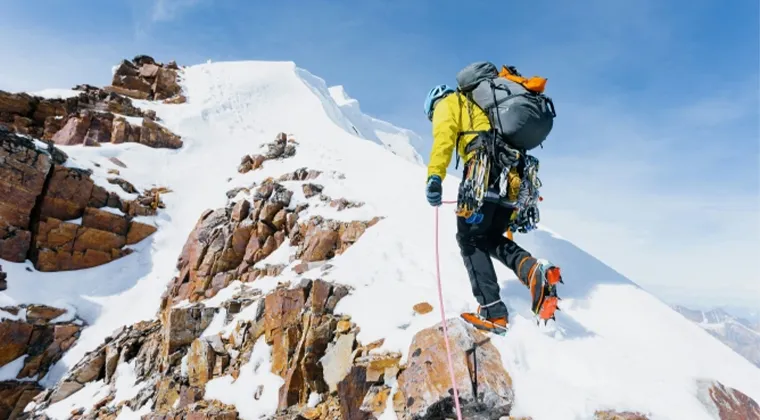
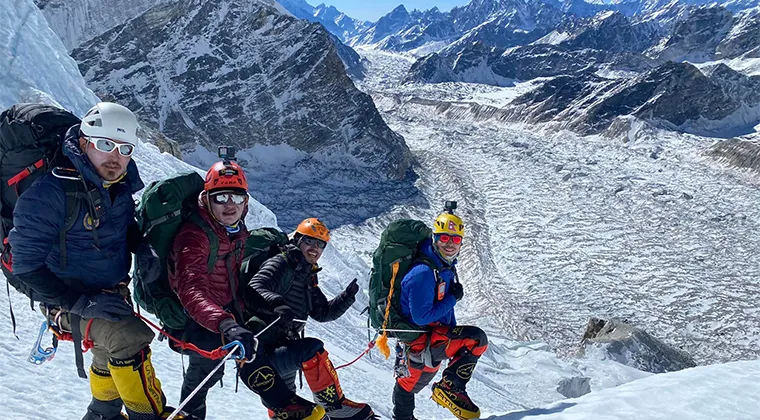
Broad Peak avalanche rescue update: Authorities confirm recoveries as search continues for missing climbers
Authorities have released further details about the ongoing rescue operation following the devastating avalanche on Broad Peak, with officials urging caution while teams continue working to determine the condition of climbers affected by the incident.
Initial reports from local police indicated that four bodies had possibly been discovered at the avalanche site. However, the identities of those found were not immediately confirmed, as rescue teams were still working to verify the information and recover those affected.
The Pakistan Alpine Club later provided an updated account, confirming that two climbers had been recovered from the mountain. The recovered climbers were identified as Nadhira Al Harthy and Pur Bahadur Gurung, also known as ‘Yukta’. Rescue teams also recovered a body part during the operation, though officials continued to stress that further confirmation would be required before releasing additional details.
The incident involved an international expedition team made up of 10 climbers from different countries, highlighting the global nature of high-altitude mountaineering in the Karakoram region. The group included six climbers from Nepal, along with one participant each from Pakistan, the United States, China and Oman.
The diverse team had been attempting to climb Broad Peak, one of the world’s highest mountains, when the avalanche struck. The disaster has triggered a coordinated rescue effort involving experienced mountaineers, local authorities and international agencies.
Search continues for missing climbers
Among those still missing is internationally recognised Nepali mountaineer Nirmal Purja, one of the most accomplished high-altitude climbers in modern mountaineering.
Purja, aged 43, has earned global recognition for his achievements in extreme climbing and has completed some of the most challenging expeditions in the world. Before becoming a professional mountaineer, he served with the British Army’s Brigade of Gurkhas and the Special Boat Service, developing skills that later contributed to his success in demanding mountain environments.
He became widely known in the mountaineering community after completing an extraordinary challenge in 2019: climbing all 14 mountains above 8,000 metres in record time. He completed the feat in just six months and six days, breaking previous records and gaining international attention for his determination and endurance.
Purja was also part of the historic team that achieved the first successful winter ascent of K2 in 2021. The expedition, completed by an all-Nepali climbing team, marked a major milestone in Himalayan and Karakoram mountaineering history.
His disappearance during the Broad Peak expedition has drawn significant attention from the international climbing community, with fellow mountaineers and supporters closely following updates from the rescue teams.
International cooperation in rescue operation
The response to the avalanche has involved cooperation between authorities in Pakistan and Nepal, with both governments working alongside the Pakistan Army to support rescue efforts.
High-altitude rescue operations require coordination between multiple teams due to the remote location, dangerous terrain and unpredictable weather conditions. Military personnel, mountain experts and local authorities are working together to improve access to the affected area and provide assistance where possible.
The operation has also received support from other climbers in the region. Several expedition groups attempting climbs on nearby peaks, including K2, have chosen to pause their summit plans temporarily in order to assist with rescue activities.
This decision reflects the strong sense of community among mountaineers, particularly during emergencies in some of the world’s most dangerous climbing regions. Climbers often rely on one another for support because rescue options at extreme altitudes are limited and conditions can change rapidly.
Officials warn against unverified information
As the rescue operation continues, officials have appealed to the public and media to avoid spreading unconfirmed reports about the status of missing climbers.
Rescue authorities have emphasised that no individual should be declared dead until teams have physically reached the location, completed recovery efforts and officially verified the situation.
In high-altitude emergencies, information from aerial searches, satellite images or early reports may not provide a complete picture. Climbers spotted from a distance may require further assessment to determine whether they are safe, injured or in need of immediate help.
Authorities have said that only ground teams reaching the affected areas will be able to provide accurate confirmation about the condition of those involved.
Mingma Gyalje Sherpa, who is leading the rescue mission, has also requested that people avoid sharing rumours or incomplete information while the operation remains active. He encouraged supporters and observers to rely only on verified updates from official sources.
The dangers of Broad Peak and high-altitude climbing
The avalanche has once again highlighted the risks faced by climbers attempting some of the world’s highest mountains. Broad Peak, standing at 8,047 metres, is considered one of the major peaks of the Karakoram range and presents serious challenges even for highly experienced mountaineers.
At extreme elevations, climbers face dangers including avalanches, severe weather, freezing temperatures and limited oxygen levels. Conditions can change quickly, leaving even skilled climbers vulnerable to unexpected events.
Rescue operations at these heights are particularly complicated because movement is slow, equipment is limited and rescuers must carefully manage their own safety while attempting to help others.
Avalanches remain one of the greatest hazards in mountain expeditions. Heavy snowfall, unstable slopes and changing temperatures can increase the risk of sudden snow movement, making it difficult to predict when and where an avalanche may occur.
Despite advances in climbing equipment, weather forecasting and rescue technology, high-altitude mountaineering continues to involve significant risks.
Mountaineering community supports rescue efforts
The Broad Peak incident has brought together climbers, rescue teams and authorities from different countries, demonstrating the international cooperation often seen during mountain emergencies.
The decision by other expedition teams to suspend their climbing attempts reflects the importance placed on human life and rescue efforts above individual summit goals.
For many mountaineers, assisting fellow climbers during a crisis is considered a responsibility that comes before personal achievements. The challenges of extreme environments create strong bonds among those who attempt some of the world’s highest peaks.
As the rescue mission progresses, teams remain focused on locating missing climbers, confirming the status of those affected and providing assistance wherever possible.
Families, friends and the global climbing community continue to await official updates as rescuers work under difficult conditions on Broad Peak.
Hope remains as teams continue their mission
While the avalanche has resulted in confirmed losses, rescue teams continue searching and assessing the situation with the hope of finding additional survivors.
Officials have repeatedly stated that accurate information will only be available once teams reach the affected locations and complete their assessments. Until then, they have urged patience and respect for the ongoing operation.
The Broad Peak avalanche serves as a reminder of both the challenges and risks associated with high-altitude exploration. It also highlights the dedication of rescue teams and the strong international cooperation that emerges when climbers face danger in some of the world’s most extreme environments.
The operation remains ongoing, with rescuers continuing their efforts to bring clarity to the situation and support those affected by the tragedy.