
**Malaysia’s increasing worries over energy, land and infrastructure resources are creating hurdles for one of Asia’s fastest-growing data centre markets as demand for digital facilities continues to rise rapidly.**
Malaysia’s growing resource concerns challenge Asia’s rapid data centre expansion.

The development marks a significant change for Malaysia and the wider region, which have aggressively attracted major technology companies by promoting cheaper land availability and cost-effective electricity to win artificial intelligence infrastructure investments.
Malaysia’s rapid rise as a major data centre destination in Asia is now facing a new challenge: growing concerns over the pressure that large-scale digital infrastructure projects place on natural resources and local communities.
After surpassing Singapore and becoming one of the region’s fastest-expanding data centre markets, Malaysia is finding itself at the centre of a wider debate about how quickly the industry should grow and whether the country’s existing resources can support continued expansion.
The discussion reflects a broader issue emerging across developing Asian economies, where governments are eager to attract artificial intelligence-related investments but are also being forced to consider the environmental and social consequences of rapid technological growth.
For years, Malaysia positioned itself as an attractive destination for global technology companies looking to establish large-scale data facilities. The country offered several advantages, including relatively affordable land, competitive electricity costs and a strategic location close to major Asian markets.
These benefits helped Malaysia attract major cloud service providers and data centre operators seeking new locations to expand their artificial intelligence and digital infrastructure capabilities. However, as more projects moved forward, concerns began increasing over the amount of electricity, water and land required to support these facilities.
The southern Johor region, located near Singapore, has become the main centre of Malaysia’s data centre boom. The area has attracted significant investment due to its proximity to one of Asia’s most important technology hubs and its availability of suitable land.
However, the rapid development of data centre complexes has also created concerns among some local residents. Protests against a data centre project in Johor marked an unusual moment for Malaysia, as public opposition to such developments had previously been limited.
The concerns raised by communities reflect a growing awareness of the resources needed to operate modern data centres. These facilities require large amounts of electricity to power servers and significant quantities of water for cooling systems, raising questions about their impact on surrounding areas.
Similar discussions have emerged in Selangor, Malaysia’s wealthiest and most populated state. As more digital infrastructure projects are proposed, debates over their effects on communities have become increasingly political, with residents and policymakers questioning how development can be balanced with public needs.
Cheam Tat Inn, managing director of the Malaysian operations of US-based data centre company Equinix, said the nature of the conversation around the industry has changed significantly.
He explained that previously, the main focus was simply on expanding capacity and building more facilities. However, expectations have evolved, with communities and stakeholders now demanding greater transparency about how companies plan to manage energy consumption, adopt renewable power sources and operate responsibly.
“Two years ago, it was just about building capacity,” Cheam said.
“Today, the conversation is more about how power will be used, whether renewable energy will be adopted and how companies intend to grow in a sustainable and responsible way.”
This shift represents a major change for Malaysia and the wider Asian region. Countries that once competed primarily by offering attractive investment conditions are now facing greater pressure to demonstrate that growth can happen without placing excessive strain on public resources.
The situation mirrors challenges previously experienced by established data centre markets in developed economies such as Ireland, the Netherlands and Singapore. In those locations, rapid expansion of digital infrastructure eventually led to concerns about electricity demand, water usage and competition between industrial facilities and local communities.
As artificial intelligence services continue to expand, the demand for computing power has increased dramatically. AI systems require advanced data processing capabilities, which means technology companies are investing heavily in larger and more powerful data centres around the world.
Global technology companies, along with data centre developers and operators, are continuing to move ahead with major investment plans. However, sustainability has become a central consideration as companies recognise the importance of gaining acceptance from the communities where they operate.
Maintaining what industry leaders describe as a “social licence” has become increasingly important. Companies understand that long-term success depends not only on securing government approvals but also on building trust with local residents who may be affected by large infrastructure projects.
Governments across Asia are also responding by introducing stricter standards and encouraging companies to adopt cleaner energy solutions. Authorities are attempting to balance economic opportunities created by digital investment with environmental responsibilities and public concerns.
In Johor, several data centre operators have highlighted their efforts to reduce the impact of their operations. Chinese company ZDATA told Reuters that its facility in the state relies entirely on treated wastewater for its operations, reducing dependence on traditional water sources.
The company also said it was working towards a renewable energy agreement with Malaysia’s national electricity provider, Tenaga Nasional, as part of efforts to reduce pressure on the electricity network and improve sustainability.
Japan-based NTT has also introduced measures aimed at reducing resource consumption. The company said its Johor facility will use a closed-loop cooling system designed to limit water usage by recycling and managing cooling resources more efficiently.
Another operator, Bridge Data Centres, which is backed by Bain Capital, has focused on renewable power adoption. The company said solar energy provides more than half of the electricity supply for its operations in Johor, demonstrating how operators are attempting to reduce dependence on conventional energy sources.
These efforts reflect a broader transformation taking place within the data centre industry. As demand for artificial intelligence infrastructure grows, companies are increasingly expected to consider environmental impact as part of their expansion strategies.
The challenge for Malaysia is finding the right balance between attracting high-value technology investments and ensuring that local communities do not face unnecessary pressure from increased resource consumption.
Data centres provide significant economic benefits, including investment, employment opportunities and support for the digital economy. They are also considered essential infrastructure for the development of artificial intelligence, cloud computing and advanced technologies.
However, the scale of these facilities means their impact cannot be ignored. Large data centres can consume electricity equivalent to thousands of households, making energy planning and sustainable power sources critical issues for governments and operators.
The debate in Malaysia reflects a wider global discussion about the future of digital growth. As societies become increasingly dependent on technology, the infrastructure supporting that technology must expand — but in a way that protects environmental resources and maintains public confidence.
For Malaysia, the next phase of its data centre expansion will likely depend on how effectively companies and policymakers address these concerns. Investment opportunities remain strong, but future growth will require greater attention to sustainability, transparency and community engagement.
The country’s experience could also provide lessons for other emerging Asian economies hoping to attract artificial intelligence and cloud infrastructure investments. As more nations compete for technology projects, the ability to offer sustainable and responsible growth models may become just as important as offering low costs and favourable investment conditions.
Malaysia’s data centre industry is therefore entering a new era. The focus is no longer only on how quickly capacity can be built, but also on how responsibly that capacity can be developed for the future.
In Johor, several major data centre operators are taking steps to reduce the environmental impact of their rapidly expanding facilities as concerns grow over energy consumption, water demand and the pressure placed on local infrastructure.
China-based ZDATA has said that its data centre operations in the state rely entirely on treated wastewater, helping to reduce dependence on conventional water sources. The company is also working towards a renewable energy agreement with Malaysia’s national electricity provider, Tenaga Nasional, as part of efforts to reduce pressure on the power network and support cleaner energy use.
Japanese technology company NTT has also introduced measures focused on improving resource efficiency. The company plans to use a closed-loop cooling system at its Johor data centre, a technology designed to recycle cooling resources and minimise the amount of water required for daily operations.
Meanwhile, Bridge Data Centres, which is supported by Bain Capital, has highlighted its use of renewable energy at its facilities in the region. The company said that solar power contributes more than half of the electricity supply used by its Johor operations, reflecting the industry’s growing focus on reducing reliance on traditional energy sources.
These initiatives come as data centre developments across Malaysia face increasing attention from communities and policymakers concerned about the environmental consequences of rapid digital infrastructure growth.
While data centres are widely viewed as essential to modern life because they support cloud services, artificial intelligence applications and online platforms, their expansion has created new questions about how much energy and water these facilities require.
Chris Howard, an executive director at consultancy firm JLL, said the public generally recognises the importance of data centres because society is becoming increasingly dependent on digital services and faster connectivity.
He explained that people understand the need for these facilities because almost every aspect of daily life now relies on digital infrastructure, from communication and business operations to entertainment and artificial intelligence services.
However, Howard noted that there is often a significant difference between the broad public support for technology and the concerns expressed by communities living near large data centre developments.
According to him, local resistance can emerge because residents worry that new facilities may increase demand on electricity supplies, contribute to higher energy costs or place additional pressure on water resources.
Some communities also raise concerns about the physical appearance of large-scale data centres, which are often large industrial buildings that can significantly change the character of surrounding areas.
“The public understands the importance of data centres because everyone is using more data and demanding faster services,” Howard said. “However, this can contrast sharply with how local communities view these developments because of concerns over energy consumption, water use and the appearance of the buildings.”
The concerns surrounding data centres are not limited to Malaysia. Across the world, governments and companies are facing similar challenges as demand for digital infrastructure continues to grow.
The rapid expansion of artificial intelligence and cloud computing has increased the need for larger and more powerful facilities. As technology companies invest billions into new infrastructure, communities are increasingly asking how these projects will affect local resources and quality of life.
According to estimates from JLL, opposition from local residents has become one of several factors contributing to delays in data centre construction projects worldwide. The consultancy said community objections, along with challenges involving electricity connections and infrastructure requirements, played a role in slowing down many developments.
JLL estimated that 57 per cent of global data centre projects experienced delays of at least three months last year. While various issues contributed to these setbacks, increasing concerns from nearby communities were among the factors affecting project timelines.
The growing scrutiny highlights a shift in how data centre projects are evaluated. Previously, the main focus was often on how quickly companies could build capacity to meet rising digital demand. Today, investors, governments and residents are paying greater attention to sustainability, resource management and long-term impact.
For operators, gaining community acceptance has become an important part of successfully developing new facilities. Companies are increasingly expected to demonstrate that they have plans to manage electricity use, reduce water consumption and adopt cleaner energy solutions.
Malaysia’s experience reflects a wider trend across emerging markets, where governments are eager to attract technology investments but must also address concerns about environmental sustainability and public support.
Data centres bring economic benefits, including foreign investment, job creation and improvements to digital infrastructure. However, their resource requirements mean that careful planning is necessary to ensure that growth does not place excessive pressure on local communities.
The efforts by companies such as ZDATA, NTT and Bridge Data Centres show how operators are attempting to respond to these challenges through renewable energy adoption, improved cooling technologies and more efficient use of resources.
As the industry continues to expand, sustainability is expected to become a central factor in determining where new data centres are built and how quickly projects can move forward.
The future growth of Malaysia’s data centre sector will likely depend not only on attracting investment but also on maintaining trust among communities. Companies that can demonstrate responsible operations and effective environmental management may find it easier to secure support for future developments.
The debate surrounding data centres reflects a broader challenge facing the digital economy: ensuring that technological progress can continue while protecting the resources and communities that support it.
Renewable energy, local content
As Malaysia continues to expand its data centre industry, authorities in key states are introducing stricter requirements to ensure that new developments can be supported sustainably. In Johor, where the data centre boom has been particularly rapid, upcoming projects are now expected to provide clear plans explaining how they will obtain electricity and manage their energy needs.
Renewable energy is becoming an increasingly important condition for gaining approval, as policymakers seek to reduce pressure on existing power networks and encourage more environmentally responsible growth. Developers are being pushed to consider cleaner energy sources from the early stages of planning rather than relying solely on conventional electricity supplies.
The tighter rules reflect growing concerns over the amount of power and water required by large-scale data centres. These facilities support cloud computing and artificial intelligence services, but they also consume significant resources, creating challenges for regions trying to balance digital investment with sustainability.
Johor, which has emerged as one of Southeast Asia’s fastest-growing data centre locations, has already taken steps to limit developments that could place excessive pressure on water supplies. Late last year, the state introduced restrictions targeting two categories of highly water-intensive data centres.
Officials said these types of facilities could require up to 50 million litres of water each day — an amount comparable to the volume held by around 20 Olympic-sized swimming pools. The restrictions were introduced as part of efforts to protect water resources and ensure that industrial expansion does not affect the needs of residents and other sectors.
The decision reflects a broader shift in government thinking. While Malaysia continues to welcome technology investment, authorities are increasingly focused on ensuring that new projects contribute to long-term economic and environmental goals.
In neighbouring Selangor, officials have taken a different approach. Rather than imposing a complete ban on proposed developments, the state government is reviewing applications carefully to ensure that projects meet international expectations for energy efficiency and water management.
Ng Sze Han, Selangor’s executive councillor for investment, trade and mobility, told Reuters that the state wants data centre developments to align with global standards while also creating greater benefits for the local economy.
One of Selangor’s key requirements is encouraging stronger local participation in the industry. Authorities are seeking at least 30% local involvement in areas such as integrated circuit design, cooling technology and related components.
The goal is to ensure that data centre investments generate wider economic advantages instead of functioning only as large infrastructure projects operated by international companies.
Ng said that although data centres involve significant financial investment, their contribution to the broader economy has historically been limited in terms of local business opportunities and technology development.
“These are highly capital-intensive projects, but historically they have delivered limited spillover to the local economy,” Ng said.
The state’s approach reflects concerns that while data centres bring investment and improve digital capacity, they may not always create enough skilled jobs, supply-chain opportunities or technological benefits for nearby communities.
In April, Malaysia’s opposition Socialist Party criticised a proposed hyperscale data centre project in Selangor valued at 1.75 billion ringgit ($428 million). The party argued that the development placed corporate interests ahead of the concerns and needs of local communities.
The criticism highlighted the growing debate around large-scale digital infrastructure projects. Supporters point to the economic advantages of attracting global technology companies, while critics argue that governments must ensure communities benefit from these developments and are protected from possible environmental impacts.
As Malaysia introduces stricter oversight, some industry analysts believe investment interest could begin shifting towards other countries in Southeast Asia that are competing for data centre projects.
Savills analyst Nicholas Tuan said that increased regulation and closer scrutiny in Malaysia may encourage some investors to explore alternative locations in the region.
He noted that Thailand has already started attracting greater attention, with more companies considering the country as a destination for large-scale data centre campuses, particularly in southern areas where additional infrastructure is being developed.
“We’re already seeing more activity and inbound requests for markets like Thailand, where there are larger-scale campuses being built in the south,” Tuan said.
Thailand’s growing appeal reflects the wider competition among Southeast Asian countries to attract artificial intelligence and cloud infrastructure investment. As demand for computing capacity rises globally, nations are competing to provide suitable locations with reliable power supplies, available land and supportive regulatory environments.
However, despite increasing competition, Johor continues to maintain strong advantages that make it attractive to investors. Its location near Singapore, established infrastructure and government backing remain major factors supporting its position as a regional data centre hub.
Tuan said Johor remains one of the most stable locations in terms of infrastructure readiness, government support and access to necessary resources.
Although new challenges have emerged around sustainability and resource management, the state still offers significant advantages for companies looking to expand their digital infrastructure operations.
The future of Malaysia’s data centre sector is likely to depend on how effectively authorities and companies can balance growth with sustainability. Investors continue to seek opportunities, but governments are becoming more selective about the projects they approve.
For developers, meeting environmental requirements, adopting renewable energy solutions and demonstrating benefits for local communities are becoming increasingly important factors in securing approval.
The evolving policies in Johor and Selangor demonstrate how the data centre industry is entering a new phase. The focus is no longer only on attracting investment and building capacity quickly; it is now also about responsible development, efficient resource use and ensuring that technological growth supports wider economic progress.
As artificial intelligence and digital services continue to expand, demand for data centres is expected to remain strong across Asia. The challenge for countries like Malaysia will be finding ways to welcome this growth while protecting resources and maintaining public confidence.
The competition for data centre investment across Southeast Asia is therefore becoming more complex. Countries must offer not only affordable land and reliable infrastructure but also sustainable solutions that address environmental concerns and deliver meaningful benefits to local communities.
Singapore spillover
Johor has emerged as one of the biggest winners from the rapid expansion of Southeast Asia’s data centre industry, particularly after Singapore temporarily halted approvals for new data centre developments between 2019 and 2022. During that period, Malaysia’s southern state attracted a significant wave of investment as companies searched for alternative locations with available land, competitive operating costs and proximity to Singapore.
The restrictions introduced by Singapore followed years of rapid data centre growth that placed increasing pressure on the city-state’s limited land availability, water resources and electricity supply. As demand for digital infrastructure continued to rise, technology companies began looking beyond Singapore for additional capacity, and Johor quickly became a preferred destination.
The state attracted billions of dollars in new investment, with estimates suggesting around $35 billion flowed into Johor’s data centre sector during this period. Major global technology companies, including Amazon and Microsoft, as well as Chinese technology giants Tencent and Alibaba, expanded their presence or announced plans for large-scale facilities in the region.
Johor’s appeal was driven by several factors. Its close geographical connection to Singapore made it strategically valuable for companies that wanted to maintain access to one of Asia’s most important business centres while benefiting from lower operating costs. The availability of larger areas of land and comparatively cheaper resources also helped position the state as an attractive alternative.
However, the speed of expansion has brought new challenges. As more projects moved forward, concerns began to grow over whether existing infrastructure could support the industry’s increasing demands, particularly in relation to electricity consumption, water usage and land availability.
Although authorities introduced tighter approval procedures from 2024 onwards, the scale of planned developments remains significant. According to estimates from consultancy firm JLL, Johor’s projected data centre capacity — including facilities already under construction and projects still in the development pipeline — could increase eight times from current levels, reaching approximately 7,000 megawatts.
Such rapid growth highlights the enormous scale of the digital infrastructure race. Data centres are essential for powering cloud services, artificial intelligence systems and online platforms, but they also require substantial amounts of energy and water to operate effectively.
Malaysia’s central bank has estimated that a single 50-megawatt data centre could consume as much water as approximately 2,200 households in one day. The same facility may require electricity equivalent to the daily consumption of around 22,000 homes, illustrating the significant resource demands created by these large-scale developments.
These figures have intensified public discussion about whether local infrastructure can keep pace with the expansion of the industry. While many recognise the economic benefits of attracting global technology companies, some residents have raised concerns about how these projects may affect everyday life.
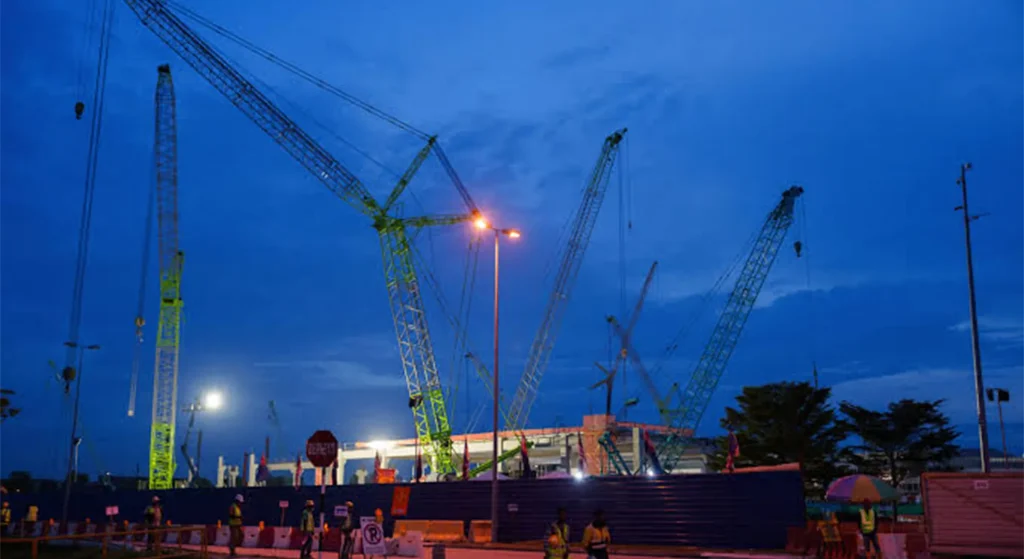
Public opposition became more visible in February, when residents in Iskandar Puteri, located in southern Johor, protested against the construction of a data centre complex operated by ZDATA.
The demonstration marked an important moment because it reflected growing community concerns about the consequences of rapid industrial development. Residents questioned whether the arrival of large-scale digital facilities could place additional pressure on essential services and change the character of their neighbourhoods.
One of the main concerns raised by residents involved water availability. Some community members expressed worries that increased demand from data centre operations could affect local water supplies. Others claimed they had already noticed reduced water pressure in the area before the 300-megawatt facility became operational.
ZDATA rejected suggestions that its development was responsible for the reported water issues. The company said its operations were not the cause of the concerns raised by residents and that it continued to follow relevant requirements regarding resource management.
However, the debate surrounding data centre expansion extends beyond questions about water and electricity. For many residents, the issue is also connected to changes in the surrounding environment and the transformation of neighbourhoods that were previously valued for their natural landscapes.
Some complaints focused on the practical impacts of construction activity. Dust generated by building work became a source of frustration for nearby residents, prompting land developer Tropicana Firstwide to respond by introducing measures to address the issue.
The developer established two free car wash services for residents as a way of helping those affected by dust from the construction site. While the initiative addressed one immediate concern, it did not resolve broader questions about the long-term impact of the development.
For some residents, the most difficult issue is not temporary disruption but the permanent transformation of the area they call home.
One Iskandar Puteri resident explained that the appeal of the neighbourhood had been closely linked to its natural surroundings. The greenery, open spaces and hills behind residential areas were among the reasons people chose to purchase homes there.
“I chose to buy a house here because of the greenery and the hills behind the property,” the resident said. “Now the land has been levelled for the data centres.”
The comment reflects a wider debate taking place in rapidly developing regions across Asia. As governments seek to attract technology investment, communities are increasingly asking how economic growth can be balanced with environmental preservation and quality of life.
Data centres bring clear economic advantages. They attract foreign investment, support digital transformation and create opportunities linked to technology development. For governments, these projects are seen as important components of future economic growth, particularly as artificial intelligence and cloud computing become increasingly central to global business.
However, residents and environmental advocates argue that expansion must be carefully managed. They want greater transparency about resource consumption, stronger sustainability commitments and more consideration for the impact on communities located near major developments.
The situation in Johor reflects a broader challenge facing many countries hoping to become digital infrastructure hubs. Attracting large technology companies requires suitable land, reliable energy supplies and supportive policies, but maintaining public support requires responsible planning and long-term sustainability.
As Johor continues to develop its data centre ecosystem, authorities and companies will need to address these concerns while ensuring that the benefits of investment are shared more widely. The future success of the industry may depend not only on how much capacity can be built but also on how effectively developments can coexist with local communities.
The state’s experience demonstrates the complex balance between technological progress and resource management. While Johor’s rise as a data centre hub has created significant economic opportunities, it has also highlighted the importance of considering environmental and social impacts alongside investment growth.
With demand for digital infrastructure expected to continue increasing, the debate over data centre expansion is unlikely to disappear. Instead, it is likely to become a central issue for governments, companies and communities across Asia as they navigate the next phase of the technology boom.