Trump has announced that the Air Force One aircraft offered by Qatar will undergo a comprehensive upgrade programme, featuring advanced modifications and significant improvements to enhance its capabilities and presidential operations.
Trump Says Qatar-Provided Air Force One Will Receive Extensive Upgrades and Top-Level Enhancements.
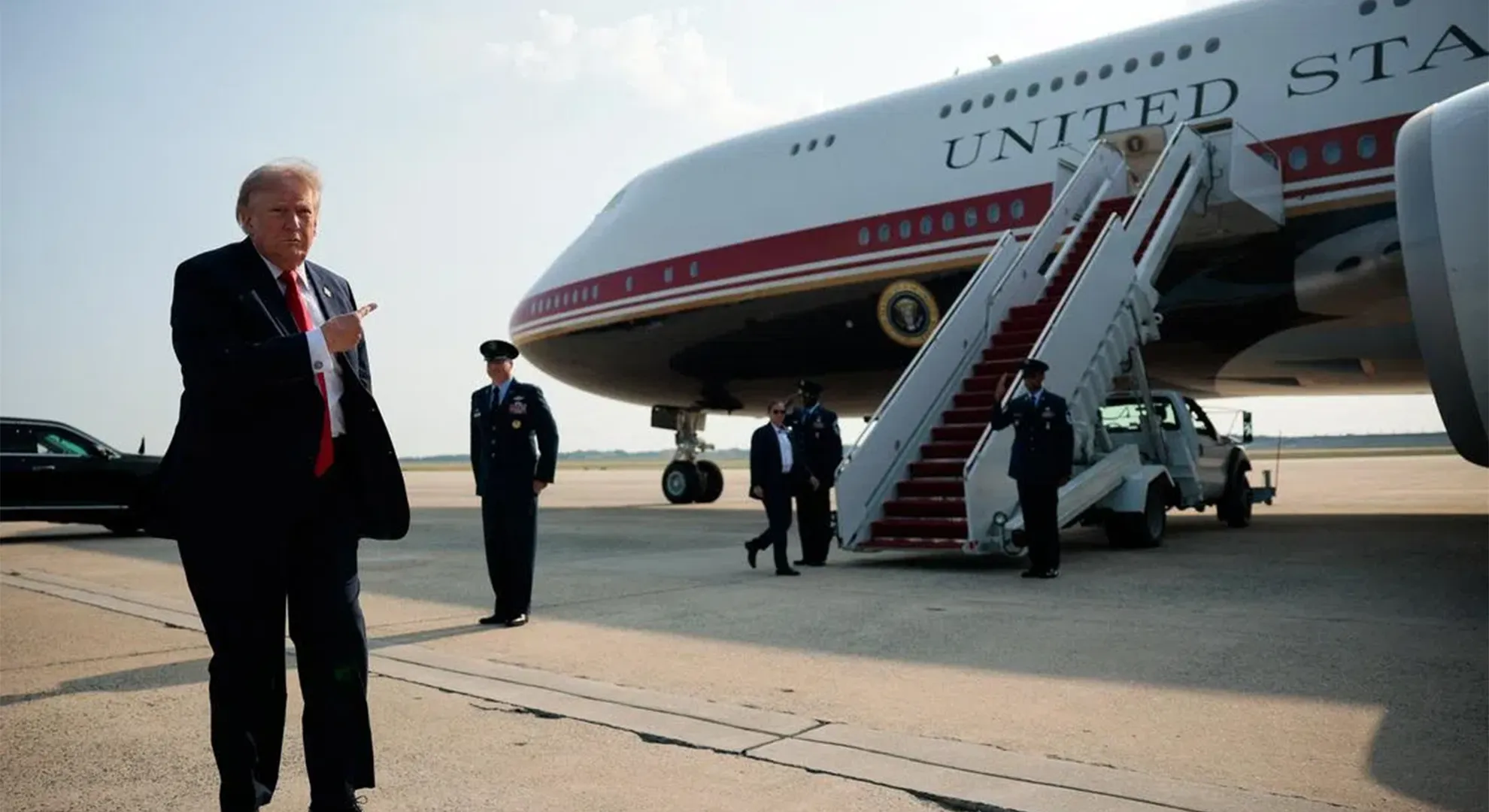
The aircraft features a red, white, navy blue, and gold exterior design selected by Trump and has been upgraded by defence company L3Harris Technologies as part of its refurbishment process.
Trump Says Qatar-Provided Presidential Aircraft Will Undergo Further Upgrades After Security Questions
US President Donald Trump has said that the aircraft provided by Qatar for use as a temporary Air Force One will soon undergo additional modifications, following discussions over the plane’s security systems and operational capabilities.
The Boeing 747, which was offered by Qatar and prepared for presidential travel, has attracted significant attention since Trump began using it. Questions were raised about whether the aircraft had all the advanced protection features typically associated with the official presidential fleet.
Trump addressed the issue on Sunday, saying that the aircraft would be taken for further improvements in the coming weeks. He said the plane already has significant capabilities but will receive additional work to enhance its performance and features.
According to Trump, the aircraft is expected to be sent for upgrades in roughly a month, with the process aimed at bringing it to a higher level of readiness for presidential use.
The aircraft entered service with Trump after an accelerated refurbishment process was carried out to prepare the large Boeing 747 for government operations. The effort began after Qatar offered the aircraft as a gift, with the goal of adapting it for presidential travel requirements.
Trump began flying on the aircraft on July 1, making it the first time he used the Qatar-provided plane for official travel. The aircraft was modified by defence contractor L3Harris Technologies, which worked on preparing the jet for its new role.
The plane features a distinctive colour scheme chosen by Trump, including red, white, dark blue, and gold elements. The design reflects a presidential-style appearance and differs from the traditional colours used on the current Air Force One fleet.
However, concerns about the aircraft’s capabilities emerged after Trump temporarily stopped using the jet during an international trip. On July 8, while travelling from Turkey to the United Kingdom, he switched back to an older Air Force One aircraft amid increasing tensions involving Iran.
Trump described the decision as a return to the older presidential aircraft “for old time’s sake.” He later resumed travel on the newer Qatar-provided plane for his journey back to the United States.
The temporary change raised questions among observers about whether the aircraft was fully equipped with all the security measures expected for presidential transportation.
During his return from a trip to New Jersey for the FIFA World Cup final, Trump was questioned about reports suggesting that the aircraft may not have certain defensive systems, including missile protection technology.
Responding to the questions, Trump said the plane had substantial capabilities but indicated that additional work was planned. He explained that the aircraft would soon undergo further upgrades to strengthen its overall functions.
Trump said the planned improvements would bring the aircraft to a more advanced level, describing the process as a way to ensure the plane reaches its maximum potential. He estimated that the upgrade work would take approximately one month.
The White House and US Air Force have not provided detailed public information about the specific systems being added or modified. The Air Force did not immediately respond to requests for further comment regarding the planned improvements.
The use of a foreign-provided aircraft for presidential travel has attracted considerable attention because of the strict security standards involved in operating Air Force One. Presidential aircraft require advanced communication systems, protective technology, and specialised equipment to ensure the safety and security of the president during domestic and international travel.
The debate surrounding the Qatar-provided aircraft has focused largely on whether the plane can meet those requirements and whether additional modifications are necessary before it can be used regularly.
Trump has defended the arrangement, arguing that the aircraft provides a practical solution while improvements continue on future presidential transportation options. Supporters of the move have pointed to the cost and time involved in replacing or upgrading presidential aircraft through traditional government programmes.
Critics, however, have raised concerns about accepting such a significant gift from a foreign government and questioned whether the aircraft can fully meet the security expectations associated with presidential travel.
Despite the controversy, Trump has continued to express confidence in the aircraft and its capabilities. His comments suggest that the administration views the additional upgrade process as part of ensuring the plane is fully prepared for future use.
The Boeing 747’s transition into presidential service represents a major logistical and technical undertaking. Converting a commercial-style aircraft into a presidential transport requires extensive changes, including communication upgrades, security enhancements, and specialised modifications.
The additional refurbishment planned in the coming weeks is expected to further improve the aircraft’s readiness and address concerns raised since it entered service.
For now, the aircraft remains a subject of public discussion because of its unusual origin, its role in presidential travel, and the ongoing work to enhance its capabilities.
Trump’s comments indicate that the plane’s transformation is still continuing, with further improvements expected before it reaches the level of capability and reliability required for long-term presidential operations.
Questions Remain Over Security and Future of Qatar-Provided Air Force One Aircraft
The US Air Force has not yet issued an official response regarding questions surrounding the Qatar-provided aircraft that has been prepared for presidential travel. Officials have not provided detailed information about the plane’s current capabilities, security systems, or the additional modifications expected to take place in the future.
The aircraft, which has attracted significant attention since being introduced as a temporary presidential transport option, features a customised exterior design selected by President Donald Trump. The colour scheme includes red, white, dark blue, and gold elements, giving the aircraft a distinctive appearance compared with the traditional look of the existing Air Force One fleet.
The Boeing 747 was refurbished and modified by defence technology company L3Harris Technologies as part of the process to prepare it for presidential use. The work involved adapting the aircraft for government operations and ensuring it could meet the requirements associated with carrying the president.
The Qatar-provided jet is intended to serve as an interim replacement while the US government waits for Boeing to complete the next generation of purpose-built Air Force One aircraft. The new presidential planes have faced years of delays, pushing back their expected delivery date.
Boeing is currently responsible for producing two specially designed Boeing 747-8 aircraft under a fixed-price contract valued at approximately $3.9 billion. The agreement, signed in 2018, was intended to deliver a new generation of presidential aircraft equipped with advanced technology and security systems.
However, the programme has experienced significant setbacks. The aircraft project is now several years behind schedule and has exceeded original cost expectations, creating challenges for both Boeing and the US government.
The delivery of the new Air Force One aircraft is currently expected in the middle of 2028. Until those planes are completed, the Qatar-provided aircraft is expected to help fill the gap and provide an additional option for presidential transportation.
The decision to use the Qatar aircraft has generated debate among aviation and security experts. Because presidential aircraft require extremely high levels of protection, some specialists questioned whether the rapid refurbishment process allowed enough time to fully install and test every necessary security feature.
Experts raised concerns that the aircraft may not initially have matched the capabilities of the current Air Force One planes, which were specifically designed and equipped for presidential missions.
The existing Air Force One aircraft, known for its distinctive blue-and-white appearance, includes specialised communication systems, defensive technology, and other security features developed specifically for presidential travel.
Critics argued that converting a commercial aircraft into a presidential transport in a short timeframe could create challenges, particularly when dealing with complex security requirements.
Supporters of the arrangement have argued that the aircraft provides a practical temporary solution while Boeing continues work on the delayed replacement planes. They have pointed to the need for reliable presidential transportation and the difficulties caused by delays in the official replacement programme.
The acceptance of the aircraft as a gift from Qatar has also sparked political debate. Some critics questioned whether accepting such a valuable asset from a foreign government was appropriate and raised concerns about potential conflicts of interest.
The issue has become part of a broader discussion about government ethics, national security, and the rules surrounding foreign gifts provided to senior officials.
Supporters of the decision have argued that the aircraft can be used effectively if it meets required security standards and that additional upgrades can address any concerns. They have emphasised that the plane is intended as a temporary measure rather than a permanent replacement for the official Air Force One fleet.
The aircraft’s introduction has also attracted attention from journalists and investigators examining its security features and the process behind its preparation.
Several New York Times reporters who covered details related to the aircraft’s security arrangements were reportedly issued subpoenas earlier this month. The journalists had reported on aspects of the plane’s capabilities and the concerns raised by experts.
The New York Times has challenged the subpoenas and asked a court to prevent the reporters from being required to appear before a federal grand jury in Manhattan. The newspaper has argued against the demands, citing concerns related to press freedom and journalistic protections.
The legal dispute has added another layer of controversy surrounding the aircraft and the broader questions about transparency, security, and government decision-making.
The debate over the Qatar-provided aircraft reflects the complicated challenges involved in presidential aviation. Any aircraft used for presidential travel must meet strict standards, not only for transportation but also for communication, safety, and national security.
The process of transforming a commercial aircraft into a presidential platform involves extensive planning, testing, and technical adjustments. Security experts note that such modifications require careful attention because the president’s aircraft serves as a mobile command centre during domestic and international emergencies.
The ongoing upgrade plans for the Qatar aircraft are expected to address some of the concerns raised since it entered service. Officials have indicated that additional improvements will be made to enhance its capabilities and prepare it for continued use.
While the aircraft has already begun serving its temporary role, questions remain about its long-term suitability and the extent of the modifications required before it can operate at the same standard as dedicated Air Force One aircraft.
The situation also highlights the challenges facing Boeing’s replacement programme. Delays in delivering the new aircraft have forced the government to explore alternative solutions to maintain reliable presidential transportation.
As work continues on the next generation of Air Force One planes, the Qatar-provided Boeing 747 remains at the centre of a wider debate involving technology, security, government spending, and international relations.
For now, the aircraft represents a temporary bridge between the current presidential fleet and the future generation of specially built planes. Additional upgrades and continued evaluation will determine how effectively it can meet the demanding requirements of presidential travel.