Lionel Messi continues to fuel Argentina’s ambition for the 2026 World Cup, delivering another influential display that strengthens the team’s confidence and keeps their championship hopes firmly alive.
Lionel Messi Inspires Argentina’s Fight for 2026 World Cup Success After Another Key Performance.
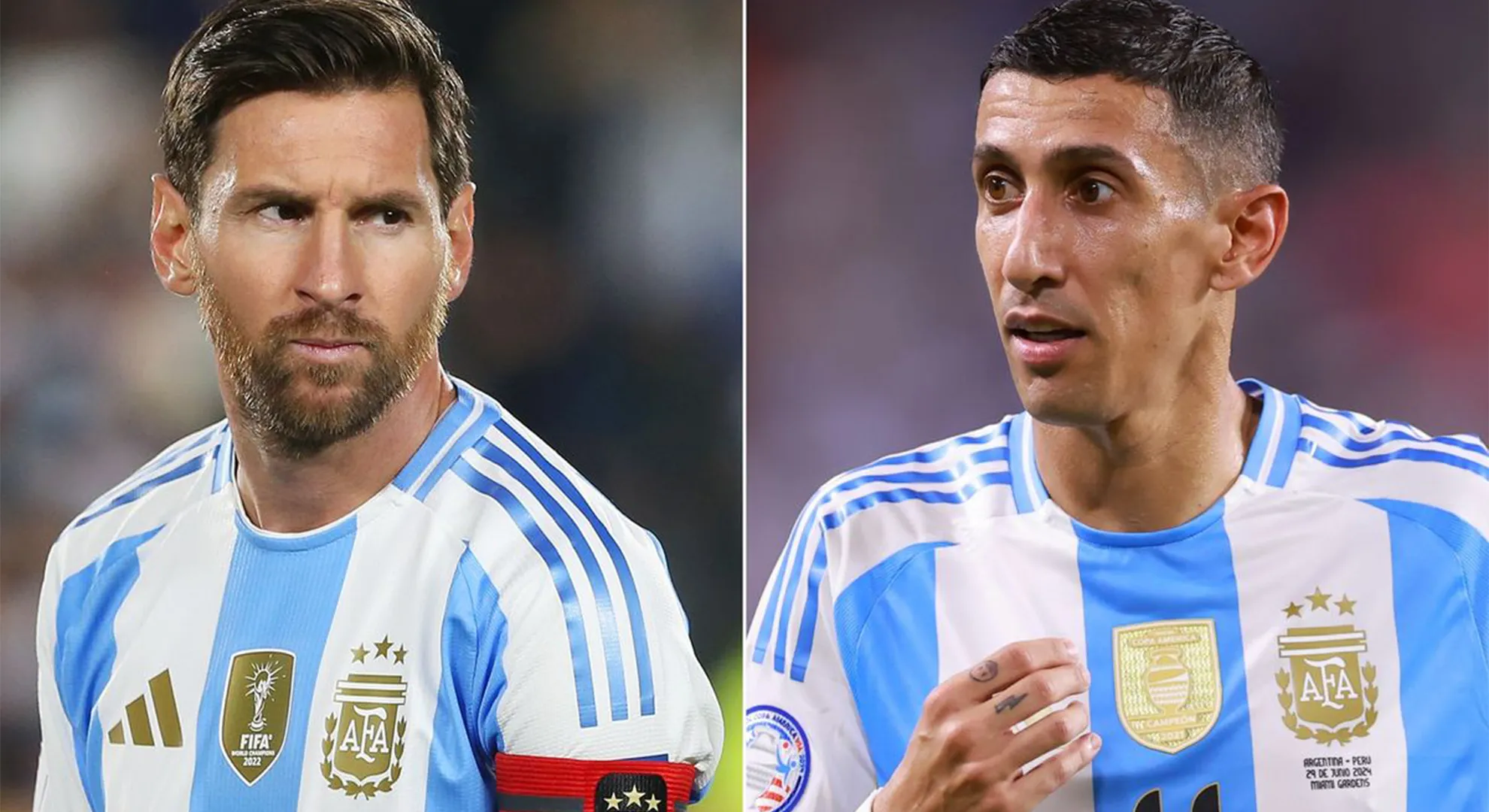
Messi took on a role similar to Angel Di Maria’s, creating moments of brilliance from the right side as he guided Argentina’s revival against England and helped secure another World Cup final appearance.Lorem ipsum dolor sit amet, consectetur adipiscing elit. Ut elit tellus, luctus nec ullamcorper mattis, pulvinar dapibus leo.
Angel Di Maria: From Childhood Struggles to Argentina’s Football Hero
Before becoming one of Argentina’s most celebrated footballers, Angel Di Maria experienced a childhood shaped by hardship, determination, and family sacrifice. His journey from a modest home to the biggest stages in world football was built on years of persistence and the unwavering support of his parents.
Growing up as the son of a coal worker, Di Maria learned the value of hard work from an early age. Life was not easy for his family, and he often helped his father with daily responsibilities. In a personal reflection shared through The Players’ Tribune, Di Maria recalled carrying heavy bags of coal with his sister from delivery trucks to their home’s backyard to support their father’s work.
Those early experiences taught him important lessons about resilience and responsibility. Long before he became known for his speed, creativity, and ability to change matches, he was a child who understood the importance of effort and family commitment.
A Childhood Full of Energy and Football Dreams
As a young boy, Di Maria was known for his endless energy. He was constantly moving, playing, and exploring, leaving his family struggling to keep up with his restless nature.
Looking for a way to channel his energy, his parents introduced him to football. They enrolled him at a local amateur club, hoping the sport would provide discipline and direction.
However, the beginning of his football journey was not without challenges. The young Di Maria faced rejection and doubts, but he refused to abandon his dream. Despite being small and thin compared with many other players, he continued to work and improve.
His mother played a crucial role in supporting his ambitions. She would regularly take him to training sessions on her bicycle, making the journey in both summer heat and harsh winter conditions. Her dedication became one of the foundations of his eventual success.
The sacrifices made by the Di Maria family gradually began to produce results. His talent became impossible to ignore, and he developed into one of Argentina’s most promising young players.
Speed, Movement and the Making of a Star
One of Di Maria’s greatest strengths was his ability to find space. His intelligence without the ball, combined with his acceleration and close control, made him a constant threat from wide areas.
His style of play was built around quick movement, sharp dribbling, and the ability to appear in dangerous positions at exactly the right moment. Those qualities eventually caught the attention of European clubs searching for the next generation of attacking talent.
Portuguese club Benfica recognized his potential and brought him to Europe, where he began proving himself at the highest level.
Reflecting on his family’s struggles, Di Maria once described how football dreams had been lost across generations. His father, despite having great ability as a footballer, saw his own career affected by serious injuries. His grandfather also experienced tragedy after losing both legs in a train accident.
For Di Maria, those stories became part of his motivation. He understood that his opportunity represented not only his own ambition but also the hopes and sacrifices of his family.
European Success and Global Recognition
At Benfica, Di Maria developed into a top-level player and attracted attention from some of Europe’s biggest clubs. His performances earned him a transfer to Real Madrid, where he joined a squad filled with world-class talent.
Playing alongside stars such as Cristiano Ronaldo, he experienced success in domestic competitions and helped the club compete for major European honors.
His versatility and creativity made him an important part of Real Madrid’s attack. Whether creating chances, delivering assists, or making decisive runs, Di Maria consistently showed why he was considered one of the most gifted wide players of his generation.
Argentina’s Big-Game Specialist
While Di Maria enjoyed success at club level, his journey with Argentina’s national team included both unforgettable victories and painful disappointments.
His ability to perform in important matches became a defining part of his international career. In the 2008 Beijing Olympics, he scored the winning goal in the final against Nigeria, helping Argentina secure Olympic gold.
However, success with the senior national team proved more difficult for many years. Argentina experienced heartbreak in several major tournaments, including defeats in World Cup and Copa America finals.
Despite criticism and disappointment, Di Maria remained committed to the national team. His persistence eventually led to some of the greatest moments of his career.
The Goal That Changed Argentina’s History
Argentina ended a long wait for international silverware in 2021 when they won the Copa America, their first major trophy since 1993.
In the final against Brazil at the famous Maracana Stadium, Di Maria delivered the decisive moment. His brilliant finish became the only goal of the match and secured a historic victory for Argentina.
That triumph was especially meaningful because it ended years of frustration and gave a generation of players, including Di Maria and Lionel Messi, the international success they had long pursued.
World Cup Glory in Qatar
A year later, Di Maria produced another unforgettable performance on football’s biggest stage.
In the 2022 FIFA World Cup final against France, he played a crucial role in Argentina’s attack. His movement, confidence, and finishing ability caused constant problems for the French defense.
Di Maria’s contribution in the final reflected the qualities that had defined his career: intelligence, bravery, technical ability, and the ability to rise during the most important moments.
From carrying coal as a child to lifting football’s biggest trophies, his story became one of perseverance and belief.
A Legacy Built on Sacrifice
Angel Di Maria’s career is more than a collection of trophies and memorable goals. It represents a journey shaped by family support, personal determination, and the refusal to give up despite obstacles.
The same qualities that helped him survive difficult childhood years later made him a player capable of deciding major finals.
His runs from the wing, once a simple expression of his natural talent, became a symbol of his football identity. Every sprint carried the history of a family that sacrificed for his dream.
For Argentina, Di Maria became the player who delivered when it mattered most. His goals in Olympic, Copa America, and World Cup finals ensured his place among the country’s most respected football figures.
His story remains a reminder that behind every great athlete is a journey filled with challenges, support, and countless moments of determination.
Messi Takes on Di Maria’s Mantle as Argentina Search for a New Source of Magic
France refused to surrender easily in the World Cup final, fighting back with remarkable determination and forcing the contest into a dramatic penalty shootout. Argentina eventually held their nerve to lift the trophy, while Angel Di Maria was overcome with emotion as he celebrated one of the greatest achievements of his career.
For Di Maria, the triumph represented the perfect ending to a remarkable international journey. After years of disappointment and criticism, the winger finally achieved the success he had chased with Argentina for so long.
Two years later, following Argentina’s Copa America victory in 2024, Di Maria announced his retirement from international football. His departure marked the end of an era for the national team and removed one of the most influential attacking players from their squad.
Argentina’s Search for a Di Maria Replacement
Replacing Di Maria has proven to be one of Argentina’s biggest challenges. His importance was not simply based on goals and assists; it came from his unique combination of speed, creativity, movement, and ability to influence the biggest matches.
Finding another player with the same characteristics has been almost impossible. Di Maria was a rare type of footballer — a player who could create moments of brilliance while remaining completely focused on serving the team.
South American football expert Tim Vickery described Di Maria as a special figure: a world-class player who never carried the attitude often associated with global stars.
Vickery highlighted how Di Maria played an essential supporting role for some of the greatest players of his generation. At Real Madrid, he provided the hard work and creativity that allowed Cristiano Ronaldo to shine, while with Argentina he performed a similar role alongside Lionel Messi.
Di Maria was not always the player receiving the headlines, but he was often the one making the decisive runs, creating opportunities, and delivering the passes that changed matches.
The Player Who Made the Difficult Look Simple
Di Maria’s greatest qualities came from his ability to attack space. His movement from wide areas created problems for defenders, while his pace allowed him to turn defensive situations into attacking opportunities within seconds.
He combined technical skill with relentless energy. Whether he was carrying the ball forward, beating defenders, or sending dangerous crosses into the box, he provided Argentina with a dimension that few teams could handle.
His value was not only measured by statistics. It was seen in the way opponents adjusted their tactics to limit him and in the confidence his teammates gained from having him available.
Now entering the later stages of his club career with Rosario Central — the club where his football journey began — Di Maria’s international chapter is complete.
But Argentina still needed someone capable of providing similar creativity and unpredictability.
Messi Steps Into a New Role
With Di Maria no longer available, Lionel Messi began taking on more responsibility in wide areas, particularly from the right side of the attack.
Argentina coach Lionel Scaloni experimented with different players in search of a suitable replacement. Several options were tested, but none managed to fully replicate Di Maria’s impact.
As a result, Scaloni adjusted Argentina’s approach, focusing more on controlling possession through central areas. However, the absence of natural width remained an issue.
Without a player capable of stretching defenses from the flank, Argentina sometimes found themselves easier to contain.
Opponents recognized this weakness and attempted to close down central spaces, forcing Argentina to find different ways to create opportunities.
Messi’s Tactical Adaptation
During difficult moments in the tournament, Messi responded by moving toward the right side of the pitch, occupying areas where Di Maria had traditionally caused damage.
The change allowed him to influence games in a different way. Instead of operating only as a central creator, Messi began using the flank to create unpredictability.
From wider positions, he could isolate defenders, deliver dangerous crosses, or cut inside to create scoring opportunities.
Against Egypt, Argentina found themselves in serious trouble after falling behind by two goals. Egypt’s defensive strategy focused on blocking central routes and limiting Messi’s influence.
Recognizing the challenge, Messi moved into wider areas and began creating more space for himself and his teammates.
His deliveries from the right helped Argentina find their way back into the match, and he later completed the comeback by scoring himself.
Once again, Messi showed why he remains one of football’s greatest problem-solvers.
Another Big Moment Against England
Argentina faced another difficult test in the semifinal against England. After conceding early in the second half, the match appeared to be moving away from them.
Once again, Messi adjusted his position. By drifting toward the right side, he became more involved and created a greater attacking threat.
The move gave Argentina more creativity and forced England’s defenders to deal with a player who could either attack directly or create opportunities for others.
On the opposite side, Guillermo Simeone — son of former Argentina international Diego Simeone — worked hard defensively but struggled to provide the same attacking influence that Argentina had enjoyed during previous generations.
The contrast highlighted Argentina’s ongoing search for a true wide attacking threat.
The Final Piece of Argentina’s Puzzle
Messi’s ability to adapt does not mean he has become an exact replacement for Di Maria. The two players have different styles and strengths.
Di Maria was built around explosive running, constant movement, and direct attacking from the wing. Messi’s game is based more on control, vision, timing, and technical brilliance.
However, the role they provide Argentina can sometimes look similar: both players are capable of creating something from nothing when the team needs inspiration.
When Argentina require a breakthrough, Messi has shown he can move into dangerous wide positions, take control of possession, and produce the decisive moment.
A New Era Without Di Maria
Argentina’s transition after Di Maria’s retirement represents one of the biggest challenges of their recent success.
The team lost a player who had been responsible for some of the most important goals in their modern history. His contributions in Olympic, Copa America, and World Cup finals created a legacy that will be difficult to match.
But in Messi, Argentina still possess a player capable of adapting and carrying responsibility.
As Di Maria’s career enters its final chapter, Messi continues to find new ways to influence matches. The winger who once delivered Argentina’s biggest moments has been replaced not by a similar player, but by another legend capable of creating his own magic.
For Argentina, the search for the next Di Maria continues. Until then, Messi remains the player trusted to provide the moments that can change everything.
Messi Channels Di Maria’s Spirit as Argentina’s World Cup Dream Moves Closer to History
With England protecting their narrow lead and the clock approaching the final minutes of normal time, Argentina needed inspiration. The breakthrough came from the player they have relied on for generations — Lionel Messi.
The move began on the right side of the pitch following a short corner routine. Messi helped create the opening, drawing defenders toward him before the ball reached Enzo Fernandez outside the penalty area.
The Chelsea midfielder produced a moment of brilliance, striking a powerful right-footed shot from distance that found the net and brought Argentina level.
The equaliser changed the entire atmosphere of the match. England had spent much of the contest sitting deep and defending their advantage, but once Argentina found their way back into the game, the momentum shifted completely.
From that moment, there appeared to be only one team searching for victory.
Argentina pushed forward with greater belief, and Messi became the centre of everything they attempted in attack. Much like Angel Di Maria had done so many times during his international career, Messi began creating danger from the right flank, finding spaces and forcing England’s defence to constantly adjust.
Messi Produces a Di Maria-Like Moment
The match entered stoppage time with the score still locked at 1-1. Argentina continued pressing for a decisive goal, and another opportunity arrived when Alexis Mac Allister produced a superb effort that struck the post.
The rebound fell into Messi’s path near the right edge of the penalty area.
What followed was a moment that carried echoes of Di Maria’s greatest performances for Argentina.
With quick movements and exceptional close control, Messi moved through pressure before delivering a perfectly weighted cross with his right foot — his less favoured side.
The ball travelled through a crowded penalty area, avoiding several England defenders before reaching Lautaro Martinez, who rose highest to head it into the net.
It was a goal created by awareness, technique, and timing — qualities that have defined both Messi and Di Maria throughout their careers.
The Legacy of Di Maria Lives On
As Argentina’s players celebrated with supporters after the final whistle, it was easy to imagine Di Maria watching from Rosario, where he had returned to finish his club career.
For years, Di Maria had been the player who delivered when Argentina needed a special moment. His speed, creativity, and fearless running helped the national team achieve some of the biggest victories in their modern history.
He was the player who scored in Olympic and Copa America finals, and he played a crucial role in Argentina’s World Cup triumph in Qatar.
Although Messi and Di Maria have always been different types of players, their influence on Argentina has often been similar. Both possess the ability to change the direction of a match through a single action.
Di Maria created opportunities by attacking space with explosive movement. Messi creates openings through intelligence, control, and an unmatched understanding of the game.
Against England, Messi demonstrated that he could provide the same kind of decisive impact from wide areas.
Messi’s New Responsibility
Following Di Maria’s international retirement, Argentina faced the difficult task of replacing a player who had become central to their success.
Several players were tested, but none could fully reproduce his combination of pace, creativity, and attacking instinct.
Instead of finding another Di Maria, Argentina adapted by allowing Messi to take on more responsibility.
The change required Messi to adjust his position and influence matches from different areas of the pitch. Rather than staying only in central attacking zones, he began moving wider, particularly toward the right, where he could create more space and attack defenders directly.
This tactical evolution showed another side of Messi’s greatness. Even late in his career, he continues to find new ways to contribute.
A Chance to Make World Cup History
The victory over England kept Argentina’s hopes of another World Cup triumph alive.
If Argentina defeat Spain on Sunday, Messi will achieve another historic milestone by becoming only the second player after Brazilian legend Cafu to appear in three World Cup finals.
The achievement would add another remarkable chapter to a career already filled with records, trophies, and unforgettable performances.
However, reaching this point required more than individual brilliance. It also required adaptation, sacrifice, and the ability to carry the responsibilities once held by another legendary teammate.
From Di Maria’s Runs to Messi’s Vision
Di Maria’s story has always been connected to movement. As a child, he learned the importance of hard work and perseverance while helping his family through difficult circumstances. His ability to run into empty spaces became one of the defining features of his football career.
Those runs helped him rise from humble beginnings to become one of Argentina’s greatest players.
Now, Messi has taken on a different version of that role.
He does not replicate Di Maria’s game, but he has embraced the responsibility of being the player who creates the decisive moments when Argentina need them most.
The speed may be different. The style may be different. But the purpose remains the same — to give Argentina a chance to achieve greatness.
As the national team continues its pursuit of consecutive World Cup titles, Messi’s ability to evolve has become one of their greatest strengths.
He has not replaced Di Maria.
Instead, he has carried forward the spirit of the player who spent years creating magic for Argentina — proving once again that great footballers find a way to deliver, regardless of their role.