The UAE is gearing up for an intense spell of summer weather, with temperatures expected to surpass 50°C in some areas, while forecasts also indicate the possibility of continued seasonal rainfall.
Summer Heat Intensifies in the UAE, with Temperatures Crossing 50°C and Rain Forecast.
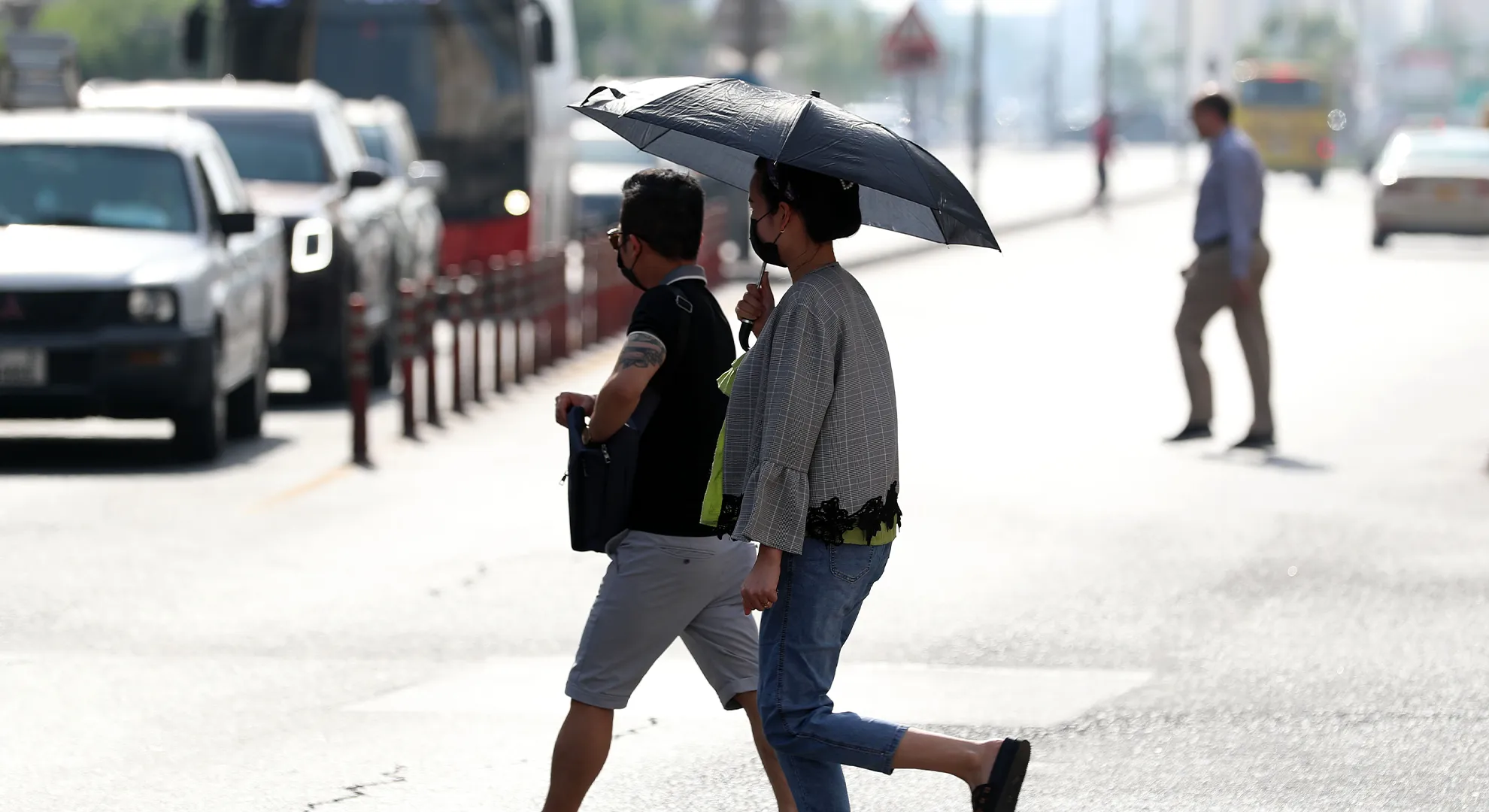
Weather officials say the season will remain marked by heat and humidity, although eastern districts and mountainous locations may see occasional rainfall during the coming days.
Residents across the UAE are being advised to prepare for a prolonged period of intense summer weather as temperatures continue to rise throughout the season. Meteorologists say the coming months are likely to bring extreme heat, elevated humidity levels, and occasional rainfall in certain parts of the country, particularly in the eastern regions and mountainous areas.
Although many people have already begun adjusting their daily schedules to cope with soaring temperatures, weather experts indicate that the most challenging phase of summer has not yet arrived. The weeks ahead are expected to bring even hotter conditions, with temperatures climbing significantly in several regions.
According to the National Centre of Meteorology (NCM), the UAE has officially entered its summer period, a time typically characterized by strong sunshine, dry conditions in many areas, and increasing humidity, especially along coastal locations. Weather officials noted that these seasonal patterns are already becoming evident across the country and are expected to persist throughout the summer months.
Eisa Al Sereidi, Acting Head of the General Meteorology Section at the NCM, explained that the current weather conditions are consistent with what is normally experienced during this time of year. He said residents should expect hot and humid weather to dominate the forecast in the weeks and months ahead.
He emphasized that the country is now firmly within the summer season and that high temperatures will remain a defining feature of daily weather conditions. While fluctuations are normal, overall temperatures are projected to stay above seasonal averages for extended periods, particularly during the afternoon hours when heat intensity reaches its peak.
Meteorologists also highlighted that humidity will continue to play a major role in shaping weather conditions. In coastal regions, moisture levels in the air are expected to rise, creating uncomfortable conditions during both daytime and nighttime hours. High humidity can make temperatures feel even warmer than the actual reading, leading to increased heat stress for those spending long periods outdoors.
At the same time, weather experts noted that some areas may receive rainfall despite the prevailing heat. The eastern parts of the UAE and mountainous regions have a greater likelihood of experiencing cloud formation and isolated showers. These weather events are generally linked to local atmospheric conditions that develop during the summer and can occasionally bring brief periods of rain and cooler temperatures.
Forecasters explained that while rainfall during the summer season is not widespread, certain regions are more prone to such activity because of their geographical features. Mountainous terrain can encourage cloud development, leading to scattered showers and occasional thunderstorms. These events are typically localized and may vary considerably from one area to another.
One of the main concerns during the summer months remains the possibility of extremely high temperatures. Weather officials warned that, on some days, thermometers could register readings above 50 degrees Celsius in certain parts of the country. However, they stressed that such extreme temperatures are not expected to persist for long periods.
According to Al Sereidi, episodes of temperatures exceeding the 50°C mark are likely to occur only occasionally. While these spikes represent some of the hottest conditions experienced in the region, they are generally short-lived and tend to be associated with specific weather patterns.
The western parts of the UAE are expected to experience the most intense heat during the season. These areas often record some of the country’s highest temperatures due to their geographical location and climatic characteristics. As a result, residents in those regions may face particularly challenging conditions during periods of peak summer heat.
Authorities continue to encourage the public to take precautions during extreme weather. Health experts recommend staying hydrated, avoiding direct sun exposure during the hottest hours of the day, and limiting strenuous outdoor activities whenever possible. Workers who spend extended periods outdoors are also urged to follow safety guidelines designed to reduce the risk of heat-related illnesses.
As summer progresses, the NCM will continue monitoring weather patterns and issuing updates to keep residents informed about significant changes in conditions. Forecasts suggest that the combination of intense heat, high humidity, and occasional localized rainfall will remain a key feature of the UAE’s weather throughout the season.
For now, residents are being reminded that the hottest part of the summer is still approaching. While current temperatures are already demanding, meteorologists expect conditions to become even more intense in the coming weeks before gradually easing later in the season. Until then, preparation and caution will remain essential as the UAE navigates another summer marked by extreme temperatures and challenging weather conditions.
Rain expected in eastern and mountainous regions
While much of the UAE continues to endure intense summer temperatures, weather experts say some regions of the country could receive rainfall over the coming days, providing a temporary change from the prevailing hot conditions.
According to meteorological forecasts, cloud activity is expected to increase throughout the week as atmospheric conditions become more favorable for the development of rain-bearing clouds. The forecast coincides with the arrival of a seasonal weather phase known locally as “Rawayeh,” a period often associated with enhanced convective activity, cloud formation, and occasional showers in specific parts of the country.
Meteorologists explain that this seasonal transition plays an important role in shaping weather patterns across the UAE during the summer months. Although temperatures remain high across most regions, changes in air circulation and moisture levels can encourage the formation of towering clouds capable of producing rainfall. These developments are most commonly observed in areas with varied terrain, particularly mountainous and eastern regions.
Weather specialists indicate that rainfall opportunities are expected to increase from the beginning of the week and may continue through Friday. During this period, moisture and daytime heating are likely to interact, creating favorable conditions for cloud growth during the afternoon and evening hours. As a result, some communities could experience scattered showers accompanied by cloud cover and occasional gusty winds.
Forecasters also noted that the increased cloud activity may contribute to a slight reduction in temperatures in certain areas. While the drop is not expected to be dramatic, the presence of clouds can help limit direct solar heating during parts of the day, making conditions somewhat less severe compared with clear-sky periods.
Experts emphasize that rainfall is unlikely to be evenly distributed across the country. Instead, precipitation is expected to remain concentrated mainly in the eastern sector of the UAE, where geographical features create conditions more conducive to cloud development. Mountainous regions, in particular, are expected to see the greatest chance of rain during the forecast period.
Weather analyst Al Asray explained that several consecutive days could witness rainfall activity. According to the forecast, showers are anticipated on Tuesday and Wednesday, while additional rainfall remains possible on Thursday. The potential for rain may continue beyond those days if atmospheric conditions remain favorable.
Meteorologists say such weather patterns are typical during this time of year. The combination of intense summer heating and available moisture often leads to the development of convective clouds, especially over elevated terrain. These clouds can produce localized rainfall that varies significantly in intensity and coverage from one area to another.
Residents living near mountainous districts may therefore encounter changing weather conditions throughout the week. Bright sunshine during the morning hours could give way to cloud formation later in the day, increasing the possibility of brief but sometimes intense showers. In certain locations, rainfall may be accompanied by thunder and localized wind activity, although severe weather is not currently expected.
The outlook differs considerably for the UAE’s major metropolitan areas. Cities such as Abu Dhabi, Dubai, and Sharjah are expected to remain largely dry despite the increased cloud activity elsewhere in the country. Weather experts suggest that while clouds associated with nearby rainfall systems may drift over urban areas, the chances of significant precipitation within these cities remain relatively low.
Instead of widespread rainfall, residents in these urban centres are more likely to notice periods of increased cloud cover. Skies may appear partly cloudy or overcast at times, particularly during the afternoon and evening. These clouds could contribute to a temporary reduction in sunlight and slightly more comfortable conditions compared with completely clear days.
Meteorologists caution, however, that cloud cover alone should not be interpreted as a sign of cooler weather. Temperatures in major cities are still expected to remain high, and humidity levels could continue to create uncomfortable conditions, especially near coastal areas. As a result, residents are advised to remain cautious when spending extended periods outdoors.
The contrast between weather conditions in eastern regions and those in the country’s larger cities highlights the diversity of the UAE’s climate. While one part of the country may experience showers and increased cloud formation, another may remain dry and hot under largely stable atmospheric conditions.
Experts note that mountainous landscapes play a critical role in triggering summer rainfall. As warm air rises along elevated terrain, it cools and condenses, forming clouds that can eventually produce rain. This process occurs more readily in eastern areas, making them the most likely locations to benefit from precipitation during the summer season.
For farmers, outdoor workers, and residents in these regions, the expected rainfall may provide temporary relief from persistent heat. Although the showers are unlikely to have a major impact on overall summer temperatures, they can help refresh local environments and improve air quality for short periods.
Weather authorities continue to monitor developments closely and will provide updated forecasts as conditions evolve. Residents are encouraged to stay informed through official weather bulletins, particularly if they plan outdoor activities in areas where rainfall and thunderstorms are possible.
Looking ahead, forecasters believe that the combination of intense summer heat and intermittent cloud activity will remain a defining feature of the UAE’s weather pattern over the coming weeks. While much of the country will continue to experience high temperatures, eastern and mountainous regions may periodically see rainfall events that offer a brief break from the harsh summer climate.
For most residents in Abu Dhabi, Dubai, Sharjah, and other major urban centres, the primary weather story will remain the ongoing heat. However, the presence of clouds and the possibility of nearby rainfall systems could bring occasional variations to otherwise typical summer conditions. As the season progresses, meteorologists will continue tracking cloud formation and rainfall potential associated with the Rawayeh period, providing guidance on any significant weather changes across the UAE.


Convective clouds drive summer showers
Meteorologists in the UAE have shed light on the factors responsible for summer rainfall across the country, explaining that most precipitation during the hottest months is generated by local atmospheric conditions rather than large regional weather systems.
According to weather experts, the rainfall occasionally experienced during the summer season is primarily linked to the development of convective clouds. These clouds form when intense surface heating causes warm, moisture-laden air to rise into the atmosphere. As the air ascends, it cools and condenses, eventually producing clouds capable of generating showers and, in some cases, thunderstorms.
Officials from the National Centre of Meteorology (NCM) noted that this process becomes particularly active during July and August, when temperatures across the UAE reach some of their highest levels of the year. The combination of extreme heat, sufficient atmospheric moisture, and favorable geographical conditions creates an environment that supports localized cloud formation.
Weather specialist Al Asray explained that these summer clouds typically develop within the UAE itself rather than arriving from distant weather systems. Unlike winter rainfall, which can be associated with larger-scale atmospheric disturbances moving across the region, summer showers are usually the result of local weather dynamics.
During the peak summer months, the country’s eastern regions and mountainous areas become the most likely locations for rainfall activity. These areas possess unique geographical features that encourage the upward movement of warm air, a crucial ingredient in cloud development. As temperatures rise throughout the day, heated air near the surface begins to ascend, particularly over elevated terrain where atmospheric conditions are more conducive to vertical cloud growth.
Meteorologists point out that mountain ranges play an essential role in this process. As moist air is forced upward by the landscape, it cools more rapidly, increasing the likelihood of condensation and cloud formation. This natural lifting mechanism helps explain why eastern and mountainous regions frequently experience showers while many other parts of the country remain dry.
Experts say that rainfall generated through convective processes is often highly localized. One community may experience a brief but intense downpour, while nearby areas receive little or no rain at all. The unpredictable nature of these storms is one of the defining characteristics of summer weather in the UAE.
The development of convective clouds is strongly influenced by three main factors: heat, moisture, and topography. During the summer months, temperatures frequently soar above 40°C, creating powerful heating at the Earth’s surface. This heat energizes the atmosphere and encourages air to rise. At the same time, moisture transported into the region provides the water vapor necessary for cloud formation. When these elements interact with mountainous terrain, the likelihood of rainfall increases significantly.
According to weather authorities, atmospheric moisture is particularly important in sustaining cloud growth. Without sufficient moisture, rising air would be unable to produce substantial cloud development. As humid air accumulates over parts of the country, it provides the fuel needed for convective storms to form during the afternoon and evening hours.
Meteorologists note that rainfall events resulting from convective clouds are generally short-lived but can occasionally be intense. These storms may produce brief periods of heavy rain, gusty winds, and lightning before dissipating. Because they are driven by localized atmospheric conditions, their exact timing and location can be difficult to predict far in advance.
Al Asray emphasized that the eastern sector of the UAE remains the primary focus for such activity. Mountainous districts frequently experience the strongest cloud development due to their elevation and terrain features. However, under favorable conditions, cloud systems can expand beyond these areas and influence some inland regions as well.
Although rainfall is often associated with cooler weather in many parts of the world, experts caution that summer showers in the UAE do not necessarily signal a significant drop in temperatures. In many cases, humidity levels remain elevated even after rainfall, and temperatures can quickly rebound once skies clear. Nevertheless, cloud cover associated with these storms can provide temporary relief from direct sunlight and extreme heat.
Another topic frequently discussed during the summer months is the potential influence of the Indian monsoon on UAE weather. While some residents assume that monsoon activity directly causes rainfall in the Emirates, meteorologists say the relationship is more complex.
According to Al Asray, the Indian monsoon does have some indirect influence on regional weather patterns, but it is not the primary factor responsible for summer rainfall within the UAE. Instead, locally available moisture and atmospheric instability play a much larger role in triggering cloud formation.
Weather experts explain that moisture transported from nearby water bodies, particularly the Arabian Sea, contributes significantly to the atmospheric conditions required for convective cloud development. This moisture moves into the region through prevailing wind patterns and helps create an environment favorable for localized storms.
The Arabian Sea acts as an important source of water vapor during the summer months. As warm, moisture-rich air flows toward the UAE, it increases humidity levels and supplies the atmosphere with the ingredients needed for cloud formation. When combined with intense daytime heating and mountainous terrain, this moisture can support the growth of rain-bearing clouds.
Meteorologists stress that no single factor is responsible for summer rainfall. Rather, it is the interaction of several atmospheric and geographical elements that produces these weather events. High temperatures provide energy, moisture supplies water vapor, and the landscape helps lift air into the atmosphere. Together, these ingredients create the conditions necessary for localized showers and thunderstorms.
As the summer season progresses, weather authorities will continue monitoring cloud development and rainfall potential across the country. Forecasting teams use advanced weather models, satellite imagery, and observational data to track atmospheric changes and provide timely updates to residents.
While most of the UAE will continue to experience predominantly hot and dry conditions, eastern and mountainous regions are expected to remain the areas most likely to see rainfall activity. These localized weather events are a natural part of the country’s summer climate and demonstrate how even one of the world’s hottest regions can occasionally experience refreshing bursts of rain.
Experts say understanding the science behind these storms helps explain why rainfall can occur even during periods of extreme heat. Far from being unusual, summer showers are the result of a complex interaction between temperature, humidity, terrain, and atmospheric circulation—factors that continue to shape the UAE’s weather year after year.