Following the US-Iran agreement, Egypt, Pakistan, Saudi Arabia, and Turkey voiced their support for maintaining peace and security across the Gulf region, emphasizing the importance of regional stability and cooperation.
Egypt, Pakistan, Saudi Arabia and Turkey Express Support for Gulf Stability Following US-Iran Agreement.
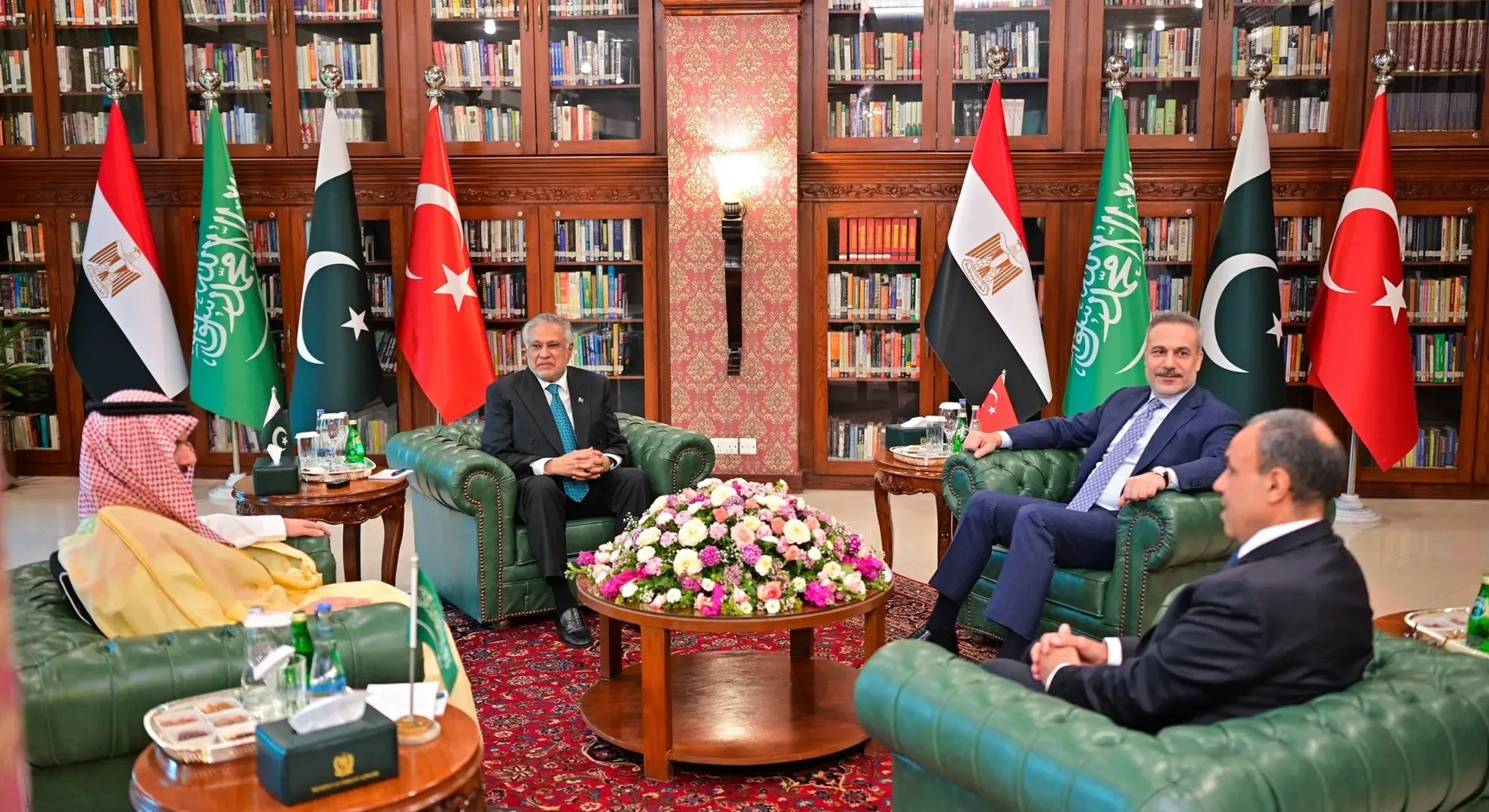
In a combined declaration, the foreign ministers praised the agreement between Washington and Tehran as a positive move toward reducing regional tensions and urged continued negotiations to secure a durable and transparent resolution.
Editor’s Note: Follow INSIDER 18’s live coverage for real-time updates on developments across the region following the US-Iran peace accord.
Egypt, Saudi Arabia, Turkey, and Pakistan stressed that any understanding reached between Washington and Tehran must support the broader interests of the Middle East. The four countries underscored the need for the agreement to reinforce regional security, safeguard national interests, and contribute to long-term stability throughout the Gulf and neighboring states, while helping prevent future tensions and encouraging greater cooperation among regional powers.
Following a consultative gathering in Cairo, the foreign ministers of Egypt, Pakistan, Saudi Arabia, and Turkey issued a joint declaration expressing their support for recent diplomatic progress between the United States and Iran. The meeting brought together Egyptian Foreign Minister Badr Abdelatty, Pakistani Foreign Minister Mohammad Ishaq Dar, Saudi Foreign Minister Prince Faisal bin Farhan Al Saud, and Turkish Foreign Minister Hakan Fidan to discuss regional developments and matters affecting security and stability across the Middle East.
In their collective statement, the ministers welcomed the signing of the Islamabad Memorandum of Understanding (MoU), which was concluded between Washington and Tehran on June 18. They described the agreement as a constructive diplomatic step that could help reduce tensions and open new avenues for dialogue between the two countries after a prolonged period of strained relations.
The four ministers emphasized the importance of continued engagement and peaceful negotiations in addressing regional challenges. They noted that diplomatic solutions remain the most effective means of resolving disputes and preventing further instability in an already sensitive geopolitical environment. According to the statement, the agreement represents an opportunity to strengthen trust, encourage cooperation, and support efforts aimed at fostering lasting peace.
The ministers also highlighted the significance of ensuring that any future implementation of the understanding takes into consideration the broader interests of countries throughout the region. They stressed that regional security, sovereignty, and economic stability should remain central priorities as discussions move forward.
Furthermore, the statement underscored the need for sustained international cooperation to maintain momentum generated by the accord. The four countries reaffirmed their commitment to supporting initiatives that promote dialogue, reduce the risk of conflict, and contribute to a more secure and stable Middle East.
By endorsing the memorandum, Egypt, Pakistan, Saudi Arabia, and Turkey signaled their belief that diplomatic engagement between the United States and Iran could play an important role in easing regional tensions and creating conditions conducive to long-term peace and cooperation.
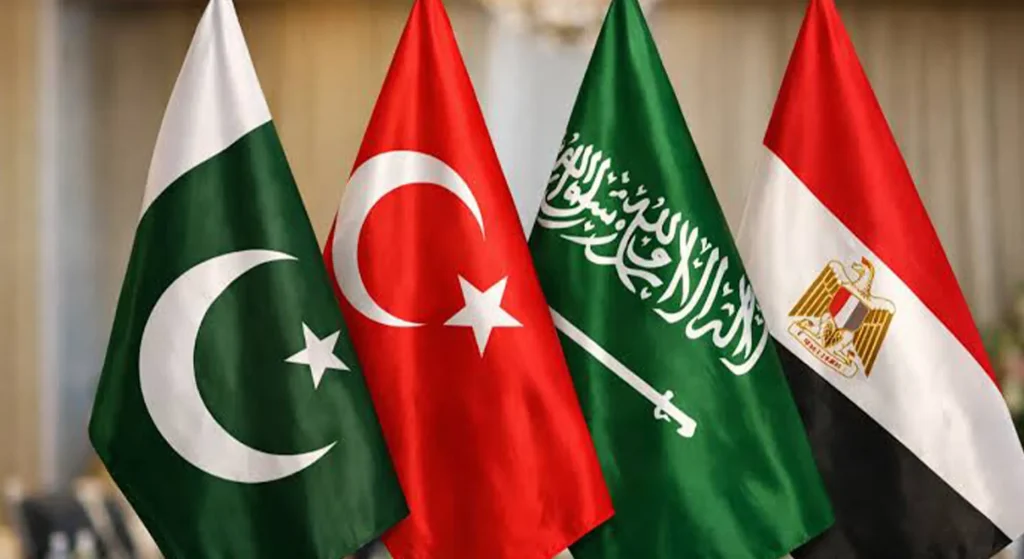
The foreign ministers of Egypt, Pakistan, Saudi Arabia, and Turkey welcomed the recent diplomatic breakthrough between the United States and Iran, describing the development as an important opportunity to reduce tensions that have affected the broader Middle East for years. In a joint position reflecting the outcome of their consultations, the ministers said the agreement represents a positive move toward restoring stability and lowering the risk of confrontation in a region that remains strategically significant to the global economy.
According to the ministers, the understanding reached between Washington and Tehran could help prevent further escalation at a time when regional security concerns have been closely linked to international economic interests. They noted that prolonged instability in the Middle East has consequences extending well beyond the region, influencing global energy supplies, commercial shipping activities, international trade networks, and supply chains that connect markets around the world.
The ministers emphasized that periods of heightened tension have repeatedly created uncertainty for governments, businesses, and investors. They pointed out that disruptions affecting key maritime routes or energy infrastructure can have far-reaching effects on commodity prices, transportation systems, and economic growth across multiple continents. For that reason, they viewed the recent diplomatic progress as an encouraging signal that dialogue can replace confrontation and help reduce risks to both regional and international stability.
While welcoming the memorandum of understanding reached between the United States and Iran, the ministers stressed that the agreement should serve as a foundation for additional negotiations rather than an endpoint. They called for sustained diplomatic engagement aimed at resolving remaining differences and transforming the current understanding into a comprehensive settlement capable of delivering long-term benefits.
The four countries urged negotiators to move forward without unnecessary delays. They argued that maintaining momentum is essential if the parties hope to build confidence and prevent setbacks that could undermine progress. In their view, the next phase of discussions should focus on practical measures that address unresolved concerns while creating mechanisms that ensure transparency, accountability, and mutual trust.
The ministers stated that any future arrangement should be durable enough to withstand political changes and capable of being independently verified by relevant parties. They emphasized the importance of achieving an outcome that is acceptable to all sides involved and that contributes to sustainable peace rather than a temporary reduction in tensions.
A central theme of their discussions was the need to consider the interests and security concerns of countries throughout the Middle East. The ministers noted that regional stability cannot be achieved solely through agreements between major powers; it also requires the confidence and participation of neighboring states whose security environments may be directly affected by diplomatic developments.
Particular attention was given to the Gulf region, where political and security dynamics play a crucial role in maintaining economic prosperity and international energy supplies. The ministers highlighted the importance of ensuring that Gulf nations feel secure and reassured as diplomatic processes move forward. They argued that regional arrangements should promote cooperation rather than competition and should strengthen collective efforts to address shared challenges.
The Levant was also identified as an area where stability remains essential for broader regional peace. The ministers observed that unresolved conflicts and political tensions in various parts of the Middle East continue to create humanitarian and security concerns. They stressed that successful diplomacy should contribute to reducing these pressures and encourage greater collaboration among countries facing common threats.
Throughout their discussions, the ministers repeatedly emphasized the value of collective security. They argued that regional peace is most likely to be preserved when countries work together to address concerns through dialogue, confidence-building measures, and diplomatic engagement. Strengthening communication channels, promoting mutual respect, and expanding cooperation in areas such as economic development and security coordination were identified as important goals.
The officials expressed hope that the recent agreement could become part of a broader effort to create a more stable and predictable regional environment. Such an environment, they suggested, would benefit not only governments but also ordinary citizens who have often borne the consequences of political disputes, economic uncertainty, and security crises.
In addition to discussing relations between the United States and Iran, the ministers devoted considerable attention to developments concerning the Palestinian issue. They reaffirmed their longstanding position that a just and comprehensive resolution of the Palestinian question remains a fundamental requirement for achieving lasting peace in the Middle East.
The ministers noted that despite changes in regional politics over the years, the Palestinian issue continues to occupy a central place in diplomatic efforts aimed at promoting stability. They emphasized that progress toward a peaceful settlement remains essential for reducing tensions and fostering greater cooperation among countries in the region.
During their consultations, the ministers reviewed current humanitarian and political developments affecting Palestinians. Particular focus was placed on conditions in Gaza, where humanitarian concerns continue to attract international attention. The discussions also examined circumstances in the West Bank and East Jerusalem, areas that remain central to ongoing diplomatic efforts and political negotiations.
The ministers expressed concern about the challenges facing civilian populations and reiterated the importance of protecting human rights and ensuring access to humanitarian assistance. They emphasized that efforts to improve living conditions and promote stability should accompany broader political initiatives aimed at resolving longstanding disputes.
Reaffirming their support for Palestinian aspirations, the ministers stated that the Palestinian people are entitled to exercise their right to determine their own future. They underscored the importance of pursuing a political process capable of delivering a fair and lasting solution consistent with international law and established diplomatic principles.
The four countries reiterated their support for the creation of an independent Palestinian state existing alongside Israel in peace and security. They referenced internationally recognized parameters that have long served as the basis for diplomatic discussions concerning the conflict. These principles include the establishment of a Palestinian state within the boundaries that existed before the 1967 war, with East Jerusalem serving as its capital.
The ministers also highlighted the relevance of international resolutions that have addressed the Israeli-Palestinian conflict over several decades. They argued that these resolutions continue to provide an important framework for negotiations and should guide future efforts aimed at achieving a comprehensive settlement.
According to the joint position, addressing the Palestinian issue is not only a matter of justice and self-determination but also a strategic necessity for the broader Middle East. The ministers maintained that unresolved aspects of the conflict continue to influence regional politics and contribute to instability. As a result, meaningful progress toward a peaceful resolution would have positive implications extending beyond the immediate parties involved.
The discussions concluded with a shared commitment to supporting diplomatic initiatives that promote peace, stability, and cooperation across the Middle East. The ministers expressed their belief that constructive dialogue remains the most effective path for resolving disputes and reducing the risk of future conflicts.
They also emphasized the importance of multilateral cooperation in addressing regional challenges. Whether dealing with security concerns, economic issues, humanitarian crises, or political disputes, the ministers argued that lasting solutions require engagement from regional and international stakeholders alike.
Ultimately, the joint statement reflected a broader vision of a Middle East characterized by stability, cooperation, and mutual respect among nations. By supporting continued negotiations between the United States and Iran, advocating for regional security arrangements, and reaffirming their commitment to Palestinian rights, the four countries sought to underscore their belief that diplomacy remains the strongest tool for building a more peaceful and prosperous future for the region.