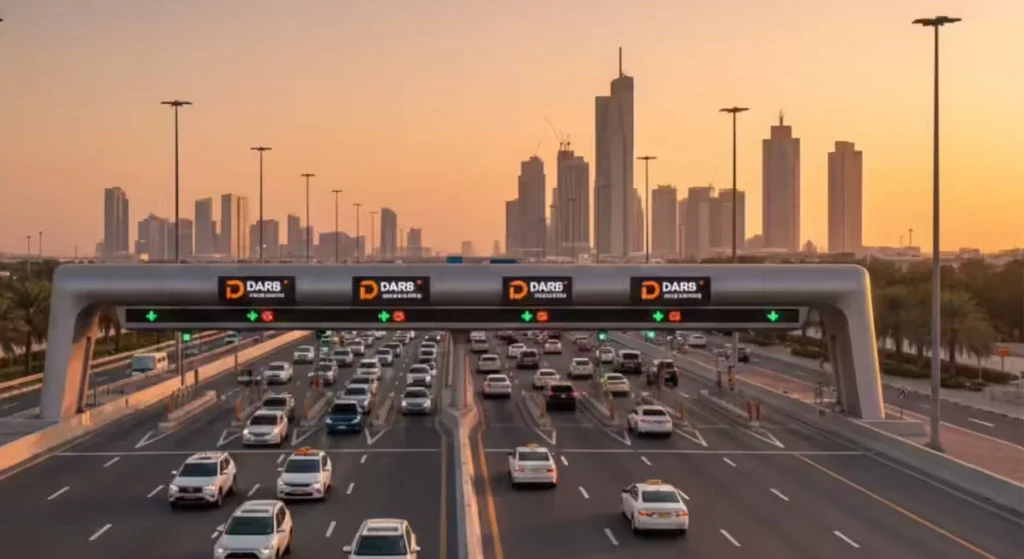
Abu Dhabi has announced free public parking and a temporary suspension of Darb toll fees during the Islamic New Year holiday, while also outlining specific exemptions applicable to the measures.
Abu Dhabi to Offer Free Parking and Suspend Darb Tolls for Islamic New Year, Details Exemptions.
Abu Dhabi Announces Free Parking and Toll Suspension for Hijri New Year, With Select Gate Exemptions
Abu Dhabi will observe the Islamic (Hijri) New Year with a series of public convenience measures, including free parking across the emirate and a temporary suspension of selected toll gate fees. The arrangements will apply on Monday, June 15, 2026, which coincides with the Hijri New Year holiday in the UAE.
The public holiday has been officially declared for both federal government entities and private sector employees, allowing residents across the country to mark the occasion with a day off work. Alongside the holiday announcement, authorities in Abu Dhabi have outlined specific transport and parking arrangements designed to ease movement across the city during the day.
Free passage through selected toll gates
As part of the holiday arrangements, the Darb toll system in Abu Dhabi will be adjusted for the day. On June 15, certain toll gates across the emirate will be open to motorists without charge, providing free passage throughout the holiday period.
However, the exemption will not apply uniformly across all toll points. Authorities have confirmed that two major toll gates—Al Qurm and Ghantoot—will continue operating under normal conditions. These gates will remain active around the clock and will continue to charge motorists standard fees even during the public holiday.
The decision effectively creates a partial toll waiver system, where some entry points into the city are free while others remain fully operational. This approach is intended to balance traffic management requirements with the need to accommodate increased movement during the public holiday.
Motorists using the exempted toll gates will be able to pass without incurring charges during the specified holiday period. These include several key routes that are commonly used for intra-city travel and access to popular destinations within Abu Dhabi.
Gates included in the toll exemption
The toll-free arrangement will apply specifically to a number of designated entry points. These include the Sas Al Nakhl gate, Al Maqta gate, Rabdan gate, and the Al Saadiyat gate. Drivers passing through these locations on June 15 will not be charged during the suspension period.
These gates represent important access routes into various parts of Abu Dhabi, including residential districts, business hubs, and leisure destinations. By temporarily lifting fees at these locations, authorities aim to facilitate smoother traffic flow during a day when many residents are expected to be traveling for social gatherings, visits, or leisure activities.
The exemption is scheduled to remain in effect for the entire day of Monday, June 15. Normal toll collection procedures will resume on the following day, Tuesday, June 16, 2026, when standard charges will once again apply across all operational gates.
Return to standard toll operations
Following the conclusion of the holiday, the Darb toll system will revert to its regular operational schedule. This means that all gates, including those temporarily exempted during the holiday, will resume normal fee collection from the start of business on June 16.
Motorists are advised to plan their travel accordingly, particularly those who regularly commute through toll points that are part of the exemption arrangement. The resumption of charges will be immediate once the holiday period ends.
Free public parking across Abu Dhabi
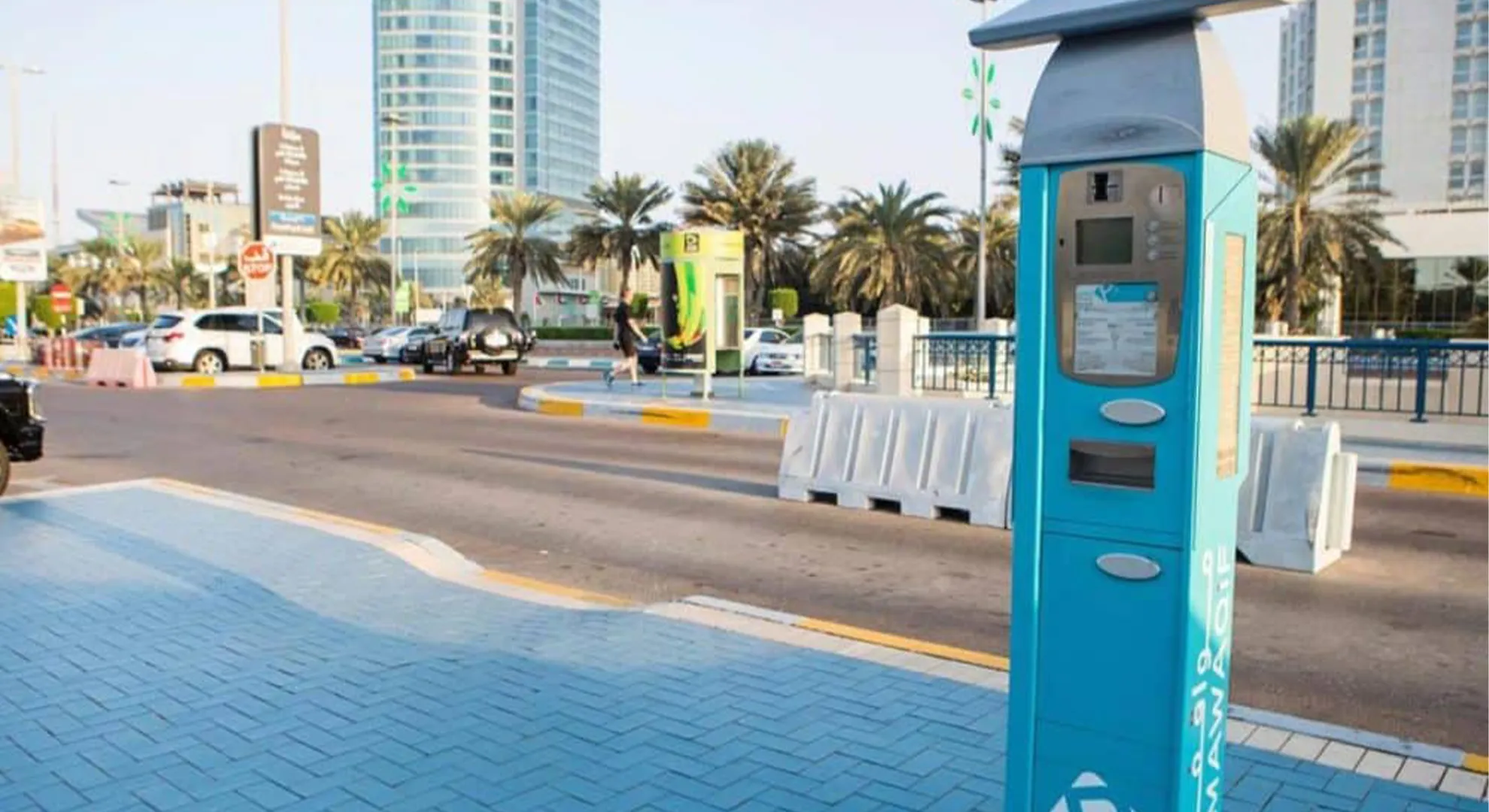
In addition to the toll adjustments, Abu Dhabi’s public parking system, known as Mawaqif, will also be made available free of charge on the same day. On Monday, June 15, residents and visitors will not be required to pay parking fees in designated public parking zones across the emirate.
This temporary suspension of parking fees is intended to further support ease of movement during the public holiday, allowing residents to travel, visit family and friends, or attend gatherings without concern for parking charges.
The free parking policy will apply only for the duration of the Hijri New Year holiday. Paid parking enforcement under the Mawaqif system will resume on Tuesday, June 16, 2026, in line with the return of normal working schedules and traffic operations.
Coordinated public holiday measures
The combination of toll exemptions and free parking forms part of a broader set of public holiday measures designed to improve mobility and convenience for residents during significant national and religious observances.
Such measures are commonly introduced during official holidays in the UAE to reduce traffic congestion, encourage family visits, and provide residents with added flexibility in how they move around the city.
By temporarily easing transportation costs, authorities aim to create a more relaxed urban environment during public holidays, particularly those that hold cultural and religious importance such as the Hijri New Year.
Significance of the Hijri New Year
The Hijri New Year marks the beginning of the Islamic lunar calendar and is observed across the Muslim world. It commemorates the migration (Hijra) of the Prophet Muhammad (PBUH) from Makkah to Madinah, a foundational event in Islamic history.
In the UAE, the occasion is recognized as an official public holiday, giving residents time to reflect, spend time with family, and participate in cultural and religious activities. While it is generally a quiet and reflective holiday compared to other festive occasions, it remains an important date in the national calendar.
Expected travel patterns during the holiday
With the announcement of free parking and toll exemptions, increased traffic movement is expected across Abu Dhabi on June 15. Residents are likely to take advantage of the holiday to visit relatives, attend gatherings, or spend time at leisure destinations such as parks, beaches, and shopping areas.
Authorities typically anticipate higher-than-usual usage of major roads and public spaces during such holidays, which is why temporary adjustments to toll and parking systems are introduced.
The availability of free access through selected toll gates is expected to help distribute traffic more evenly across the road network, while free parking will reduce pressure on high-demand urban areas.
Return to normal operations
Once the holiday concludes, all transport-related charges will return to normal. This includes both Darb toll fees and Mawaqif parking rates. Motorists are encouraged to remain aware of the timing of these changes to avoid unexpected charges when the system reverts to standard operation on June 16.
Conclusion
The announcement of free parking and partial toll suspension in Abu Dhabi for the Hijri New Year reflects the emirate’s ongoing efforts to facilitate smooth mobility during public holidays. By easing transportation costs and temporarily adjusting road pricing systems, authorities aim to enhance convenience for residents while maintaining efficient traffic management.
As the holiday approaches, residents can expect a brief period of reduced travel costs followed by the return of standard systems the following day, ensuring both flexibility and continuity in urban transport operations.
UAE Confirms Hijri New Year Holiday, Parking Rules, and Return-to-Work Schedule
Authorities in the UAE have clarified key details regarding public services, holiday arrangements, and working schedules for the upcoming Hijri New Year 1448, along with updates on parking operations across Abu Dhabi during the holiday period.
While several public convenience measures will be introduced for the occasion, officials have confirmed that not all parking systems will be affected by the holiday exemption. In particular, multi-storey public parking facilities will continue operating as normal on a paid basis throughout the day and night, with no suspension of fees. These car parks will remain active 24 hours a day, and standard charges will apply without any changes to pricing or enforcement rules during the holiday.
This means that although many surface-level or designated public parking areas may offer free access during the Hijri New Year, structured multi-level parking buildings will continue functioning under regular paid conditions. Motorists using these facilities will still be required to pay applicable fees in accordance with existing regulations.
Official declaration of Hijri New Year holiday
The Hijri New Year 1448 has been officially announced as a public holiday across the United Arab Emirates. The announcement applies to both federal government entities and the private sector, ensuring that employees across most workplaces in the country will be granted a day off in observance of the occasion.
The confirmation has been issued in line with the UAE’s official holiday calendar, as communicated by the Federal Authority for Government Human Resources as well as the Ministry of Human Resources and Emiratisation. These bodies are responsible for regulating public sector schedules and overseeing labour-related policies in the private sector.
The holiday marks the beginning of the Islamic lunar calendar year and is observed widely across the Muslim world. It is a significant religious occasion that commemorates the Hijra, the historic migration of Prophet Muhammad (PBUH) from Makkah to Madinah. While the observance is generally reflective in nature rather than celebratory, it remains an important date in the Islamic calendar.
Impact on the working week
Because the Hijri New Year falls on a Monday this year, employees in the UAE who follow a standard Saturday-to-Sunday weekend structure will benefit from an extended break. In practical terms, this timing creates a three-day weekend for many workers across both public and private sectors.
This extended break is expected to give residents additional time for family gatherings, travel within the country, or rest before the resumption of regular work duties. Long weekends in the UAE often see increased movement across cities, as residents take advantage of the opportunity to plan short holidays or leisure activities.
For many employees, the Monday public holiday effectively bridges the gap between the weekend and the start of the working week, creating a continuous period of rest from Saturday through Monday.
Return to normal operations
Following the end of the holiday period, normal working schedules will resume across the country on Tuesday, June 16. Government offices, private companies, educational institutions, and other workplaces are expected to reopen and continue operations as per their regular timings.
Employees will return to standard weekday routines, with offices resuming full operational capacity after the brief pause for the public holiday. Public services, administrative functions, and business activities are also expected to restart without disruption on the same day.
Authorities typically ensure that any adjustments made for public holidays, including transport and parking changes, are reversed promptly so that daily operations can continue smoothly once the holiday concludes.
Broader context of holiday arrangements
Public holidays in the UAE are often accompanied by coordinated adjustments across multiple sectors, including transport, parking, and government services. These measures are designed to accommodate increased leisure activity and travel while ensuring that essential services remain available where needed.
However, certain systems—particularly structured facilities such as multi-storey parking buildings—are excluded from temporary exemptions due to their operational and commercial nature. These facilities typically involve managed infrastructure, security systems, and staffing arrangements that continue to function regardless of public holidays.
As a result, while some parking areas may be offered free of charge during specific occasions, multi-level parking structures generally remain outside such exemptions and continue operating under standard paid models.
Significance of the Hijri New Year in the UAE
The Hijri New Year holds cultural and religious importance across the Islamic world and is observed as a time of reflection and spiritual awareness. In the UAE, it is officially recognized as a public holiday, allowing residents to pause their work routines and acknowledge the beginning of a new Islamic calendar year.
Although the day is not typically associated with large public celebrations, it is widely respected as a meaningful occasion. Many residents use the holiday to spend time with family, engage in personal reflection, or simply enjoy a break from their regular schedules.
The UAE’s recognition of the Hijri New Year as a public holiday reflects its commitment to observing important religious dates while maintaining a structured national holiday calendar that balances work and leisure.
Summary of key arrangements
In summary, while Abu Dhabi and the wider UAE will observe the Hijri New Year 1448 as an official public holiday, not all services will be subject to full exemptions. Surface parking and selected public facilities may operate free of charge depending on local announcements, but multi-storey parking facilities will remain paid and operational at all times.
Employees across both public and private sectors will enjoy a day off, and in many cases, a three-day weekend due to the timing of the holiday. Normal working hours and public service schedules will resume on Tuesday, June 16, restoring routine operations across the country.
These arrangements ensure a balance between public convenience during holidays and the continued functioning of essential urban infrastructure.