
Kuwait has resumed regular air traffic after temporarily closing its airspace due to an Iranian attack, which led to a short disruption. Around 11 diverted flights were later allowed to continue their routes within two hours.
Kuwait restores normal airspace operations after a brief shutdown triggered by an Iranian strike, with 11 diverted flights resuming their journeys after about two hours.
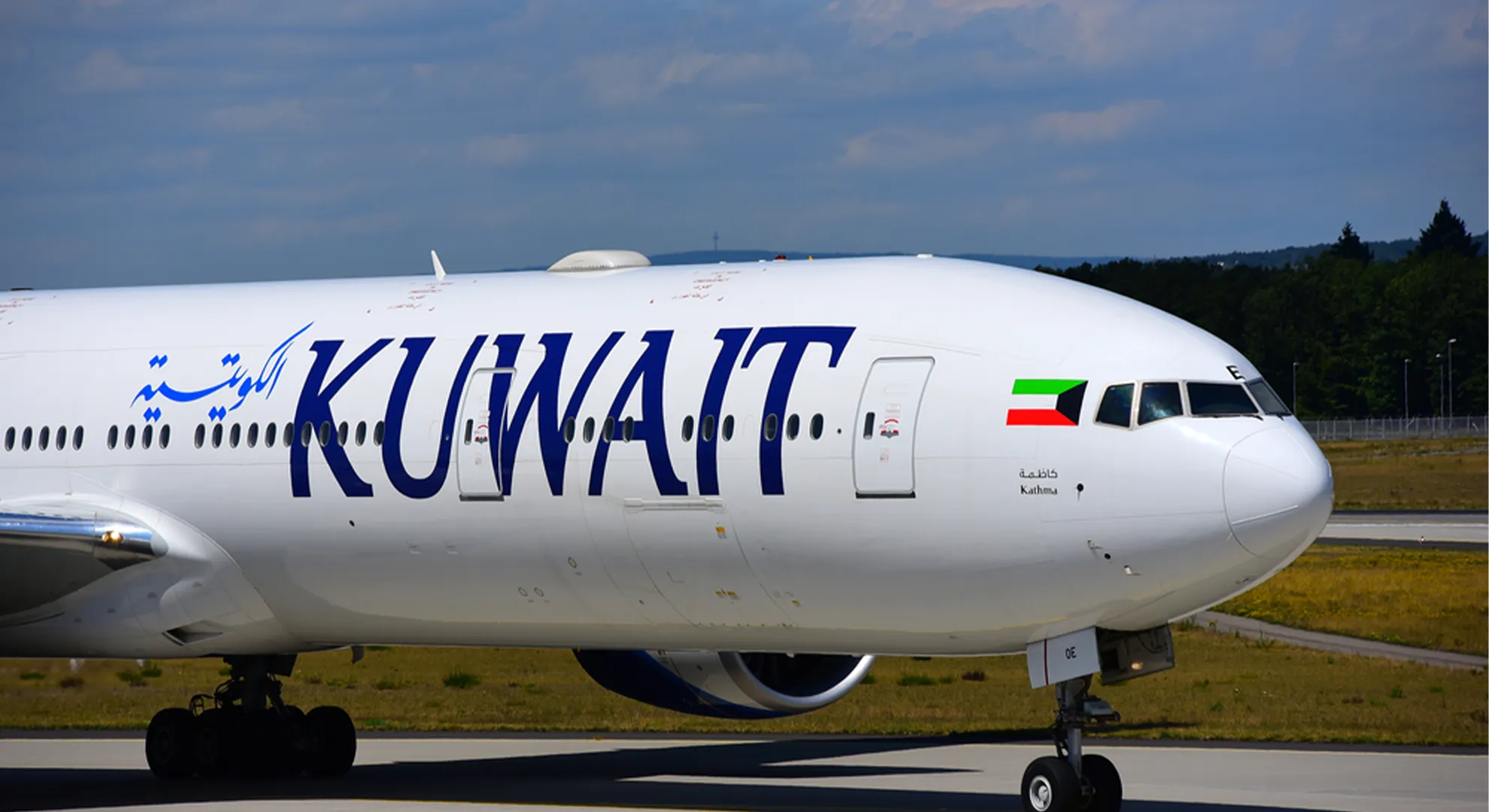
A recent escalation in regional tensions led to a temporary disruption in air operations over Kuwait, following the launch of seven ballistic missiles toward both Bahrain and Kuwait. In response to the security situation, Kuwaiti aviation authorities took immediate precautionary steps that resulted in a short-term suspension of flight activity within the country’s airspace.
According to official information shared by the Directorate General of Civil Aviation in Kuwait, the airspace closure was implemented strictly as a safety precaution after the incident involving missiles and drones. The restriction on air traffic remained in effect for approximately two hours, beginning at 4:15 a.m. and ending at 6:15 a.m. on Saturday. Authorities emphasized that this decision was made to ensure maximum protection for passengers, airline crews, and critical civil aviation infrastructure during a period of heightened risk.
During this temporary suspension, normal flight operations at Kuwait International Airport were paused, and incoming and outgoing flights were either held back or redirected to alternate destinations. The disruption particularly affected commercial air traffic, with several aircraft unable to land at their scheduled time in Kuwait. Aviation officials coordinated closely with regional airports to manage the unexpected diversions and maintain operational safety across the affected air routes.
As part of the emergency response procedures, Kuwait’s aviation authorities activated established contingency plans designed for scenarios involving potential aerial threats. These protocols are intended to safeguard human lives, protect airport facilities, and maintain orderly control of airspace during situations where security conditions become uncertain. The activation of these measures demonstrated the structured approach taken by the country’s civil aviation system in handling unforeseen security-related events.
In total, eleven commercial flights were impacted by the temporary closure. These flights were operated by Kuwait Airways and Jazeera Airways, two of the major carriers serving the country’s international airport. Due to the sudden restriction on airspace access, these flights were redirected to nearby international airports in Saudi Arabia, specifically Dammam and Riyadh, where they remained until conditions improved and clearance was given for safe return.
Passengers aboard the diverted flights experienced brief delays as airline operators and airport authorities coordinated logistics, refueling, and scheduling adjustments. Despite the disruption, airline staff worked to ensure that passengers were kept informed and that necessary arrangements were made to minimize inconvenience during the waiting period. The cooperation between Gulf aviation authorities played an important role in managing the situation efficiently.
Once the security assessment confirmed that conditions had stabilized and it was safe to resume normal operations, Kuwait reopened its airspace. Following the lifting of restrictions, the diverted aircraft were cleared to depart from their temporary locations and continue their journeys back to Kuwait International Airport. All eleven flights successfully returned after the resumption of air traffic services.
The reopening of the airspace marked the end of the short-lived disruption and the restoration of regular flight operations across the country. Airport activities gradually returned to normal, with arrivals and departures resuming according to scheduled timings. Aviation authorities continued to monitor the situation closely even after operations resumed, ensuring that no further immediate risks were present.
Officials highlighted that the quick response and temporary closure were necessary measures given the nature of the threat, which involved both missile and drone activity in the region. The primary objective of the precautionary shutdown was to eliminate any risk to civilian aircraft during a period of uncertainty. By implementing a controlled and time-bound suspension, authorities aimed to maintain aviation safety standards while responding to evolving security developments.
The incident underscored the sensitivity of air travel operations in regions experiencing geopolitical tension. Civil aviation systems in such environments often rely on rapid decision-making frameworks that allow for immediate action when potential threats arise. In this case, Kuwait’s aviation authorities followed established international safety protocols, prioritizing precaution over continuity until it was confirmed that normal operations could safely resume.
Throughout the event, coordination between military, civil aviation, and regional air traffic control bodies played a significant role in managing airspace security. Communication channels remained active to ensure that all relevant parties were informed about the temporary closure and subsequent reopening. This level of coordination helped prevent confusion and ensured that diverted flights were handled smoothly at alternate airports.
The return of the affected aircraft from Dammam and Riyadh highlighted the flexibility of regional aviation networks in responding to sudden disruptions. Airports in neighboring countries provided support by accommodating diverted flights, offering ground handling services, and assisting in turnaround operations once clearance was received.
Although the disruption was brief, it had a noticeable impact on flight schedules and passenger itineraries. However, the situation was resolved without any reported harm to passengers, crew members, or airport infrastructure. Authorities reiterated that the precautionary closure had achieved its intended purpose of maintaining safety during a potentially unstable period.
In summary, Kuwait’s airspace was temporarily closed for two hours in response to a regional missile and drone-related security incident, leading to the diversion of eleven commercial flights. The shutdown, implemented between 4:15 a.m. and 6:15 a.m., was carried out strictly as a preventive safety measure. After conditions were assessed and deemed secure, air traffic operations resumed, allowing all affected flights operated by Kuwait Airways and Jazeera Airways to return safely from Dammam and Riyadh and continue normal operations at Kuwait International Airport.
Iran attacks on Kuwait, Bahrain
A sharp escalation in regional tensions unfolded as reports indicated that seven ballistic missiles were fired toward both Bahrain and Kuwait during a broader wave of hostilities in the area. According to statements issued by Bahraini authorities, all of the incoming missiles were successfully intercepted before they could reach their intended targets. The interception of these projectiles was presented as a sign that the country’s defensive systems were functioning effectively amid a rapidly evolving security situation.
In the early hours of Saturday morning, Kuwait also experienced heightened alert conditions as its air defence networks became actively engaged in countering what officials described as hostile missile and drone activity in the vicinity. The situation prompted immediate responses from security agencies, with systems tracking and responding to aerial threats detected in national airspace. Authorities in Kuwait informed the public that defensive operations were underway and that loud explosive noises might be audible across certain areas, clarifying that such sounds were likely the result of successful interception activities rather than direct impacts on the ground.
The communication from Kuwaiti officials was aimed at maintaining public awareness and preventing panic during a period of uncertainty. Residents were advised that the sounds they might hear were linked to air defence operations responding to incoming threats. This early warning approach was part of a broader effort to ensure transparency while security forces managed the situation in real time.
At the same time, Bahrain activated its emergency alert systems early on Saturday morning, including the sounding of sirens across various parts of the country. The sirens served as a direct warning to residents, urging them to remain calm while immediately seeking shelter in safe or protected locations. The public guidance emphasized the importance of following civil defence instructions and avoiding unnecessary movement until the situation was declared stable.
The Bahraini government also issued a strong public statement condemning the missile attack, which it attributed to Iranian actions. Officials warned that continued aggression of this nature would not be tolerated and issued a firm message indicating that restraint should not be interpreted as weakness. This statement reflected a hardened stance in response to the escalation and underscored Bahrain’s position that its national security would be defended without compromise.
In addition to condemning the attacks, Bahrain’s leadership reiterated that the safety and protection of its citizens and residents remain an absolute priority. Officials described the safeguarding of human life as a fundamental boundary that cannot be crossed under any circumstances. This framing was intended to reinforce the seriousness with which the country views any threat to its territorial integrity or civilian population.
Beyond the immediate defensive response, Bahrain also called for a halt to ongoing hostilities, urging that attacks be stopped without delay. The appeal included broader regional concerns, with calls for cooperation in addressing destabilizing activities such as the removal of naval mines from affected waters. Authorities further stressed the importance of ensuring safe passage for maritime traffic, particularly highlighting the need to assist sailors who may have become stranded in the Strait of Hormuz, a strategically significant waterway.
These developments occurred against a backdrop of heightened regional instability, where missile and drone activity has increasingly raised concerns among Gulf states. The coordinated nature of air defence responses in both Kuwait and Bahrain highlighted the level of preparedness that regional governments have developed in response to such threats. Defensive systems were reportedly activated swiftly, reflecting established protocols designed to respond to aerial incursions within seconds of detection.
In Kuwait, the activation of air defence systems was described as part of a structured military readiness procedure. Once unidentified aerial objects were detected, monitoring systems tracked their movement while defensive units prepared to engage. Authorities emphasized that all necessary measures were taken to ensure that any incoming threats were neutralized before they could pose danger to populated areas or critical infrastructure.
The government’s decision to inform the public about potential sounds of explosions demonstrated an effort to manage information flow during a tense security situation. By providing real-time updates, officials aimed to reduce confusion and prevent misinformation from spreading among residents who might otherwise misinterpret the situation.
Meanwhile, in Bahrain, the early warning sirens played a crucial role in activating public awareness and encouraging immediate protective action. Civil defence guidelines were reinforced through official messaging, instructing individuals to remain indoors or move to designated safe zones until further notice. The emphasis was placed on calm compliance, with authorities urging residents not to panic but to treat the alerts seriously.
The successful interception of all incoming missiles, as reported by Bahraini authorities, was highlighted as a significant operational outcome. It demonstrated the effectiveness of the country’s air defence capabilities in dealing with high-speed ballistic threats. Although the incident itself marked a serious escalation, officials pointed to the defensive success as evidence of preparedness and coordination within national security systems.
Statements condemning the attack also carried broader diplomatic implications. By directly attributing responsibility and issuing warnings against further escalation, Bahrain signaled its firm stance in regional geopolitics. The language used by officials reflected both concern over the immediate security threat and a desire to deter future incidents through strong public messaging.
At the same time, Bahrain’s call for restraint and cooperation indicated an awareness of the wider risks associated with continued conflict. The mention of maritime safety and stranded sailors in the Strait of Hormuz highlighted the potential humanitarian and economic consequences of prolonged instability in the region. The strait is a critical global shipping route, and any disruption there can have far-reaching effects on international trade and energy transport.
The combined responses from Kuwait and Bahrain illustrated how Gulf states manage sudden security crises involving aerial threats. Rapid detection, immediate defensive action, public communication, and regional diplomatic messaging all formed part of the coordinated response framework. These systems are designed not only to intercept physical threats but also to maintain public confidence during uncertain and potentially dangerous situations.
Despite the alarming nature of the missile launches and drone activity, both countries reported that defensive measures were effective in preventing direct damage. No immediate reports indicated successful strikes on intended targets, as interception systems engaged the threats before impact. This outcome reduced the potential for casualties and infrastructure damage, although it did not eliminate concerns about further escalation.
The incident also underscored the fragile security environment in the region, where rapid developments can trigger immediate military and civil defence responses. Governments remain on alert for any further escalation, with monitoring systems continuously tracking airspace activity and coordinating with regional partners to ensure early warning capabilities remain active.
As the situation stabilized following the interceptions, attention turned toward preventing additional attacks and restoring a sense of normalcy. However, authorities in both Kuwait and Bahrain continued to stress vigilance, indicating that security forces would remain fully operational until the risk level was deemed to have significantly decreased.
Overall, the events of that Saturday morning reflected a high-stakes moment in regional security, characterized by missile launches, active air defence engagement, public safety alerts, and strong political statements. While the immediate threat was neutralized through interception and rapid response, the incident contributed to ongoing concerns about stability and the potential for further escalation in the region.