Residents of Dubai’s Remraam neighbourhood have been promised financial compensation for rental expenses after receiving notices requiring them to temporarily leave their homes during planned property-related works.
Dubai’s Remraam Community Offered Rental Compensation After Short-Term Relocation Notices.
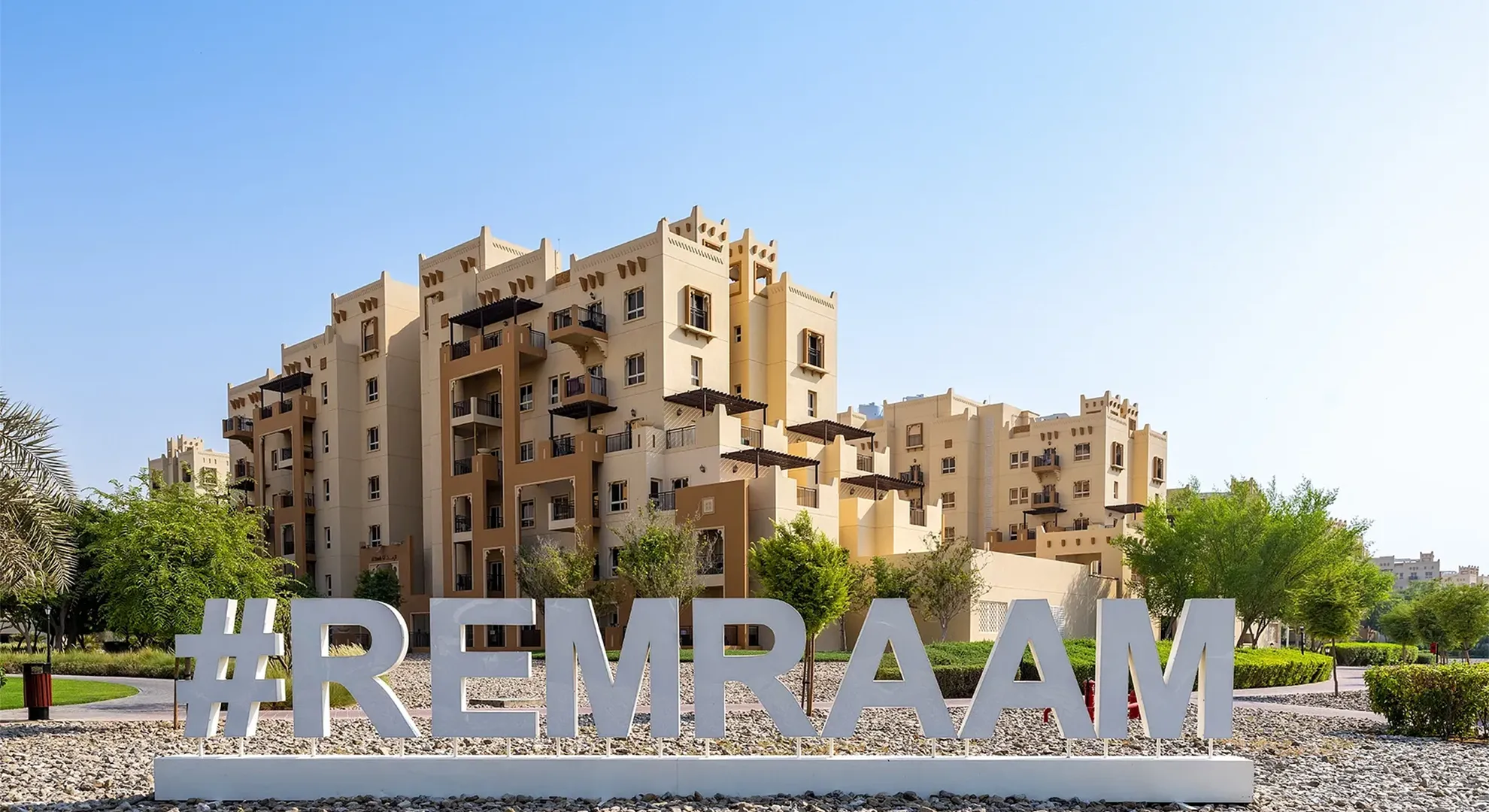
Tenants living in parts of Dubai’s Remraam community have been informed that they will need to temporarily leave their homes for an extended period of time, as a large-scale maintenance and remediation programme is set to begin. The planned works, described as preventative in nature, are expected to last for a significant duration, with estimates ranging from approximately 16 months to as long as 20 months depending on the specific building or phase involved.
According to information shared by residents familiar with the situation, the relocation process will not happen all at once but will instead be carried out in stages. These phased departures are scheduled to begin from July 1, marking the start of a long operational timeline aimed at addressing infrastructure and building-related concerns across selected sections of the community.
Several residents have reported receiving formal notices requesting them to vacate their apartments within the outlined timeframe. While some households are expected to be away for just over a year, others may face a displacement period extending closer to two years. This variation appears to depend on the scope of work required in different clusters or buildings within the development.
The community operator, Dubai Holding Community Management (DHCM), has stated that the initiative is part of a broader effort to ensure long-term safety, reliability, and upkeep standards within the residential area. The organisation described the programme as a precautionary measure, initiated after routine inspections identified the need for substantial corrective and maintenance work in certain parts of the development.
DHCM has emphasized that the remediation plan is not driven by emergency conditions but rather by a proactive approach intended to preserve the structural integrity and overall quality of the community. The company explained that the objective is to maintain a high standard of living for residents by addressing underlying issues before they evolve into more serious concerns in the future.
In its official communication, the management company indicated that it is aware of the inconvenience such a large-scale relocation may cause to residents. As a result, it has introduced support mechanisms designed to assist affected tenants during the transition period. These measures reportedly include structured communication channels, guidance for relocation, and financial support options where applicable.
One of the key components of the assistance package involves compensation arrangements. Residents who are required to vacate their homes are being considered for rental compensation, along with additional relocation allowances intended to help offset the costs associated with moving to temporary accommodation. However, the eligibility and exact amount of compensation may vary depending on individual tenancy agreements and circumstances.
DHCM has also stressed that it is maintaining ongoing communication with residents throughout the process. The company has stated that it aims to provide clear and timely updates so that tenants can make informed decisions about their housing arrangements during the remediation period. This includes advance notice of timelines, procedural steps, and available support services.
In addition to direct communication with residents, the management body has noted that it is coordinating closely with relevant regulatory authorities to ensure that the entire process is carried out in accordance with established rules and housing standards. This collaboration is intended to guarantee that the relocation programme remains structured, compliant, and responsibly executed from start to finish.
Residents, meanwhile, have expressed mixed reactions to the announcement. While some acknowledge the necessity of maintaining infrastructure and ensuring long-term safety, others have raised concerns about the disruption caused by such an extended displacement period. For families, especially those with children enrolled in nearby schools or individuals working in close proximity, the relocation process presents logistical and emotional challenges.
A resident who spoke anonymously about the matter indicated that the notices were issued with clear timelines, but also noted that the scale of the relocation is significant. According to this account, tenants were informed that the vacating process would not occur simultaneously for all households, but rather in phases aligned with construction schedules and engineering requirements.
The same resident also mentioned that uncertainty remains a key issue, particularly for those who must secure alternative accommodation for more than a year. Long-term rentals in Dubai can be costly and may require adjustments to work commutes, schooling arrangements, and daily routines, all of which add to the burden of relocation.
Despite these challenges, DHCM has reiterated that the remediation programme is essential for maintaining the long-term livability of the Remraam community. The organisation has described the initiative as part of its responsibility to uphold the standards expected in a modern residential development, particularly in a rapidly growing urban environment like Dubai.
The company further explained that such large-scale maintenance projects are occasionally necessary in established communities where infrastructure requires significant updating or reinforcement. It noted that undertaking these works in a planned and controlled manner helps prevent unexpected failures or more disruptive emergency repairs in the future.
As part of its broader support strategy, DHCM has also highlighted the importance of ensuring transparency throughout the process. Residents are being provided with information about the scope of work, expected timelines, and compensation frameworks where applicable. The intention, according to the operator, is to reduce uncertainty and help tenants plan their next steps with greater clarity.
Although full details of the compensation structure have not been publicly disclosed, it has been confirmed that financial assistance is being considered on a case-by-case basis. This may include partial rent reimbursement or relocation support depending on the duration of displacement and the specific conditions of each tenancy.
The remediation programme itself is expected to involve a range of maintenance activities, although exact technical details have not been fully outlined in public statements. Typically, such programmes can include structural assessments, repairs to building components, upgrades to shared facilities, and improvements to safety systems.
For a residential community like Remraam, which hosts a large number of families and long-term tenants, such works are likely to require careful coordination to minimise disruption while ensuring that essential upgrades are completed efficiently. This explains the phased approach adopted by the management company, allowing sections of the community to be addressed in sequence rather than all at once.
Authorities and management are expected to continue monitoring the situation as the relocation process begins. Further updates are likely to be issued as the programme progresses, particularly once the first phase of tenant departures begins in July.
For now, residents are preparing for a significant transition period, balancing the inconvenience of temporary relocation with the expectation that the end result will be improved living conditions and enhanced safety standards within the community.

Compensation offered
According to a frequently asked questions document that was shared with residents and reviewed by Khaleej Times, the method used to determine compensation has been clearly outlined and is based on a formula tied to both the duration of the displacement and prevailing rental benchmarks. Specifically, the compensation amount is expected to be calculated by multiplying the number of months a tenant is required to vacate their home by the average rental index value set by RERA for that particular category of unit. This approach links the payout directly to market-aligned rental standards while also taking into account how long each household is affected by the temporary relocation.
In practical terms, this means that the longer a resident is required to stay away from their home due to the remediation works, the higher the overall compensation they are likely to receive. At the same time, the calculation is adjusted according to the type and size of the apartment, since rental values vary significantly between studios, one-bedroom, two-bedroom, and larger units. By anchoring the formula to the RERA index, the framework attempts to ensure that compensation reflects an established and widely recognised measure of rental value in the Dubai property market, rather than arbitrary or fixed figures.
Alongside this monthly compensation structure, the document also confirms that residents will be entitled to an additional relocation payment intended to help cover the immediate costs associated with moving out and settling into alternative accommodation. This relocation allowance has been structured on a tiered basis depending on the size of the apartment occupied by the tenant. For those living in studio units, the allowance has been set at approximately Dh7,000, while occupants of larger homes, such as three-bedroom apartments, may receive up to Dh16,000 to assist with their transition.
These relocation payments are designed to help offset the upfront expenses that typically come with moving residences, such as hiring movers, transporting furniture and belongings, setting up utilities in a new location, and covering deposits or administrative charges that landlords often require. Importantly, the document also clarifies that these payments are not issued in advance of the move but will be processed on or after the official vacate date, meaning residents will first complete their relocation before receiving the financial support.
While the compensation framework and relocation assistance have been clearly defined, some residents have expressed unease about additional financial obligations that may continue during the period of displacement. One of the key concerns raised relates to ongoing service charges, which are still expected to be paid by property owners even while the remediation work is underway and the units remain unoccupied. These service charges are typically used to maintain common areas, building facilities, and community infrastructure, but their continuation during a period when residents cannot access their homes has become a point of contention for some stakeholders.
For example, owners of one-bedroom apartments have reported that they are still required to pay service fees estimated at around Dh1,200 per month, even though they may not be residing in or deriving direct benefit from their properties during the remediation period. This creates an additional financial burden at a time when many are also dealing with the costs of temporary accommodation elsewhere.
In many cases, these owners are not only managing ongoing service charge payments but are also simultaneously handling mortgage obligations on their properties. As a result, the financial pressure becomes compounded, since mortgage instalments continue as normal regardless of occupancy status. When combined with the potential need to rent alternative housing during the displacement period, the overall expense for affected residents can increase significantly.
Another concern raised by some residents is the possibility that the relocation allowance and compensation provided may not fully cover the cost of renting comparable accommodation in other parts of the city. Rental prices in Dubai can vary widely depending on location, demand, and property type, and in some cases, monthly rent for temporary housing may exceed the financial support provided through the relocation package. This means that certain residents could end up paying out-of-pocket differences between their actual rental costs and the compensation received.
This gap between support provided and actual market costs has led to uncertainty among some tenants and property owners, particularly those who may need to secure housing for an extended period of up to 16 to 20 months. Over such a long timeframe, even relatively small monthly shortfalls can accumulate into a significant financial difference, adding to the strain of relocation.
Despite these concerns, the compensation structure outlined in the FAQ suggests that the framework has been designed to provide a degree of predictability by tying payouts to an established rental index and clearly defined relocation categories. The use of the RERA index is intended to offer a standardised benchmark, which may help ensure consistency in how compensation is calculated across different unit types and tenants.
Nevertheless, the situation has prompted discussions among residents about the broader financial implications of long-term remediation works in occupied communities. While the intention of the programme is to improve safety and living standards in the long run, the immediate impact includes not only logistical disruption but also layered financial responsibilities that residents must manage during the transition period.
The timing of the payments has also become a point of attention, as the relocation allowance is scheduled to be disbursed only after tenants vacate their homes. This means residents will need to initially cover moving and housing expenses themselves before receiving reimbursement or support funds. For households with limited liquidity, this sequencing could create short-term financial pressure, especially when combined with overlapping obligations such as rent for temporary homes, ongoing mortgage payments, and service charges.
Overall, while the compensation system provides a structured method for calculating financial support and includes clearly defined relocation assistance amounts, residents continue to weigh these provisions against the practical realities of extended displacement. The balance between regulatory compliance, property maintenance needs, and resident financial well-being remains at the centre of ongoing discussions surrounding the remediation programme.
Impact on residents
Several residents of Dubai’s Remraam community have shared their personal experiences and concerns following the announcement that parts of the development will undergo long-term remediation works requiring tenants to temporarily vacate their homes.
One resident, identified as S.K., explained that he has been instructed to leave his apartment in July, but the timing of the move has created significant uncertainty for his family. He described being in a particularly complicated situation due to overlapping life decisions that are currently unresolved, especially those involving his children’s education and future plans.
He said his eldest child is expected to begin university soon, but recent changes to the academic calendar in the UAE have disrupted the usual timeline. Because final examinations were cancelled, students are now waiting until August to receive their final grades and determine their eligibility for higher education placements. This delay has left the family uncertain about the next step, as the outcome will influence whether his son proceeds directly to university or considers taking a gap year instead.
According to S.K., this uncertainty is directly affecting his housing decisions. If his son chooses to take a gap year and remain at home, the family would likely need a larger apartment to accommodate everyone comfortably for the duration of the remediation period. On the other hand, if his son is accepted into university and moves out, the household may opt for a smaller and more cost-efficient rental unit during the relocation phase.
He explained that this lack of clarity makes it difficult to commit to a new rental agreement at such short notice, especially when combined with other financial pressures already affecting the household. Despite these challenges, he noted that he does not oppose the compensation structure offered by the community management. However, he expressed concern about the practical difficulties involved in finding suitable alternative accommodation within the limited timeframe and under changing family circumstances.
He added that the situation has arrived at a time when his family is already managing several other expenses, making the relocation process even more stressful. While he appreciates that financial support is being provided, he remains anxious about how smoothly the transition will unfold in reality, particularly given the uncertainty surrounding both housing availability and family needs.
Another resident, referred to as M.M., shared a different perspective, noting that his apartment is located in a section of the community that is not currently included in the evacuation plan. As a result, he does not face the immediate disruption of having to move out. However, he expressed concern about the broader impact of large-scale construction activity that will take place in close proximity to his home over the coming months.
He explained that although he is relieved to remain in his current residence, he is apprehensive about the environmental conditions that may arise once remediation work begins in nearby buildings. One of his primary concerns relates to dust and air quality, as he suffers from a severe dust allergy. He fears that prolonged construction activity could worsen the level of airborne particles in the area, potentially triggering allergic reactions and even asthma-related complications.
Because of this, M.M. said he intends to monitor the situation closely once work begins before making any final judgment about whether it remains comfortable and safe to stay in the community during the construction period. He suggested that his decision will depend largely on how effectively dust, noise, and other disruptions are managed by the contractors and community authorities over time.
He acknowledged that while the remediation programme is intended to improve long-term living conditions, the short-term impact of construction activity could still affect residents who are not required to relocate. His comments reflect a broader concern among some homeowners about quality of life during the transition phase, even for those who are not directly displaced.
A third resident, P.M., who has owned property in the community for more than eight years, expressed stronger dissatisfaction with the situation. She described the requirement to vacate homes as highly inconvenient and disruptive, particularly for long-term residents who have established their lives within the community over many years.
She said that being asked to leave her home, even temporarily, has created a sense of frustration, as it requires reorganising daily life, securing new accommodation, and adjusting to an unfamiliar living environment for an extended period. For many long-term homeowners like herself, she noted, the emotional and logistical impact of such a move is significant, especially when the displacement could last well over a year.
At the same time, she acknowledged that the management has explained the reason behind the decision, stating that structural issues in parts of the development necessitate comprehensive remediation work. According to her understanding, these repairs are intended to address underlying safety and maintenance concerns within the buildings, which, if left unresolved, could lead to more serious problems in the future.
She reflected that while the process is undoubtedly inconvenient, it may ultimately lead to a safer and more stable living environment once completed. However, she remained candid about her feelings, describing the situation as an unwelcome disruption that residents must endure despite the inconvenience it causes.
Her remarks highlight the mixed emotions among homeowners in the community, many of whom recognise the necessity of the works but still struggle with the immediate impact on their daily lives. For long-standing residents in particular, the prospect of leaving behind a familiar home environment—even temporarily—adds an emotional layer to an already complex logistical challenge.
Overall, the experiences shared by residents illustrate a wide range of reactions to the remediation programme. While some are trying to adapt their personal and financial plans around the uncertainty, others are focused on health concerns or broader disruptions to community life. Despite differing circumstances, there is a shared understanding that the coming months will be a period of significant adjustment for those affected.