A dispute has emerged in the UAE over assigning homework during the Eid holiday period, with parents and schools expressing differing opinions on whether students should receive academic work during the festive break.
“UAE Eid Holiday Homework Issue Sparks Disagreement Between Parents and Schools”.

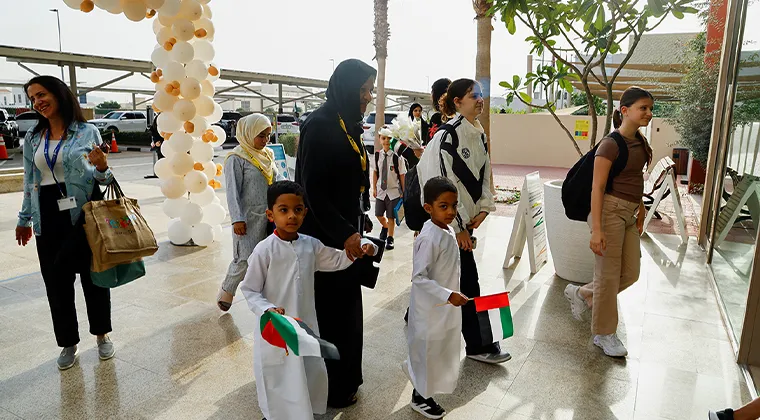
Across schools in the United Arab Emirates, attention is turning toward the upcoming nine-day Eid break, a period that traditionally brings a shift in daily routines for students, teachers, and families alike. As classrooms pause and academic schedules temporarily wind down, households across the country are preparing for a combination of travel plans, family gatherings, and much-needed downtime away from school obligations. For many, this stretch of holiday time represents one of the longest continuous breaks in the academic calendar, and it often becomes a moment when education and leisure intersect in complex ways.
In numerous homes, parents are already planning how to make the most of the extended holiday period. Some families are looking forward to international trips, with airports expected to see increased activity as residents take advantage of the long break to visit relatives abroad or explore new destinations. Others intend to remain within the country, using the opportunity to reconnect with extended family, participate in cultural celebrations, or simply enjoy a slower pace of life compared to the regular school term. Despite these varied plans, a common thread runs through many conversations: how children should engage with learning, if at all, while school is paused.
This question has once again brought forward a familiar and ongoing discussion within UAE society. At the heart of it lies a difference in perspective between those who believe holidays should remain completely free of academic responsibilities and those who feel that a small amount of structured study during breaks can be beneficial. The debate is not new, but it tends to resurface during major school holidays such as Eid, summer vacation, or winter breaks, when extended time away from formal education prompts reflection on how students spend their days outside the classroom.
On one side of the discussion are parents who strongly advocate for a complete break from school-related tasks. For them, holidays are viewed as an essential period for rest, mental recovery, and family bonding. They argue that children already face a demanding academic schedule throughout the term, with assignments, exams, projects, and extracurricular commitments filling much of their time. From this perspective, adding homework during holidays risks extending the pressure beyond school hours and reducing the restorative value of the break. These parents often emphasize the importance of allowing students to disconnect fully from academic routines so they can return to school refreshed, motivated, and mentally recharged.
Many of these parents also highlight the importance of childhood experiences that are not structured around academic achievement. They point out that holidays provide rare opportunities for children to engage in unstructured play, travel, social interaction, and exploration of personal interests. Whether it is spending time with extended family members, participating in outdoor activities, or simply relaxing at home, these experiences are seen as equally valuable to formal learning. In their view, continuous academic engagement during holidays may unintentionally limit these opportunities and blur the boundaries between school time and personal time.
On the other side of the discussion are parents who support the idea of light academic engagement during the break. This group does not necessarily advocate for heavy workloads or strict schedules, but rather for manageable tasks that help reinforce what students have already learned. They believe that short periods of revision, reading, or skill-based exercises can prevent students from losing momentum during long breaks. According to this perspective, completely disconnecting from academics for several weeks may make it harder for some students to adjust when school resumes, particularly in subjects that require continuous practice such as mathematics, languages, or science.
Supporters of this approach often describe it as a form of balance rather than pressure. They suggest that even a small amount of daily reading or occasional revision can help maintain cognitive engagement without interfering with family time or relaxation. For example, reading a book, practicing vocabulary, or reviewing previously covered concepts for a short duration each day is seen as a way to keep learning active in a gentle and non-intrusive manner. These parents argue that such habits can help students return to school more confidently, without the sense of having “forgotten” key material over the break.
Schools in the UAE, meanwhile, generally position themselves somewhere between these two viewpoints. Educational institutions are increasingly aware of the importance of student wellbeing, especially in a context where academic expectations are high and diverse student populations have different learning needs. As a result, many schools aim to strike a balance that respects the need for rest while also acknowledging the value of continuity in learning.
Rather than assigning heavy homework loads during holidays, a growing number of schools encourage what could be described as “light structured engagement.” This may include optional reading lists, creative projects, reflective activities, or simple revision exercises designed to reinforce key concepts without creating pressure. The intention behind such tasks is not to replicate the school day at home, but to gently maintain familiarity with academic material in a way that feels flexible and manageable for families.
Educators often explain that learning does not have to stop entirely during breaks, but it should also not dominate family life or disrupt the purpose of the holiday period. From their perspective, the ideal approach is one that respects both academic progress and emotional wellbeing. Teachers frequently emphasize that children benefit from time away from formal instruction, as it allows them to develop independence, creativity, and social skills that are not always fully exercised in the classroom environment.
At the same time, schools are mindful of the wide variety of home environments and family expectations. In some households, parents actively prefer structured academic guidance during holidays, while in others, any form of homework is considered unnecessary during breaks. This diversity makes it challenging for schools to adopt a single approach that satisfies everyone, which is why many institutions opt for optional rather than mandatory holiday assignments.
The recurring nature of this debate reflects broader questions about education philosophy and the role of breaks within the learning process. Holidays such as Eid, in particular, carry cultural and familial significance, making them especially important periods for rest, celebration, and connection. For many families, these days are among the few times in the year when everyone can gather without the constraints of school schedules or work commitments. This cultural dimension adds another layer to the discussion about whether academic tasks should be included at all.
In practical terms, the nine-day duration of the upcoming break is long enough for students to fully disengage from school routines, which is precisely why opinions differ. For some educators and parents, this length of time raises concerns about losing academic rhythm, especially for younger students who benefit from consistency. For others, it represents a rare and valuable opportunity for uninterrupted rest, during which students should be encouraged to step away from structured learning entirely.
As the holiday approaches, many families find themselves navigating a compromise between these perspectives. Some choose to set informal routines at home, such as reading before bedtime or spending a short period on revision every few days. Others decide to avoid any academic structure altogether, focusing instead on travel, recreation, and family interaction. In many cases, decisions are made based on the child’s academic needs, personality, and the overall pace of their school term.
Ultimately, the discussion surrounding homework during the Eid break highlights the broader challenge of balancing education with wellbeing. While academic continuity is important, so too is the need for rest, cultural celebration, and family connection. The differing opinions among parents and educators reflect not a disagreement over the value of education itself, but rather over how best to support children in growing, learning, and thriving both inside and outside the classroom.
Should children continue studying during the Eid break?
Students themselves also hold different opinions when it comes to whether school holidays should involve any form of academic activity, and their views often reflect both their age and how they experience school pressure. While some learners feel that a small amount of revision during breaks can be helpful, others strongly believe that holidays should remain completely free from school-related responsibilities so they can fully relax and enjoy their time away from classrooms.
For some older students, especially those in higher grades, the idea of doing a little revision during the holidays is seen as a practical way to stay prepared for the return to school. Fourteen-year-old Mark Kiwan shared that he prefers not to completely disconnect from his studies during the break. He explained that he usually revises lightly before school resumes, as this helps him feel more confident when classes restart. According to him, easing back into lessons becomes much smoother when he has already reviewed key topics, instead of facing a full reset after several days away from studying.
He also mentioned that as students progress into higher academic levels, the volume and difficulty of schoolwork naturally increase. This, he feels, makes it more important to keep in touch with what has already been taught. From his point of view, even a small amount of revision can reduce stress in the first week back at school, since it prevents the feeling of having forgotten important material. Rather than seeing it as a burden, he views it as a helpful habit that makes the transition between holidays and school life less abrupt.
However, this view is not shared by all students. Younger pupils, in particular, tend to express a stronger desire for holidays to be completely free of academic expectations. For them, the break is seen as a rare chance to step away from structured routines, homework, and assessments. Nine-year-old Salah Fahmy, for instance, believes that holidays should be reserved entirely for rest and enjoyment. He feels that this time should be spent playing, relaxing, and being with family rather than continuing with school assignments.
From his perspective, school already takes up a significant portion of a child’s daily life, and holidays offer an important opportunity to recharge. He explained that when schoolwork is added during breaks, it can make the holiday feel less enjoyable and more like an extension of the school term. Instead of feeling like a true pause, it starts to feel like there is no real break from academic responsibilities.
Salah’s view reflects a broader sentiment among younger students who associate holidays with freedom and leisure. Many children in this age group look forward to spending time outdoors, engaging in hobbies, or simply having unstructured days without timetables or deadlines. For them, the idea of homework during this period can feel like it takes away from the excitement and relief that holidays are meant to bring.
At the same time, even among students who disagree on the role of holiday study, there is a shared understanding that school itself can sometimes be demanding. Older students often talk about increasing workloads as they move into higher grades, where exams, projects, and subject complexity begin to intensify. This can influence their willingness to accept some level of revision during breaks, as they start to see academic continuity as part of managing long-term performance.
Younger students, on the other hand, are typically more focused on the immediate experience of the holiday rather than academic preparation. Their priorities tend to revolve around rest, entertainment, and spending time with friends and family. As a result, they are more likely to view any form of schoolwork during this period as unnecessary or even unfair.
These contrasting opinions highlight how students’ attitudes toward holiday learning are shaped by their stage of education and personal experiences within the school system. While some gradually begin to see the value of staying academically engaged in moderation, others continue to associate holidays primarily with complete rest and freedom from structured learning.
What kind of learning, if any, is appropriate during the break?
Arpita Paul, a mother of a ten-year-old student, is among those who support the idea that learning does not need to stop completely when schools close for extended holidays. In her view, breaks such as the Eid vacation do not necessarily have to be entirely separated from academic habits. Instead, she believes they can be used in a more flexible way, allowing children to stay mentally active without feeling the pressure of formal schooling.
She explained that children benefit when they maintain some level of academic engagement at home during longer holidays, even if it is not structured in the same way as a classroom timetable. According to her, the goal is not to recreate school at home or burden children with heavy assignments, but rather to ensure that they do not lose touch with what they have already learned. She feels that when children completely disconnect from studies for an extended period, it can sometimes make it harder for them to adjust once school starts again.
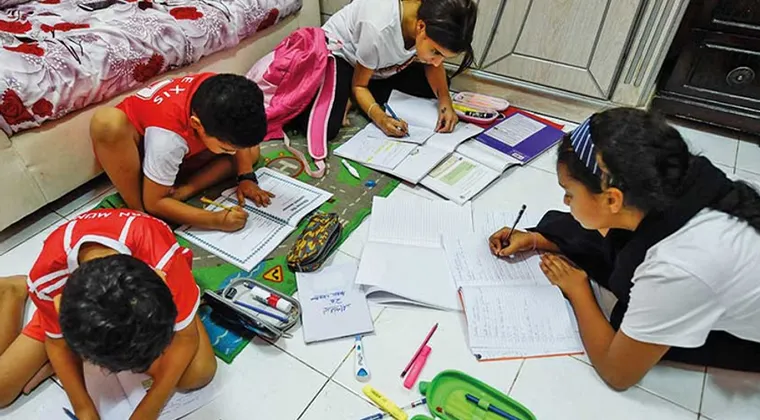
In her opinion, simple and consistent habits such as reading books, practicing writing, or revising previously learned lessons can make a meaningful difference. She emphasizes that this kind of learning does not need to take up large portions of the day or follow strict schedules. Even short, manageable periods of study, she suggests, can help children remain mentally engaged with their subjects. Rather than long hours of homework, she supports the idea of light and regular practice that fits naturally into holiday routines.
Arpita Paul also pointed out that learning during holidays should not feel like an extension of classroom pressure. She believes it is important that children still experience the freedom and enjoyment that holidays are meant to provide. In her view, a balanced approach works best, where students have plenty of time for rest, play, travel, and family interaction, while also spending a small portion of their day on simple educational activities. This balance, she feels, helps children return to school with more confidence and less difficulty adjusting to academic routines again.
She suggested that even something as simple as one or two hours a day dedicated to reading or revision can be helpful. This time does not need to be continuous or rigidly planned, but can be divided into short sessions depending on the child’s comfort and family schedule. The idea, she explained, is to keep the brain active and maintain familiarity with learning, so that the transition back to school after the holidays feels smoother and less overwhelming.
Alongside general academic engagement, she also expressed concern about certain skills that she feels are gradually being affected by increasing reliance on digital tools. One of these is handwriting, which she believes is becoming less frequent among children today. With the growing use of keyboards, tablets, and other digital devices, she feels that students are spending less time practicing writing by hand.
In her view, this shift may have unintended consequences. She suggested that handwriting is not just about forming letters on paper, but also about developing patience, concentration, and fine motor skills. When children write by hand regularly, they tend to slow down and think more carefully about what they are writing, which she believes contributes to better learning and retention.
Arpita Paul acknowledged that technology, including artificial intelligence and digital learning tools, will likely play an even greater role in children’s education in the future. However, she does not see this as a reason to abandon traditional skills. Instead, she believes that both can exist side by side. While digital tools may support learning in new and efficient ways, foundational skills like handwriting should still be preserved and practiced.
She added that handwriting remains an important ability that students will continue to need at various stages of their academic and personal lives. Whether it is taking notes in class, completing examinations, or expressing ideas clearly on paper, she feels that writing by hand continues to hold value despite technological changes.
Overall, her perspective reflects a belief in balance rather than extremes. She does not support heavy academic workloads during holidays, but she also does not agree with a complete break from learning. Instead, she advocates for a middle path where children remain lightly engaged with reading and writing, helping them stay connected to their studies while still enjoying the freedom and rest that holidays are meant to provide.
Have parents’ views on holiday homework changed over time?
A number of parents say their views on holiday assignments have changed significantly over time, especially after experiencing school life from both sides—first as students themselves and now as caregivers responsible for their own children’s education. Many admit that what once felt like an inconvenience during childhood now appears more understandable, and in some cases even beneficial, when seen through the lens of parenting.
Shreya Chakraborty is one of those who reflects on this shift quite clearly. She remembers her own school days, when holiday homework was a strict and unavoidable part of every break. According to her, it was not something students could easily negotiate or avoid, regardless of whether they were at home or travelling. She recalls that even during family trips, particularly those involving long journeys to visit relatives, schoolbooks were always part of the luggage. Holidays, in her memory, did not mean a complete pause from studies; instead, they included an expectation that assignments would be completed on time, no matter the circumstances.
She explains that at the time, this approach was widely accepted within the education system she grew up in, and both schools and parents placed strong emphasis on completing assigned work during breaks. Although it sometimes felt restrictive as a child, she now recognizes that there may have been practical reasons behind it. One of the aspects she particularly highlights is how academic tasks during holidays naturally limited excessive use of television, mobile phones, or other digital entertainment, something she feels is an even greater concern for parents today.
In her current role as a mother, Shreya finds herself reassessing those earlier experiences. While she understands why some students may resist holiday homework, she now believes that a certain level of structured academic activity can help maintain balance during long breaks. She feels that without it, children may end up spending a large portion of their free time on screens, which can become difficult to regulate over extended periods away from school routines.
Looking back more thoughtfully, she feels that the discipline required to complete holiday assignments helped shape her personal habits. She mentions that it encouraged consistency, responsibility, and time management from a young age. These are qualities she now values deeply as an adult and parent. Although she acknowledges that education systems have evolved and teaching approaches have become more flexible and student-friendly, she still sees merit in the idea of maintaining some level of structured learning during holidays.
Shreya also emphasizes that she tries to pass on these lessons to her own daughter, though she is aware that today’s children grow up in a very different environment. With changes in curriculum design, teaching methods, and attitudes toward student wellbeing, she understands that expectations are no longer the same as they were in her childhood. Still, she believes that the underlying principle of discipline remains relevant, even if the methods of achieving it have changed.
Similarly, Ben Ramos shares a comparable change in perspective. He recalls that when he was a student following the Philippine curriculum, he often viewed holiday homework in a negative light. Like many students, he saw it as something that interfered with his freedom during breaks and reduced the enjoyment of time away from school responsibilities. At that stage in his life, he did not appreciate its purpose and often considered it an added burden rather than a helpful exercise.
However, his outlook has shifted since becoming a parent. Now that he is responsible for guiding his own children through their education, he sees holiday assignments in a different way. What once felt unnecessary or frustrating has, in hindsight, taken on a more practical meaning. He now views it as a useful tool that can support learning continuity and help children stay connected to their studies even outside the classroom.
From his current perspective, he recognizes that short academic activities during holidays can help children retain what they have learned and make it easier for them to return to school routines after a long break. While he still understands the feelings he once had as a student, he now balances that memory with his present responsibilities as a parent, leading him to a more moderate and supportive view of holiday homework.
Should holidays remain completely free from academic work?
Some parents continue to strongly believe that school holidays should function primarily as a period of rest and recovery for children, particularly when it comes to younger age groups. From their perspective, extended breaks from school are not just an opportunity for leisure, but an essential part of a child’s overall development, allowing them to recharge mentally, emotionally, and physically after months of structured academic routines.
Yasmin Mahmoud, who is originally from Egypt, reflects on her own upbringing to explain this viewpoint. She recalls that during her school years in Egypt, holidays were clearly defined as a complete pause from academic responsibilities. In her experience, the summer break was not mixed with assignments or revision tasks, but was instead treated as a full and uninterrupted holiday period. She describes it as a time when schoolwork was completely set aside, and students were given the freedom to fully disengage from studies.
She explains that the education system she grew up with followed a two-term academic structure, and once the school year concluded, students were not expected to carry any academic workload into the holiday period. For her, this clear separation between school time and vacation time created a strong sense of relief and allowed children to fully enjoy their break without any lingering academic pressure. Holidays, in her memory, were associated with rest, family time, and personal enjoyment rather than study or revision.
Now, as a parent, Yasmin maintains that this approach has value, especially for younger children. She believes that early childhood and primary school years should be protected from unnecessary academic pressure during holidays. In her view, children at this stage benefit more from play, relaxation, and family interaction than from structured learning tasks outside school hours. She feels that if holidays are filled with schoolwork, even in small amounts, it can reduce the sense of freedom that makes these breaks meaningful for young learners.
At the same time, she does not dismiss the idea of learning entirely during holidays. Instead, she supports a more balanced and age-sensitive approach. She suggests that for younger students, any academic engagement during breaks should remain minimal and informal, focusing perhaps on light reading or simple activities rather than formal assignments. The goal, she explains, should be to maintain gentle engagement without turning the holiday into an extension of the school term.
However, Yasmin also recognizes that expectations can gradually change as students grow older. She believes that as children move into higher grades and become more independent, they can begin to take on additional responsibility during holiday periods. For older students, she feels that structured projects, reading tasks, or revision exercises can be introduced in a more intentional way, helping them develop discipline and time-management skills that will be important in later academic stages.
In her view, this gradual shift is important because it respects the developmental differences between younger and older learners. While younger children need space to enjoy a carefree childhood, older students are at a stage where they can start preparing for more demanding academic challenges. She sees this progression as a natural transition rather than an imposed pressure, where responsibilities increase slowly in line with age and capability.
Yasmin emphasizes that the key is balance. She does not support removing learning entirely from holidays for all age groups, nor does she agree with heavy workloads during breaks. Instead, she advocates for a flexible approach that considers the child’s age, maturity, and academic stage. In her opinion, preserving the joy and freedom of childhood should remain the priority, while still allowing older students to gradually build habits that will help them succeed in more advanced years of education.
What balance are schools encouraging during the Eid break?
School leaders across the UAE consistently highlight that holiday periods, particularly culturally significant breaks such as Eid, should not be viewed through the lens of academic pressure alone. Instead, they stress the importance of finding a careful balance between rest, wellbeing, and maintaining a gentle level of academic engagement. In their view, holidays are an essential part of the school calendar that allow students to step away from structured routines, recover from academic demands, and spend meaningful time with family and friends.
Simon Jodrell, Principal of Jebel Ali School, underlined this perspective by pointing out that national holidays like Eid Al Adha carry deep cultural and family significance. He explained that these periods are primarily intended for togetherness, celebration, and rest, and therefore students should be given the opportunity to fully disconnect from the pressures of daily school life. According to him, genuine rest is not just beneficial but necessary, as it allows young people to reset both mentally and emotionally after a busy academic term.
He further noted that when students are well-rested and feel supported within their home environment, they are naturally more prepared to engage positively with learning once they return to school. Rather than relying on academic pressure to drive performance, he emphasized the importance of creating conditions where students feel secure, motivated, and confident in their abilities. In his view, high academic standards are best achieved not through excessive workload during holidays, but through a supportive approach that prioritizes student wellbeing and long-term growth.
At the same time, Richard John Drew, Principal of Jumeira Baccalaureate, offered additional insight into how holiday learning can be approached in a more structured yet balanced way, particularly for students who are preparing for examinations. He explained that for learners in critical academic years, maintaining some level of continuity can be beneficial, but this does not mean replicating a full school schedule at home. Instead, he advocates for light and purposeful revision that helps students stay connected to their studies without overwhelming them during their break.
He encouraged families to think in terms of moderation rather than intensity. According to his guidance, short and focused study sessions can be integrated into the holiday routine alongside a wide range of non-academic activities that contribute to a child’s overall development. These include reading for enjoyment, physical exercise, creative play, and spending time outdoors. He stressed that such activities are just as important as academic revision, as they support creativity, physical health, and emotional balance.
Richard John Drew also pointed out that many students actually return to school in a stronger academic position after taking time to rest properly. He suggested that stepping away from continuous study allows the brain to recover, process information, and regain focus. As a result, students often come back more alert, more resilient, and better prepared to absorb new learning. This, he believes, demonstrates that rest is not the opposite of academic success, but rather an important contributor to it.
He concluded that wellbeing and academic achievement should not be treated as separate or competing priorities. Instead, they are closely connected and mutually supportive. When students are given adequate time to relax, recharge, and engage in non-academic experiences, they are more likely to return to school with improved concentration, stronger motivation, and a healthier mindset. In this way, both school leaders reinforce the idea that holiday time should be used thoughtfully, ensuring that students benefit from rest while still maintaining a gentle link to learning where appropriate.
How are schools trying to prevent burnout among students?
Educators are increasingly warning that schools need to be careful not to place unnecessary pressure on students by expecting too much academic work during holiday periods, as this can sometimes lead to fatigue rather than meaningful learning. Instead, many education leaders are encouraging a more thoughtful approach that recognises the value of breaks not only for relaxation and family time, but also for maintaining a gentle and healthy connection with studies.
Punit MK Vasu, CEO of The Indian High Group of Schools, explained that long school holidays do not have to be seen as either purely academic downtime or entirely disconnected from learning. In his view, both family bonding and academic reinforcement can coexist during these periods if they are managed in a balanced and realistic way. He suggested that it is not difficult to design holiday routines that allow children to enjoy their time off while still keeping their minds engaged in a light and structured manner.
He pointed out that students often respond better to shorter bursts of focused study rather than long, continuous hours of revision. According to him, one effective approach that has shown positive results is the use of “power study blocks,” where students study for around 30 to 40 minutes at a time, followed by proper breaks. This method, he explained, helps maintain attention and improves retention while also preventing mental exhaustion that can come from extended periods of study without rest.
Vasu further emphasized that the idea of academic discipline and student wellbeing should not be treated as opposing forces. He argued that there is a common misunderstanding in many competitive education systems that rigor and wellbeing exist in conflict with each other. In reality, he believes they are closely connected and actually depend on one another for long-term success.
From his perspective, true academic excellence cannot be achieved if students are constantly under stress or pushed beyond their capacity without adequate rest. At the same time, wellbeing alone without structure and discipline may not provide students with the academic foundation they need to succeed. Therefore, he suggests that both elements must work together in a complementary way.
He described this relationship as essential for sustainable educational success, where students are not only achieving strong academic results but are also mentally healthy, motivated, and capable of handling future challenges. In this sense, he believes schools should focus on creating systems that support both productivity and rest, rather than treating them as separate or competing goals.
Is holiday homework becoming more experiential than compulsory?
Some schools explain that the nature of holiday assignments has gradually changed in recent years, moving away from the traditional idea of written homework and toward more flexible, experience-based learning that encourages students to observe, think, and engage with the world around them. Rather than treating holidays as an extension of classroom instruction, educators are increasingly designing activities that blend learning with real-life experiences in a more natural and less pressured way.
Pramod Mahajan, Principal of Sharjah Indian School, noted that in his institution, holiday tasks are not compulsory but are offered as optional activities meant to support students’ overall development. He emphasized that the intention behind such assignments is not to create additional academic burden during breaks, but to provide opportunities for enrichment for those who choose to participate. According to him, students who engage with these tasks can benefit from them, but there is no strict requirement forcing them to complete traditional homework during the holiday period.
He also pointed out that modern educational systems, particularly under curricula such as CBSE, are gradually shifting toward competency-based evaluation. This means that instead of focusing solely on memorization or repetitive written tasks, there is a stronger emphasis on understanding concepts, applying knowledge, and developing practical skills. In this changing framework, holiday learning is also being reimagined so that it supports deeper learning rather than simply adding workload.
Mahajan explained that one of the key ideas behind this approach is to encourage children to learn from their surroundings and everyday experiences. For instance, during holidays like Eid, students might accompany their families on trips, visits, or community outings, and then reflect on those experiences by writing short reports or sharing their observations. These kinds of tasks are designed to help students connect classroom knowledge with real-world situations, making learning more meaningful and relatable.
He suggested that even simple family activities can become valuable learning opportunities when approached with the right perspective. A visit to a historical site, a cultural event, or even a casual travel experience can be used as a basis for reflection, writing, or discussion. In this way, children are not just completing assignments for the sake of finishing tasks, but are actively engaging with what they see and experience around them.
According to him, the broader goal is to encourage experiential and lifelong learning habits. This approach focuses on helping students understand concepts through direct experience rather than limiting learning to textbooks and worksheets. It also aims to develop critical thinking skills, where students learn to analyze situations, make connections, and identify gaps in understanding.
He further clarified that the intention is not simply to measure how much content a student can reproduce, but to encourage deeper thinking about how knowledge is applied in different contexts. In this sense, holiday learning becomes more about observation, reflection, and interpretation rather than rigid task completion.
Ultimately, Mahajan described this shift as a move toward situational learning, where education is closely linked to real-life environments. Instead of focusing only on completing assignments, the emphasis is placed on understanding ideas, applying them in everyday situations, and developing the ability to think independently.