Dubai South and Majid Al Futtaim have revealed plans for a Dh62 billion development project aimed at creating a large integrated mixed-use community featuring residential, commercial, and lifestyle facilities.
Dubai South and Majid Al Futtaim announce Dh62 billion project to develop a mixed-use community.
A growing wave of real estate and infrastructure development is currently reshaping the southern corridor of Dubai, with increasing attention being directed toward the area surrounding Al Maktoum International Airport. This region, commonly known as Dubai South, is emerging as one of the most strategically significant urban expansion zones in the emirate. Its importance is expected to rise even further as preparations continue for the full-scale opening of Al Maktoum International Airport, which is projected to become one of the largest aviation hubs in the world once fully operational.
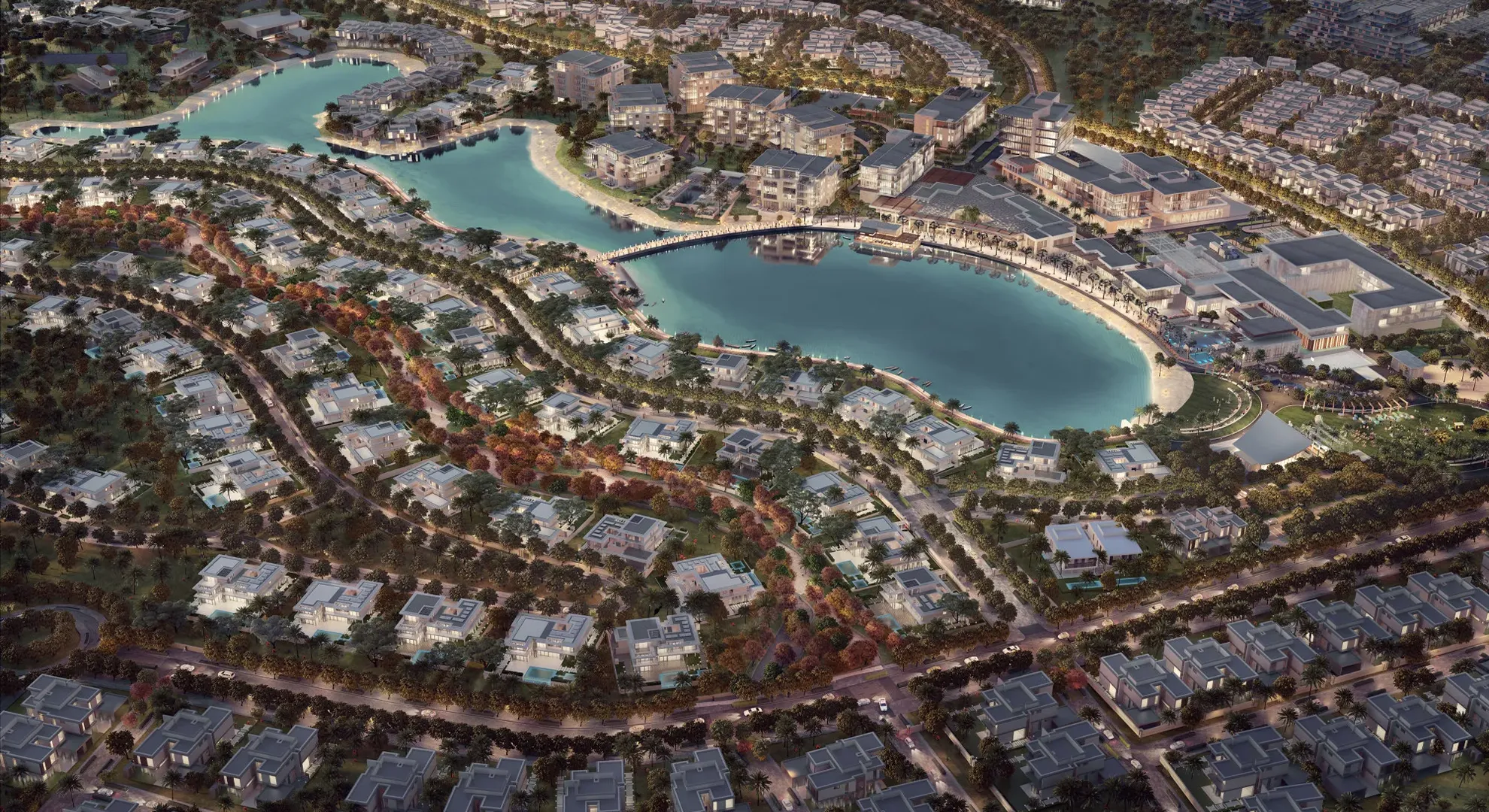
Against this backdrop of rapid transformation, Dubai South and Majid Al Futtaim have jointly unveiled plans for a large-scale mixed-use master development valued at approximately Dh62 billion. The announcement reflects a continued push by major developers and investors to capitalize on the long-term growth potential of the area, which is increasingly seen as a future center of economic, residential, and commercial activity in Dubai.
The new development is envisioned as a comprehensive urban community that integrates multiple aspects of modern living within a single, well-planned environment. Spanning an extensive land area of around 22 million square feet, the project is designed to accommodate a wide variety of residential, retail, leisure, and lifestyle components. Rather than functioning as a single-purpose residential zone, the community will be structured as a fully integrated destination where people can live, work, shop, and spend leisure time without needing to travel far outside the district.
A key feature of the planned development is its emphasis on creating a balanced urban ecosystem. Residential units will form a core component of the community, offering housing options intended to cater to diverse population segments. Alongside this, retail spaces will be developed to serve both residents and visitors, ensuring that daily needs and commercial activities can be met within the community itself. In addition, lifestyle and entertainment elements are expected to play a central role in shaping the identity of the project, contributing to a vibrant and active environment.
One of the most significant anchors of the project will be a large-scale shopping mall, which is expected to serve as a major retail and social hub within the development. This retail centerpiece is intended not only to attract residents of the community but also to draw visitors from surrounding areas, thereby enhancing the commercial vitality of the entire district. By integrating such a major retail destination within the master plan, the developers aim to ensure consistent footfall and sustained economic activity throughout the year.
The strategic location of the project near Al Maktoum International Airport is a major factor contributing to its appeal. As the airport expands and prepares for its future role as a global aviation gateway, the surrounding areas are expected to experience significant increases in population density, business activity, and infrastructure demand. Developers have therefore been increasingly positioning themselves in Dubai South to take advantage of this anticipated growth trajectory.
In recent years, Dubai South has attracted growing interest from both local and international real estate developers. This trend is largely driven by long-term infrastructure planning, government-led urban expansion strategies, and the expectation that the area will evolve into a major logistics, aviation, and residential hub. The presence of large-scale transport infrastructure, combined with carefully planned zoning and development frameworks, has made the region particularly attractive for integrated community projects such as the newly announced Dh62 billion development.
The broader real estate market sentiment in Dubai also plays an important role in shaping such large-scale investments. The emirate continues to position itself as a global destination for business, tourism, and long-term residency. This positioning is supported by strong economic fundamentals, investor-friendly regulations, and a reputation for delivering high-quality urban environments. As a result, developers are increasingly confident in launching ambitious projects that align with Dubai’s long-term growth vision.
According to statements made in connection with the announcement, senior leadership at Dubai South emphasized that the ongoing development activity in the region reflects the broader strength and adaptability of Dubai’s economy. The city continues to demonstrate resilience through strategic infrastructure investments and carefully planned urban expansion initiatives. These efforts are designed to reinforce Dubai’s position as a leading global hub for investment, commerce, and high-quality living standards.
From the perspective of Majid Al Futtaim, the partnership represents a continuation of its long-term strategy of investing in large-scale destination developments that create sustainable economic value. The company has consistently focused on building integrated communities that combine residential living with retail and entertainment experiences. In this context, the new Dubai South project aligns closely with its broader vision of shaping urban environments that enhance quality of life while also delivering strong economic returns.
Leadership from the company highlighted confidence in Dubai’s continued growth trajectory and expressed commitment to contributing to its evolving urban landscape. The development is seen as part of a long-term investment approach that prioritizes not only immediate commercial outcomes but also lasting impact on community development and urban livability.
The scale of the project also reflects broader shifts in urban planning philosophy within the region. Modern developments are increasingly moving away from isolated residential clusters and toward fully integrated mixed-use environments. These new models are designed to reduce commuting distances, enhance convenience, and create more sustainable patterns of urban living. By combining housing, retail, entertainment, and public spaces within a single master plan, developers aim to build self-sustaining communities that support long-term population growth.
Another important aspect of the project is its potential contribution to job creation and economic diversification. Large-scale developments of this nature typically generate employment opportunities during both construction and operational phases. In addition to construction-related jobs, long-term roles in retail, hospitality, property management, and facility operations are expected to emerge once the community becomes fully operational.
The development is also likely to have a positive impact on surrounding infrastructure. As population density increases in Dubai South, demand for transportation, utilities, education, and healthcare services is expected to rise accordingly. This, in turn, may lead to further government and private sector investments aimed at enhancing connectivity and service delivery in the region.
From a real estate investment perspective, projects of this magnitude often serve as catalysts for broader market activity. They tend to attract secondary developments, including smaller residential projects, commercial centers, and service-oriented businesses that seek to benefit from increased population flow. Over time, this can lead to the formation of a fully developed urban district with its own economic ecosystem.
The long-term vision for Dubai South is closely tied to the expansion of Al Maktoum International Airport, which is expected to play a transformative role in shaping the region’s economic geography. As air traffic and logistics operations grow, the surrounding area is likely to become a critical node for international trade, tourism, and business connectivity. This makes early-stage investments in residential and mixed-use developments particularly significant, as they position stakeholders ahead of future demand curves.
Overall, the announcement of the Dh62 billion mixed-use master community represents a major milestone in the ongoing transformation of Dubai South. It reflects a convergence of strategic planning, private sector confidence, and long-term infrastructure development. With its large scale, integrated design, and prime location, the project is poised to become a key component of Dubai’s evolving urban landscape in the years ahead.
A significant partnership has been formalized between two major players in Dubai’s urban development and real estate landscape, marking another milestone in the emirate’s ongoing transformation into a global hub for integrated living and investment.
The agreement was signed by senior leadership from Dubai South and Majid Al Futtaim, with Nabil Al Kindi, Group Chief Executive Officer of Dubai South, and Ahmed Galal Ismail, Chief Executive Officer of Majid Al Futtaim Holding, leading the signing ceremony. The event also brought together high-level dignitaries, including Khalifa Al Zaffin, Executive Chairman of Dubai Aviation City Corporation and Dubai South, as well as Fadel Abdulbaqi Al Ali, Chairman of Majid Al Futtaim Holding. Their presence reflected the strategic importance of the agreement and its long-term implications for Dubai’s urban development agenda.
This collaboration is widely seen as part of a broader wave of large-scale development initiatives taking shape in the southern corridor of Dubai, an area that has become increasingly central to the emirate’s future planning. Dubai South, in particular, has emerged as one of the most ambitious master-planned urban districts in the region, designed to support aviation, logistics, residential communities, and commercial growth in a single integrated ecosystem.
During remarks surrounding the agreement, leadership emphasized that Dubai South is steadily evolving into a key future hub within the city’s development roadmap. The area is being positioned not only as a residential and commercial zone but as a fully functioning urban center that will play a critical role in supporting Dubai’s long-term economic diversification goals.
The partnership with Majid Al Futtaim is intended to accelerate this vision by introducing a large-scale integrated destination that combines multiple components of urban life. Rather than focusing on a single-use development, the project is designed to bring together retail spaces, entertainment facilities, hospitality offerings, and residential communities within one cohesive master plan. This integrated approach reflects modern urban design trends that prioritize convenience, accessibility, and lifestyle balance.
The statement associated with the announcement highlighted Dubai’s continued ability to position itself as a global leader in urban innovation and economic resilience. Over the years, the city has consistently pursued forward-looking development strategies that blend infrastructure expansion with investment-friendly policies, making it one of the most attractive destinations for international developers and investors.
Dubai South itself is one of the largest planned urban developments in the emirate, covering an area of approximately 145 square kilometers. It is strategically centered around Al Maktoum International Airport, a mega aviation project that is expected to become the largest airport in the world once fully completed. This proximity to a major global transport hub gives Dubai South a unique advantage in terms of connectivity, logistics, and long-term economic relevance.
The broader vision behind Dubai South is to create a fully integrated city that supports aviation, trade, residential living, and business activity in one unified environment. As infrastructure development continues to expand across the district, it is increasingly being viewed as a key pillar in Dubai’s strategy to decentralize growth and create multiple economic centers across the emirate.
From the perspective of Majid Al Futtaim, the partnership represents a continuation of its long-term investment strategy in large-scale, experience-driven destinations. The company is widely recognized across the Middle East for its expertise in developing retail-led mixed-use communities that combine shopping, leisure, hospitality, and residential elements.
With total assets valued at approximately $20 billion, Majid Al Futtaim stands among the most financially strong privately held development groups in the region. It also holds a BBB credit rating, one of the highest assigned to private companies in its category, reflecting its financial stability and operational strength.
Over the years, the company has developed and operated a significant portfolio of retail and lifestyle destinations. It currently manages 29 shopping malls across different markets, including some of the most prominent retail landmarks in the region such as Mall of the Emirates in Dubai, Mall of Egypt in Cairo, and Mall of Oman in Muscat. In addition, its widely recognized “City Centre” brand continues to serve as a key retail destination format in multiple cities.
These developments have positioned Majid Al Futtaim as a leading force in shaping modern retail and lifestyle infrastructure across the Middle East. Its projects are known for integrating commercial activity with entertainment and community spaces, creating destinations that go beyond traditional shopping environments.
The collaboration with Dubai South therefore aligns naturally with its established expertise in building large-scale, mixed-use environments. By contributing to the development of a new master-planned community in one of Dubai’s fastest-growing districts, the company is extending its footprint into a region that is expected to experience substantial long-term growth.
Dubai South, on the other hand, continues to represent one of the most important growth corridors in the emirate. Its master plan covers vast land areas and is designed to support a range of functions, including residential neighborhoods, logistics hubs, aviation-related industries, and commercial districts. The ongoing development of Al Maktoum International Airport further enhances its strategic importance, as the airport is expected to transform global air travel and cargo connectivity once fully operational.
Together, both entities aim to create a development that reflects the next phase of urban evolution in Dubai—one that is highly integrated, economically sustainable, and focused on improving quality of life. The combination of residential living, retail destinations, hospitality services, and entertainment infrastructure within a single master plan is intended to reduce fragmentation in urban design and create more efficient, connected communities.
This type of development also aligns with broader global trends in city planning, where mixed-use environments are increasingly preferred over isolated zones. Such projects help reduce commuting times, enhance social interaction, and create more efficient use of infrastructure and public services.
As Dubai continues to expand its global influence as a business, tourism, and investment hub, partnerships like this one highlight the importance of collaboration between major developers and strategic urban planning authorities. They also demonstrate the emirate’s commitment to building long-term value through carefully structured, large-scale development projects.
In this context, the agreement between Dubai South and Majid Al Futtaim is more than a single project announcement—it represents a continuation of Dubai’s broader vision of creating world-class urban environments that support economic diversification, population growth, and global competitiveness.