Dubai came to an almost complete standstill during George Bush’s visit, with deserted streets and a public holiday creating a rare pause in the city’s typically fast-paced daily life eighteen years ago.
Empty Streets and a Public Holiday: Dubai’s Rare Pause During George Bush’s Visit.
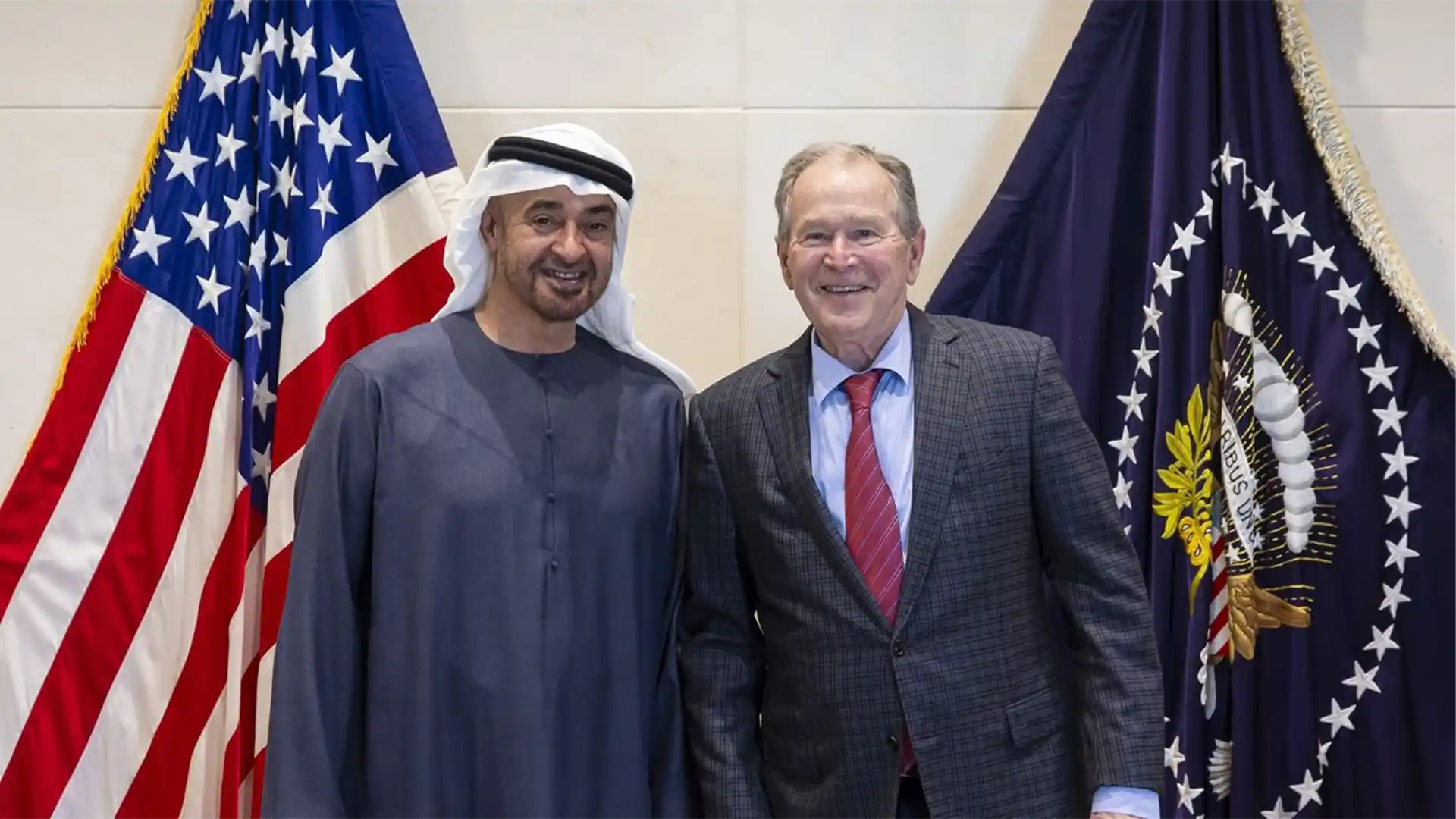
The Day Dubai Slowed Down: Remembering an Extraordinary Moment in 2008
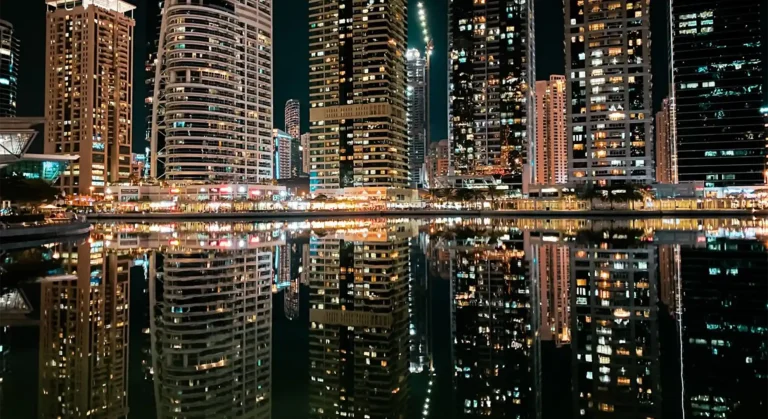
Dubai has built its global reputation on momentum. The city is synonymous with constant movement — highways alive with traffic, construction cranes reshaping the skyline, and an energy driven by ambition and growth. Rarely does the emirate pause. Yet on January 14, 2008, Dubai did exactly that, marking one of the most unusual days in its modern history.
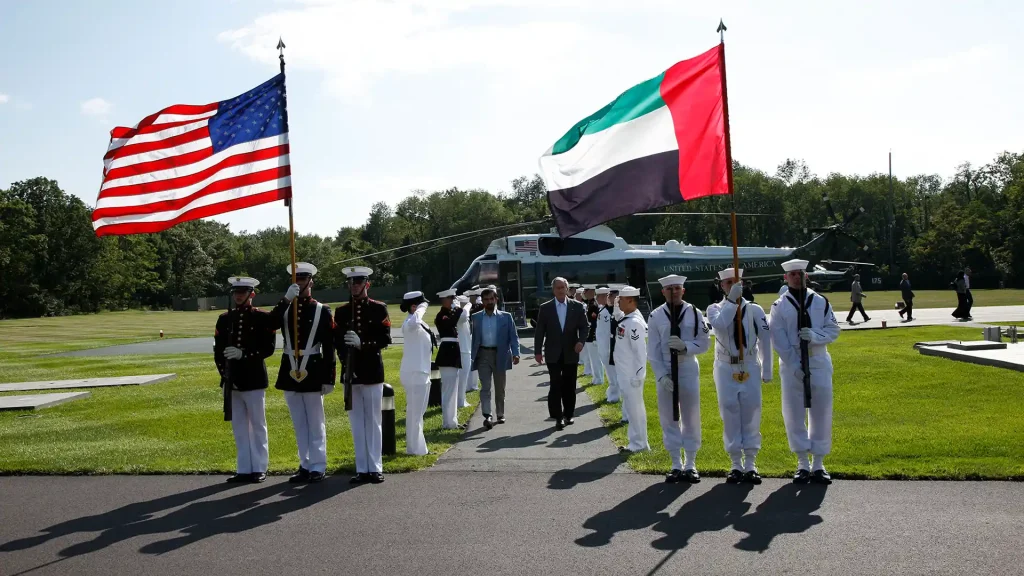
On that winter morning eighteen years ago, the city temporarily shed its fast-paced identity to welcome a visitor whose arrival carried historic significance. Former United States President George W. Bush was in Dubai as part of a regional Middle East tour, making him the first sitting American president to officially visit the UAE. The occasion was momentous, and the city responded in a way it never had before — or since.
At a time when Dubai was rapidly establishing itself as a global business and tourism hub, the visit triggered unprecedented security measures and a sudden announcement that surprised residents across the emirate: a public holiday. The decision, rare even by the standards of the time, underscored the importance attached to the visit and reflected the scale of preparations undertaken by authorities.
A City Prepared for History
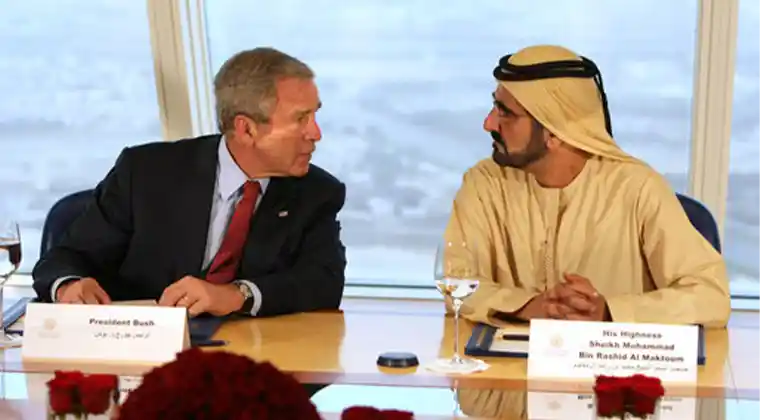
President Bush arrived in Dubai from Abu Dhabi, where his regional tour had begun a day earlier on January 13. Upon landing, he was formally received by Sheikh Mohammed bin Rashid Al Maktoum, Vice President and Prime Minister of the UAE and Ruler of Dubai. Their meeting symbolized a significant diplomatic moment, highlighting the strengthening ties between the UAE and the United States.
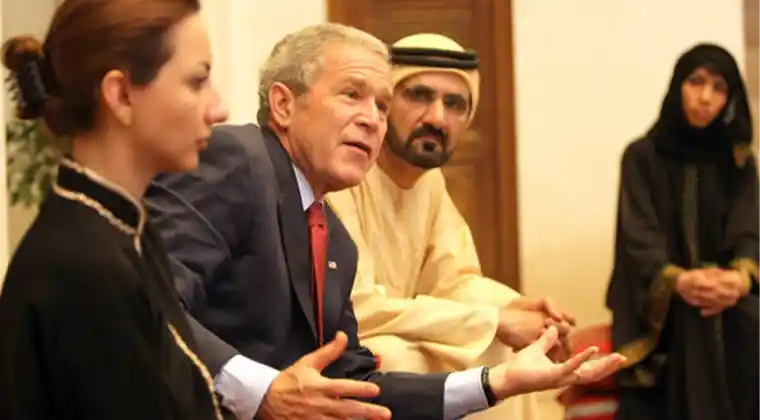
One photograph from the day, distributed by the Emirates News Agency (Wam), captured a lighter, more personal moment between the two leaders. Sheikh Mohammed was seen sharing a relaxed exchange with President Bush during their visit to the historic Sheikh Saeed Al Maktoum House — a setting that reflected Dubai’s heritage against the backdrop of its modern evolution.
But beyond the official meetings and diplomatic engagements, what most residents remember vividly is how dramatically the city changed for a single day.
Roads Without Traffic, Streets Without Sound
From the early hours of the morning, Dubai’s usual rhythm was disrupted. Authorities began implementing extensive security protocols well before sunrise. By 6am, major arteries across the city were closed. Bridges, tunnels, flyovers, and highways that typically carried thousands of vehicles every hour were rendered almost entirely empty.
From Sheikh Zayed Road to Emirates Road, from central districts to outer suburbs, traffic disappeared. For a city where congestion had already become a defining feature, the silence was striking. Entire stretches of road stood vacant, guarded by security personnel and checkpoints.
Residents were advised to remain indoors, and most complied. Schools, offices, and businesses shut for the day following the holiday announcement. The only people permitted to travel were essential service workers and passengers heading to or from Dubai International Airport — and even they encountered significant delays.
Those who ventured out described a surreal experience. Some found themselves halted at security barricades, others were redirected multiple times, and many were caught in slow-moving traffic far from the city’s centre. Emirates Road, one of the few corridors partially accessible, became heavily congested as restricted movement funnelled vehicles into limited routes.
Watching History From Home
For most Dubai residents, the day unfolded from behind windows, balconies, and television screens. Families gathered at home, observing the unusual quiet outside. Children, accustomed to the noise of passing cars and construction activity, noticed the stillness. For many expatriates and long-term residents alike, it was the first time they had ever seen Dubai at rest.
Social conversations later reflected a shared sense of curiosity and disbelief. People spoke about how quickly the city had adapted, how efficiently the closures were enforced, and how rare it was to experience Dubai without its constant motion.
While inconvenience was unavoidable, there was also an underlying recognition that the moment was exceptional. The presence of a sitting US president placed Dubai at the centre of international attention, and the scale of the response reinforced the significance of the occasion.
Security at an Unprecedented Scale
Behind the scenes, the operation required meticulous planning and coordination. Law enforcement agencies, transport authorities, and government departments worked in unison to ensure the visit passed smoothly. The comprehensive shutdown of infrastructure was part of a wider strategy to maintain security while facilitating the president’s movements across the city.
From early morning until late afternoon — roughly between 6am and 4pm — the restrictions remained in place. Convoys moved through cleared routes, and access to key areas was tightly controlled. For several hours, Dubai resembled a city frozen in time.
Such measures would be difficult to imagine today, given the emirate’s population growth and expanded infrastructure. Yet in 2008, Dubai demonstrated its ability to mobilize swiftly and decisively when history demanded it.
A Defining Memory in Dubai’s Modern Story
As the afternoon progressed and restrictions were gradually lifted, the city began to return to life. Traffic resumed, shops reopened, and the familiar buzz slowly re-emerged. By evening, Dubai was once again the dynamic metropolis it was known to be.
However, the memory of that day has endured. For many residents, January 14, 2008, remains a reference point — a reminder of a rare pause in a city that rarely stops moving. It was a moment when global politics intersected with everyday life, briefly altering the pace of an entire emirate.
In hindsight, the visit marked not just a diplomatic milestone, but also a snapshot of Dubai at a particular stage in its journey — confident, ambitious, and increasingly prominent on the world stage.
Eighteen years later, as Dubai continues to evolve at remarkable speed, the image of empty roads and quiet streets serves as a powerful contrast to the city’s usual intensity. It stands as a reminder that even the most fast-moving cities can, when history calls, slow down — if only for a day.
A Day Unlike Any Other: When Dubai Slowed to a Walk
On that unusually quiet morning, even those accustomed to Dubai’s constant surprises were caught off guard. One elderly Western expatriate, out for his habitual walk, found himself moving through streets that felt almost unrecognisable. Accustomed to dodging traffic and noise, he instead encountered stillness.
“This is something I’ve never witnessed before,” he remarked to Insider 18, pausing to look down a road typically clogged with cars. With a faint smile, he added, “It’s a perfect day for a walk.”
His words captured the collective astonishment felt across the city. Dubai, known for its relentless pace and ceaseless activity, had momentarily pressed pause.
Disruption at Street Level
While some residents embraced the calm, others faced unexpected hardship. The sudden shutdown of roads and transport links caught many workers mid-routine. Dubai Duty Free employees finishing overnight shifts found themselves stranded, forced to walk long distances to neighbourhoods like Satwa after discovering that buses, taxis, and metro services were either unavailable or severely restricted.
Public transport was almost invisible for much of the day. Taxi booking systems were suspended until authorities began reopening roads later in the afternoon. For workers dependent on late-night or early-morning travel, the silence of the streets was not peaceful — it was exhausting.
Stories spread quickly among residents of people walking for hours under the winter sun, navigating unfamiliar backstreets, or waiting indefinitely for instructions that never quite arrived. Yet remarkably, frustration rarely turned into anger. Most understood that the city was navigating an extraordinary situation.
Calm Amid the Confusion
For others, the day unfolded in a way that felt almost celebratory. With offices closed and responsibilities temporarily suspended, neighbourhoods came alive in unexpected ways. Children spilled into residential streets, setting up impromptu cricket matches in places usually dominated by moving vehicles.
Residents strolled without hurry, chatting with neighbours they rarely had time to see. Families ventured outside simply to experience the novelty of silence. In a city defined by schedules and speed, time itself seemed to stretch.
Shopping malls, some of the few places operating as usual, became informal gathering points. With roads largely empty and no work obligations, people wandered through air-conditioned corridors, enjoying an unplanned day off that felt strangely liberating. Cafés buzzed with conversation as residents shared stories of roadblocks, detours, and unexpected encounters.
A Presidential Tour Through a Quiet City
While life on the ground adjusted to the shutdown, President George W. Bush moved through a carefully coordinated itinerary across the city. His visit was historic — the first time a sitting US president had officially travelled to the UAE — and it was treated with the gravity such a moment demanded.
The tour began at the former residence of Dubai’s ruling family, a heritage site that now serves as a museum preserving the emirate’s early history. There, President Bush was introduced to elements of Emirati culture, including traditional music and performances that reflected the country’s roots.
Later, he visited the Dubai School of Government, where he joined students for lunch in a setting that broke with formal protocol. Seated on cushions arranged in a circle, participants shared food placed on carpets, engaging in conversation in an atmosphere that emphasized cultural exchange over ceremony.
The visit concluded with engagements that highlighted Dubai’s modern ambitions. At the iconic Burj Al Arab, President Bush addressed a gathering of business leaders and entrepreneurs. He spoke openly about what he had witnessed during his visit.
“I’m deeply impressed by what I’ve seen here,” he said, praising the emirate’s entrepreneurial drive and its focus on creating opportunity. His remarks touched on the importance of ambition, innovation, and hope — themes that resonated with Dubai’s vision at the time.
Air Travellers Caught in the Middle
Perhaps the most severely affected group that day were air travellers. Passengers arriving at Dubai International Airport expected routine journeys into the city, only to find themselves trapped by circumstances beyond their control.
Many were unable to leave the airport for hours. Taxi services were suspended, buses were rerouted, and access roads remained closed until late afternoon. Terminal Two, in particular, became inaccessible for a period after 2pm, compounding confusion for arriving passengers.
Sirajuddin, who landed in Dubai with his family after a flight from Lahore at around 11am, recalled the frustration. “We were told no taxi could take us anywhere until the roads reopened,” he said. With luggage in tow and no clear timeline, families waited, unsure of when — or how — they would reach their homes or hotels.
Inside the airport, operations continued largely as normal, according to aviation authorities. Flights landed and departed with minimal delays. The challenge lay beyond the terminals, where road closures created bottlenecks no amount of planning could fully resolve.
Managing the Unprecedented
To mitigate the disruption, the Roads and Transport Authority (RTA) issued guidance on alternative routes, particularly for those attempting to reach the airport. Signage was placed across the city directing drivers toward designated open roads, though many found these routes difficult to navigate amid frequent checkpoints.
Essa Al Dossari, CEO of the Public Transport Agency at the RTA at the time, confirmed that public buses continued operating but adhered strictly to diversion plans. Drivers were instructed to avoid restricted zones entirely, even if that meant extended travel times.
Hotels across the city received maps outlining approved routes, but reality often differed from planning. Roads marked as open were sometimes unexpectedly closed, forcing drivers to improvise. Guests staying near Sheikh Zayed Road experienced the most difficulty, as one of the city’s main arteries remained completely shut.
Meanwhile, Garhoud Bridge, Maktoum Bridge, and the Shindagha Tunnel were also closed, along with Al Khail Road. Only a handful of corridors, including Al Wasl Road and Jumeirah Road, remained accessible, becoming lifelines for those attempting to cross the city.
Order Without Incident
Despite the scale of disruption, the day passed without major incident. No traffic accidents were reported, and authorities confirmed that no formal complaints were lodged. Considering the complexity of the operation and the suddenness of many closures, this stood out as a quiet achievement.
The absence of chaos spoke to both the effectiveness of coordination among agencies and the patience of residents. While inconvenience was widespread, cooperation largely prevailed.
A Day Etched Into Memory
Public holidays announced with little notice, citywide shutdowns, and completely deserted highways are rare even in Dubai’s eventful history. January 14, 2008, stands apart not merely because of the visitor it welcomed, but because of how profoundly the city transformed itself to do so.
For one day, Dubai — a place built on speed, ambition, and constant movement — slowed its pace entirely. The hum of engines faded, streets emptied, and residents glimpsed a version of their city they had never known.
Eighteen years later, the memory endures. It remains a story shared by longtime residents, a reference point in conversations about how far the city has come, and a reminder of a moment when global history briefly reshaped everyday life.
On that day, Dubai did more than host a visiting leader. It demonstrated its ability to pause, to adapt, and to extend hospitality on a scale few cities could imagine — proving that even the fastest-moving places can, when the moment calls for it, stand still.