Saudi Arabia presses forward with its ambitious skyscraper project, aiming to reshape Jeddah’s skyline and reclaim the title of the world’s tallest building through the long-delayed Jeddah Tower.
The Race for the World’s Tallest Building Continues in Saudi Arabia
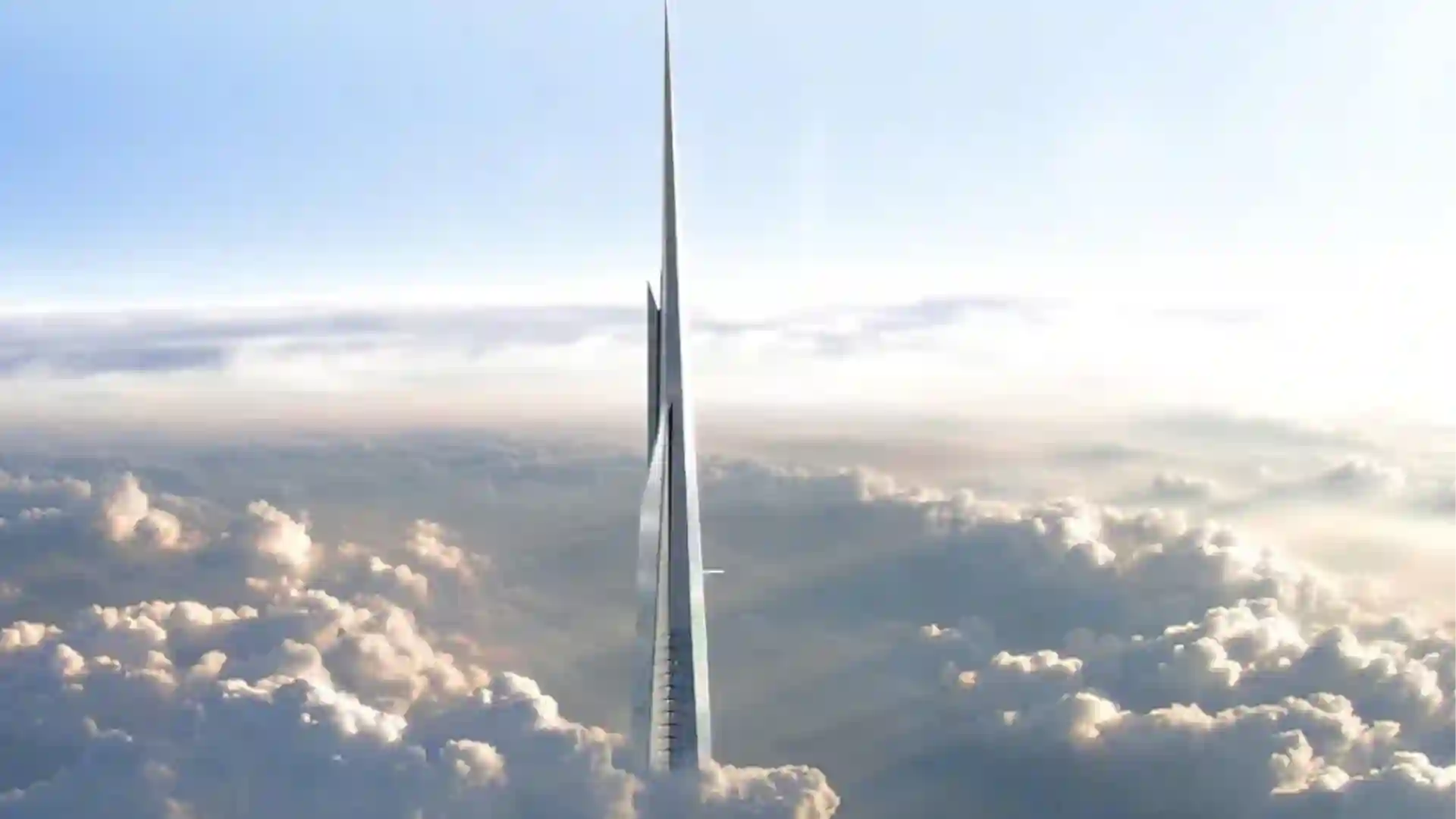
Construction on the world’s tallest skyscraper in Jeddah has gathered significant momentum following its long-awaited restart in January 2025, bringing an end to a seven-year construction hiatus. With 80 floors now completed, Jeddah Tower is steadily advancing toward its goal of becoming the first structure in history to rise one kilometre above ground level, a milestone expected to be achieved by 2028.
Planned to stand at more than 3,281 feet (over 1,000 metres), Jeddah Tower will eclipse Dubai’s Burj Khalifa, which currently holds the global height record at just over 2,700 feet. When Burj Khalifa opened in 2010 with a height of 828 metres, it was widely viewed as an engineering achievement unlikely to be surpassed anytime soon. More than a decade later, Saudi Arabia is preparing to redefine architectural limits with a tower that will push vertical construction into entirely new territory.
The 168-floor skyscraper will serve multiple purposes, housing luxury residences, premium office spaces, a five-star hotel, retail areas, and public amenities. One of its standout attractions will be an observation deck located at approximately 652 metres above ground, offering visitors unparalleled views over Jeddah and the Red Sea coastline. The tower’s scale and mixed-use design reflect Saudi Arabia’s broader ambition to position itself as a global destination for business, tourism, and innovation.
Designed by Adrian Smith + Gill Gordon Architecture, the firm behind several iconic supertall buildings, Jeddah Tower is expected to cost around $1.2 billion to construct. Adrian Smith originally conceived the tower while working at Skidmore, Owings & Merrill, bringing his experience from projects such as the Burj Khalifa to the design. The building’s striking form and advanced engineering are intended not only to break records but also to stand as a symbol of Saudi Arabia’s modernization drive.
The project was first unveiled in 2011, with groundwork beginning in late 2013. However, construction faced significant challenges, leading to a suspension of work in 2018. Financial issues, contractor changes, and broader economic factors contributed to the prolonged delay. During this period, the partially built structure stood as a reminder of an ambitious vision put on hold.
Originally known as Kingdom Tower, the skyscraper was envisioned as the focal point of Jeddah Economic City, a massive 57-million-square-foot mixed-use development planned along the Red Sea coast. The development aims to transform the area into a vibrant urban center featuring residential districts, commercial hubs, and leisure spaces. In 2015, the tower was renamed Jeddah Tower to better reflect its location and strengthen the city’s international profile. The name change also helped avoid confusion with Riyadh’s Kingdom Centre, another prominent skyscraper in the kingdom.
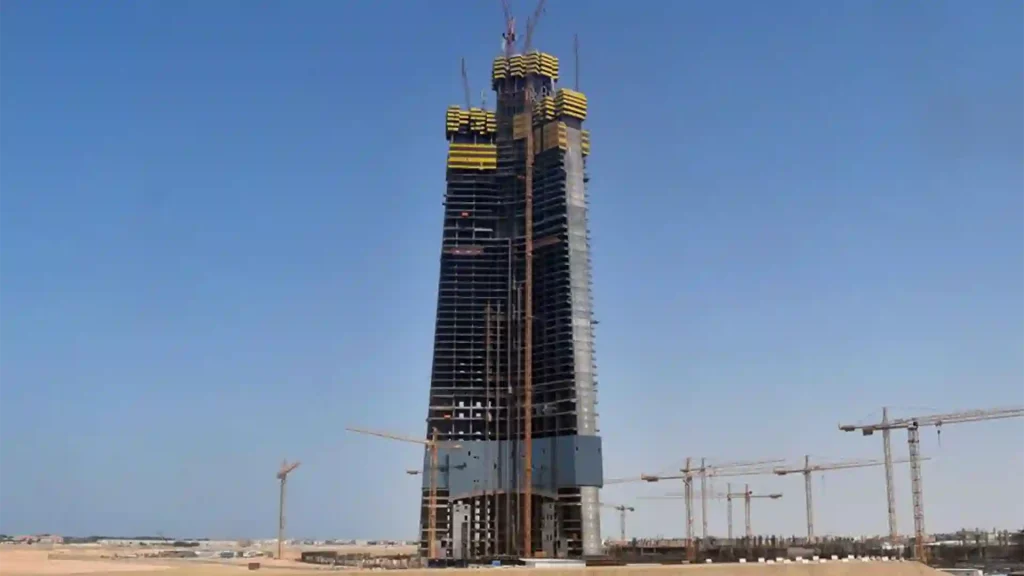
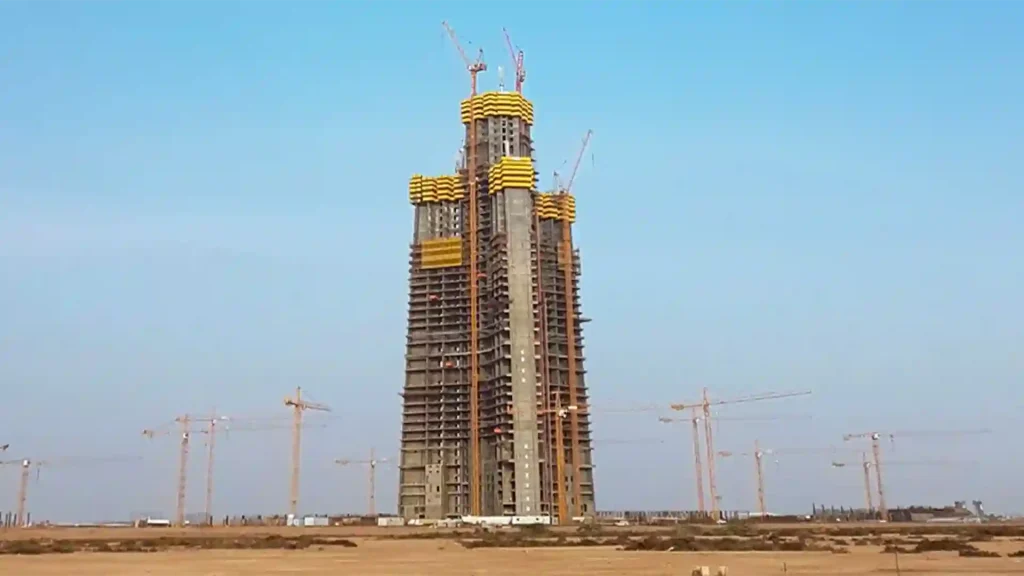
After years of uncertainty, construction officially resumed in January 2025 under a SR7.2 billion contract awarded to Saudi Binladin Group. Since then, progress has been notably swift. By December 2025, the structure had surpassed the 80-floor mark, with construction teams now completing a new floor every three to four days. According to Thornton Tomasetti, the structural engineering firm overseeing the project, the tower is expected to reach its 100th floor by February 2026, with final completion scheduled for August 2028.Commenting on the renewed progress, Talal Ibrahim Al Maiman, CEO of Jeddah Economic Company, described the tower as a powerful symbol of ambition and innovation. He noted that the resumption of construction represents the realization of a long-held vision and positions Jeddah Tower as a driver of economic growth and global recognition for the city.From an engineering perspective, Jeddah Tower incorporates several cutting-edge features designed to address the challenges of extreme height. The building uses a Y-shaped central core, a configuration that enhances structural stability and resistance to wind and seismic forces. Its three-petal footprint and tapering wings create an aerodynamic profile that helps minimize wind loads and reduce vortex shedding, a critical factor for supertall buildings.
Vertical transportation within the tower will rely on one of the most advanced elevator systems ever installed. Manufactured by Kone, the system will include 59 elevators—54 single-deck and five double-deck units—along with 12 escalators. Elevators serving the observation areas will travel at speeds of up to 10 metres per second, ensuring efficient movement across the tower’s vast height.
One of the most distinctive features of Jeddah Tower is its sky terrace, located on level 157. Measuring approximately 30 metres in diameter, this open-air space will be accessible to the public and is expected to become the highest observation point in the world once the tower opens. The terrace is designed to offer a unique experience, blending architectural innovation with breathtaking panoramic views.
As construction accelerates, Jeddah Tower is no longer just a concept or a stalled project—it is rapidly becoming a defining landmark. Upon completion, it will stand as a testament to human ingenuity, engineering excellence, and Saudi Arabia’s determination to set new global benchmarks in architecture and urban development.