Abdullah bin Zayed held a telephone discussion with Iran’s foreign minister, during which both sides reviewed bilateral relations and exchanged views on issues of mutual interest between the two countries.
Phone conversation between Abdullah bin Zayed and Iranian FM focuses on bilateral ties.
UAE–Iran Diplomatic Contact Takes Place Amid Escalating Unrest in Iran
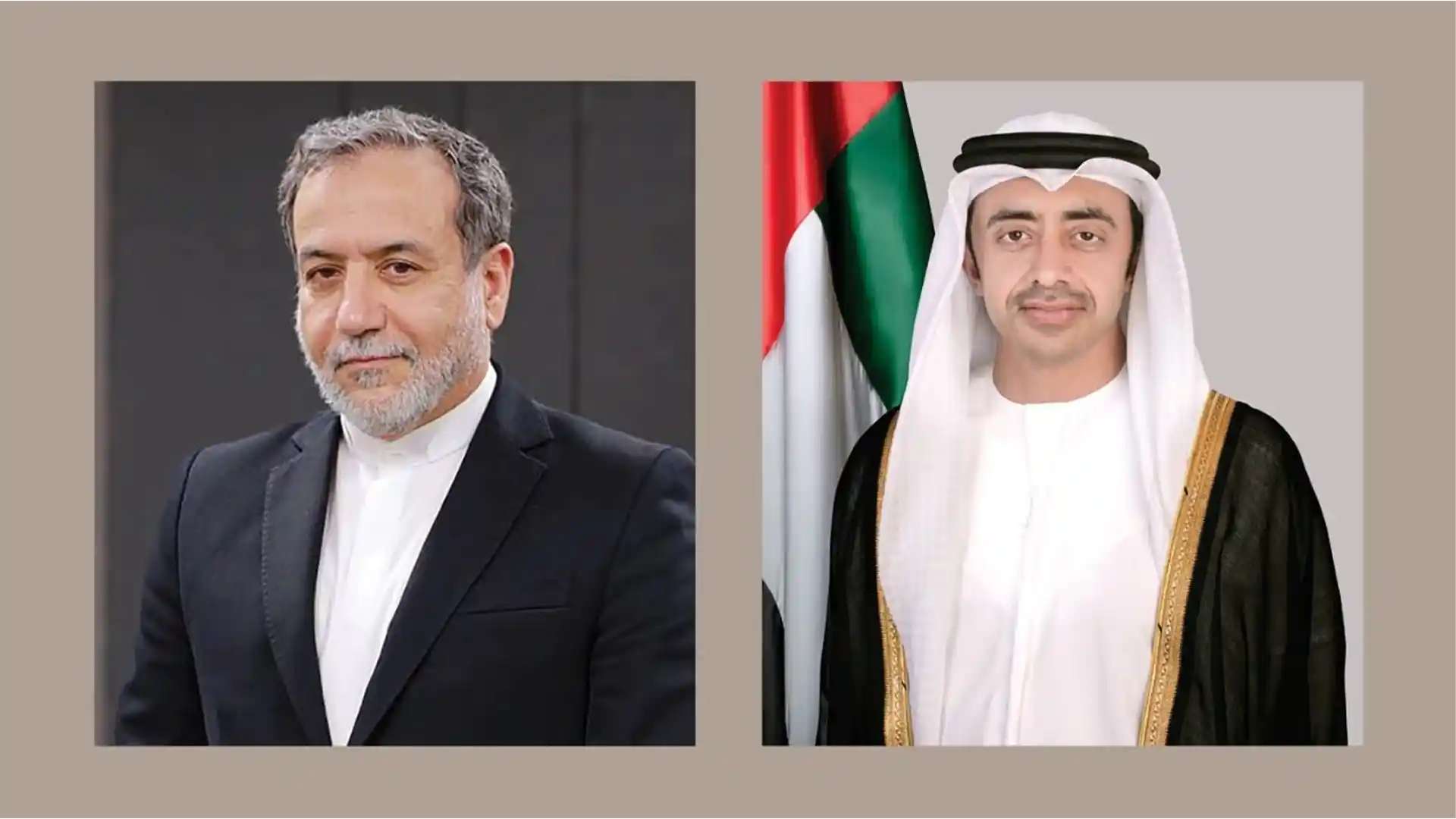
Sheikh Abdullah bin Zayed Al Nahyan, Deputy Prime Minister and Minister of Foreign Affairs of the United Arab Emirates, recently held a telephone conversation with Abbas Araghchi, Iran’s Minister of Foreign Affairs. The discussion focused on the state of bilateral relations between the UAE and the Islamic Republic of Iran, reflecting ongoing diplomatic engagement between the two neighboring countries at a time of heightened regional sensitivity.
While official details of the conversation remained limited, the exchange underscored the importance both sides place on maintaining dialogue and diplomatic communication. Such discussions are part of broader efforts to manage relations in a complex regional environment marked by political uncertainty, economic pressures, and evolving security challenges.
The phone call comes against the backdrop of significant internal developments within Iran, where widespread protests have erupted across multiple cities and provinces, marking one of the most intense periods of domestic unrest the country has witnessed in decades.
A Nation in Turmoil: Protests Spread Across Iran
Iran is currently facing a wave of mass demonstrations that have swept through urban centers, provincial towns, and university campuses. Protesters from diverse backgrounds have taken to the streets demanding sweeping political change, including calls for an end to the clerical establishment that has governed the country since the 1979 Islamic Revolution.
What began as localized demonstrations quickly expanded into a nationwide movement, fueled by long-standing grievances related to political freedoms, economic hardship, social restrictions, and governance. Activists and opposition groups say the protests reflect deep frustration among large segments of the population, particularly young people, women, and urban residents.
The demonstrations have been met with a forceful response from Iranian authorities, who describe the unrest as a threat to national stability and security. Security forces have been deployed across major cities, checkpoints have been established, and public gatherings have been restricted in an effort to contain the movement.
Internet Blackouts and Information Restrictions
One of the defining features of the current unrest has been the extensive restriction of internet access across Iran. Authorities imposed widespread internet shutdowns and severe limitations on mobile data services, particularly during periods of intense protest activity. These blackouts have made it difficult to independently verify events on the ground and have complicated communication between protesters and the outside world.
Human rights organizations and digital rights advocates have criticized the internet restrictions, arguing that they are designed to suppress information, disrupt protest coordination, and limit international scrutiny. Despite these challenges, videos and eyewitness accounts have continued to emerge through alternative channels, painting a picture of escalating confrontations between demonstrators and security forces.
Casualties and Conflicting Narratives
According to activists and rights groups monitoring the situation, the crackdown on protests has resulted in a significant loss of life. Estimates suggest that at least 648 people have been killed during clashes, arrests, and security operations, although the true figure may be higher given the lack of transparent reporting and restricted access to affected areas.
These groups allege that many of the fatalities occurred during violent dispersals of protests, nighttime raids, and encounters at checkpoints. They also report thousands of arrests, including students, journalists, and activists, many of whom have been detained without formal charges or access to legal representation.
Iranian authorities, however, have presented a sharply different account. State media outlets have reported that dozens of members of the security forces have been killed during the unrest, describing them as victims of what officials characterize as organized violence and foreign-backed sabotage. According to these reports, security personnel were targeted during clashes, ambushes, and attacks on public infrastructure.
State Funerals and Pro-Government Mobilization
Iranian state television has broadcast images of funerals held for security personnel killed during the unrest, framing them as national martyrs who lost their lives defending the country. In several instances, these funerals have turned into large pro-government gatherings, with crowds waving flags, chanting slogans in support of the Islamic Republic, and expressing loyalty to the country’s leadership.
Authorities in Tehran have announced plans to hold a large, centrally organized funeral ceremony in the capital to honor those described as the “martyrs” of recent days. The event is expected to draw senior officials, military leaders, and supporters of the government, serving both as a memorial and a political statement reinforcing the state’s narrative of resilience and unity.
Such ceremonies have historically played a symbolic role in Iran’s political culture, reinforcing legitimacy and mobilizing public support during times of crisis. Analysts note that these events are often used to counterbalance images of protest and dissent by projecting strength, order, and popular backing for the ruling system.
Regional and Diplomatic Implications
The unrest in Iran has significant implications not only domestically but also for the wider Middle East. Iran plays a central role in regional geopolitics, with influence extending across Iraq, Syria, Lebanon, Yemen, and beyond. Internal instability raises questions about how the country’s foreign policy posture and regional engagements may be affected in the short and medium term.
Against this backdrop, diplomatic communication between regional actors, including the UAE, takes on added importance. The phone conversation between Sheikh Abdullah bin Zayed and Foreign Minister Abbas Araghchi reflects an awareness of the need to maintain open channels of dialogue, even as Iran navigates internal challenges.
The UAE has consistently emphasized diplomacy, dialogue, and de-escalation as key principles guiding its foreign policy. Maintaining communication with Iran is seen as part of broader efforts to support regional stability, reduce tensions, and prevent misunderstandings that could escalate into wider conflicts.
UAE–Iran Relations: A Complex Dynamic
Relations between the UAE and Iran have historically been shaped by geography, trade, and regional politics. Despite periods of tension, particularly over regional security issues, the two countries have maintained economic ties and diplomatic engagement.
In recent years, there has been a renewed focus on pragmatic diplomacy in the Gulf region, with efforts to manage differences through dialogue rather than confrontation. High-level contacts, including phone calls and diplomatic visits, are part of this approach, aimed at fostering communication and addressing shared concerns.
The latest conversation between the two foreign ministers fits within this broader context, signaling continuity in diplomatic engagement even amid challenging circumstances.
Public Sentiment and the Role of Youth
One of the most striking aspects of the current protests in Iran is the prominent role played by young people. Iran has a relatively young population, with a significant proportion under the age of 30. Many of these young citizens face limited economic opportunities, rising living costs, and restrictions on personal freedoms, contributing to growing dissatisfaction.
Universities and schools have emerged as key centers of protest activity, with students organizing demonstrations and expressing solidarity with broader social movements. Women, in particular, have been highly visible in the protests, raising issues related to social rights, personal autonomy, and equality.
Observers note that the scale and persistence of youth participation reflect deeper generational shifts within Iranian society, with younger citizens increasingly questioning established norms and structures.
Government Response and Security Measures
Iranian authorities have defended their actions as necessary to maintain order and protect national security. Officials argue that protests have been exploited by hostile foreign actors seeking to destabilize the country, a claim frequently echoed in state media.
In response to the unrest, security forces have increased patrols, expanded surveillance, and enforced strict measures on public gatherings. Courts have also reportedly expedited cases involving protesters, drawing criticism from human rights groups concerned about due process and fairness.
The government maintains that it supports peaceful expression but will not tolerate violence, vandalism, or threats to public safety. Critics, however, argue that the line between peaceful protest and unlawful activity has been broadly defined, resulting in the suppression of dissent.
International Reaction
The events in Iran have drawn widespread international attention. Governments, human rights organizations, and international institutions have issued statements expressing concern over the use of force against protesters and calling for restraint.
Some countries have urged Iranian authorities to respect the right to peaceful assembly and freedom of expression, while others have imposed or considered sanctions targeting individuals and entities linked to human rights abuses.
Iranian officials have rejected external criticism, describing it as interference in the country’s internal affairs and accusing foreign governments of double standards.
The Importance of Diplomatic Engagement
In this complex environment, diplomatic communication remains a critical tool for managing uncertainty and reducing the risk of escalation. The phone call between Sheikh Abdullah bin Zayed and Abbas Araghchi highlights the role of diplomacy in maintaining regional dialogue during periods of internal and external tension.
Such exchanges allow countries to share perspectives, clarify positions, and reinforce commitments to peaceful engagement. For the UAE, maintaining contact with Iran aligns with its broader strategy of fostering stability through dialogue and cooperation.
Looking Ahead
As protests continue and the situation within Iran evolves, the coming weeks are likely to be pivotal. The government faces the challenge of addressing public grievances while maintaining control, while protesters continue to demand change despite significant risks.
The long-term impact of the unrest on Iran’s political system, economy, and regional role remains uncertain. Much will depend on how authorities respond, whether avenues for reform or dialogue emerge, and how international dynamics shape the environment.
For neighboring countries and regional partners, developments in Iran will remain closely watched. Diplomatic engagement, such as the recent phone conversation between the UAE and Iranian foreign ministers, underscores the interconnected nature of regional stability and the importance of maintaining communication during times of upheaval.
Conclusion
The recent phone call between Sheikh Abdullah bin Zayed Al Nahyan and Iranian Foreign Minister Abbas Araghchi took place at a moment of profound internal challenge for Iran. While the discussion centered on bilateral relations, it unfolded against a backdrop of widespread protests, a forceful security response, and growing international concern.
As Iran navigates this turbulent period, diplomatic dialogue with regional partners remains an essential component of managing uncertainty and promoting stability. The situation continues to evolve, with significant implications not only for Iran’s future but also for the broader Middle East.