Despite concerns of a slowdown, Dubai’s 2025 property data shows strong performance, contradicting analyst forecasts and highlighting continued demand, resilience, and sustained growth across key real estate segments.
Dubai slowdown? 2025 property figures challenge analysts’ predictions
Dubai’s property sector has once again confounded analysts and investors, posting robust 20 per cent annual growth in 2025 and overturning widespread expectations of a market slowdown.
Property leaders say the strong showing last year clearly demonstrates that the expansion is not driven by speculation. Instead, it is underpinned by steady population growth, long-term residency programmes, major infrastructure investment, and solid economic fundamentals. Several senior industry figures are even more optimistic about 2026, citing continued population increases, ongoing inflows of high-net-worth individuals, and the launch of more competitively priced residential projects.
This performance stands in contrast to projections made in 2024, when global ratings agency Fitch forecast that Dubai property prices could decline by as much as 15 per cent in 2025 due to a potential oversupply.
However, newly released figures show Dubai’s real estate market recorded more than 270,000 transactions in 2025, with a total value of Dh917 billion, marking a 20 per cent rise compared to the previous year.
The results also highlight steady progress toward the targets outlined in the Dubai Real Estate Sector Strategy 2033, which aims to increase transaction values by 70 per cent to reach Dh1 trillion over the coming years.
Investment activity remained strong throughout 2025, with real estate investments surpassing Dh680 billion across 258,600 transactions. This represented a 29 per cent increase in value and a 20 per cent rise in deal volume. The investor base expanded to approximately 193,100 individuals, up 24 per cent year on year, including 129,600 new investors — a growth of 23 per cent. Resident investors accounted for 56.6 per cent of the total.
‘Growth driven by fundamentals’
According to Allsopp & Allsopp, Dubai’s real estate sector has clearly outperformed earlier slowdown forecasts, with Dubai Land Department data showing solid transaction growth across all major segments.
Pricing trends further support this momentum. The Dubai Land Department reported average price growth of around 7 per cent in 2025, while Allsopp & Allsopp’s internal data indicated a much sharper rise of nearly 33 per cent in average sales prices. This, the firm said, reflects a growing preference for higher-value properties, reinforcing long-term confidence in the market.
“All core indicators — transaction volumes, pricing, and average values — are moving upward. The idea of a slowdown simply doesn’t match what the data is telling us,” said Lewis Allsopp, chairman of Allsopp & Allsopp.
Humaira Vaqqas, senior consultant at Range International Properties, described Dubai’s 2025 property performance as both exceptionally strong and well-balanced.
She noted that record-breaking transaction volumes and value growth point to sustained demand from end-users, alongside continued confidence from institutional and international investors. “What is particularly notable is that this growth is not speculative. It is supported by population inflows, long-term residency initiatives, infrastructure development, and a resilient economy,” she said, adding that improved transparency and regulation have helped maintain momentum while limiting volatility.
What it means for investors
Vaqqas also highlighted that rising transaction volumes signal strong market liquidity and healthy absorption across different property segments.
“For investors, this creates opportunities for capital appreciation, easier exits, and attractive rental yields driven by ongoing demand. For end-users, it reflects confidence in long-term ownership, but also underscores the importance of entering the market early and making informed decisions, as prices in prime, well-connected communities are becoming increasingly competitive,” she explained.
Looking ahead to 2026
Vaqqas believes the market’s performance in 2025 will shape investor behaviour in 2026 and beyond, drawing in a wider pool of participants.
“The strong results set a clear benchmark for the future. Investors are likely to focus more on long-term, portfolio-based strategies, prioritising quality developments, branded residences, and communities aligned with Dubai’s 2040 Urban Master Plan,” she said. She also expects growing interest from institutional investors and high-net-worth individuals who increasingly view Dubai as a stable global real estate destination rather than a cyclical market.
Allsopp & Allsopp echoed this optimism, describing 2025 as Dubai’s strongest property year to date and suggesting that conditions point to an even more promising 2026.
“We continue to see steady population growth, strong inflows of high-net-worth individuals, and rising demand from established families. These are long-term fundamentals that support sustainable market strength, not short-term speculation,” Lewis Allsopp said.
With global interest in Dubai real estate continuing to intensify and wealth migration to the UAE on the rise, industry experts conclude that the emirate’s residential market is entering its next phase from a position of resilience and confidence, rather than decline.
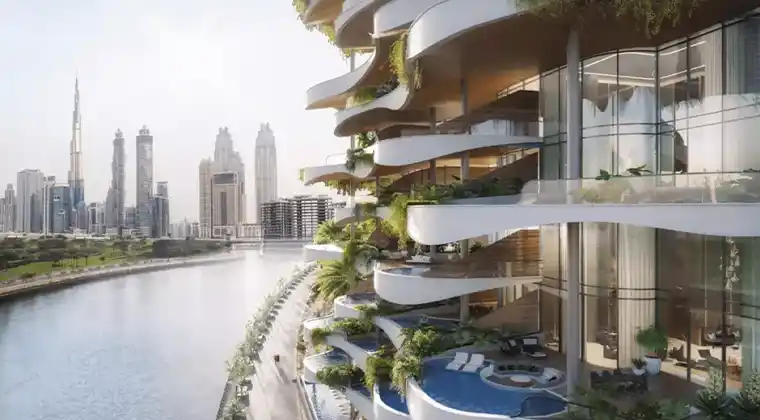
Market observers also point to diversification across property segments as a key factor behind Dubai’s resilience. While luxury and ultra-luxury homes continue to attract high-net-worth buyers, mid-market and affordable housing have seen rising demand from professionals and growing families. Developers have increasingly focused on delivering projects that cater to a broader demographic, helping to balance supply and demand. This diversification has reduced the risk of overheating in any single segment and strengthened overall market stability, making Dubai’s real estate sector more adaptable to global economic fluctuations.
Rental market dynamics have further supported investor confidence, with strong tenant demand sustaining healthy yields across many communities. Population growth, driven by job creation and business expansion, has increased demand for rental housing, particularly in well-connected areas. As rents continue to remain firm, investors are benefiting from stable income streams alongside capital appreciation. Analysts say this dual advantage has encouraged both first-time and repeat investors to remain active in the market, reinforcing liquidity and helping maintain momentum throughout 2025.
Policy initiatives introduced in recent years have also played a critical role in shaping investor sentiment. Long-term residency visas, retirement visas, and expanded eligibility for golden visas have encouraged property ownership among expatriates and international buyers. These measures have provided greater security and long-term visibility, making real estate investment in Dubai more attractive. In parallel, regulatory reforms and improved data transparency have strengthened trust in the market, allowing investors to make decisions based on reliable information and long-term fundamentals.
Looking ahead, analysts believe that infrastructure development will remain a key growth driver for Dubai’s property sector. Major transport upgrades, new residential communities, and mixed-use developments aligned with the Dubai 2040 Urban Master Plan are expected to unlock new investment opportunities. As the city continues to expand and evolve, demand is likely to shift toward emerging neighbourhoods offering improved connectivity and lifestyle amenities. This ongoing development pipeline is expected to support steady growth, even as global property markets face increasing uncertainty.