Guests at Wynn Al Marjan Island can expect an immersive, cinematic-inspired experience, where every detail—from the décor to the activities—feels like stepping into a film, blending luxury, entertainment, and storytelling throughout their stay.
Inside Wynn Al Marjan Island: A Guest Experience Styled Like a Movie.
Wynn Al Marjan Island: A Cinematic Journey in Ras Al Khaimah
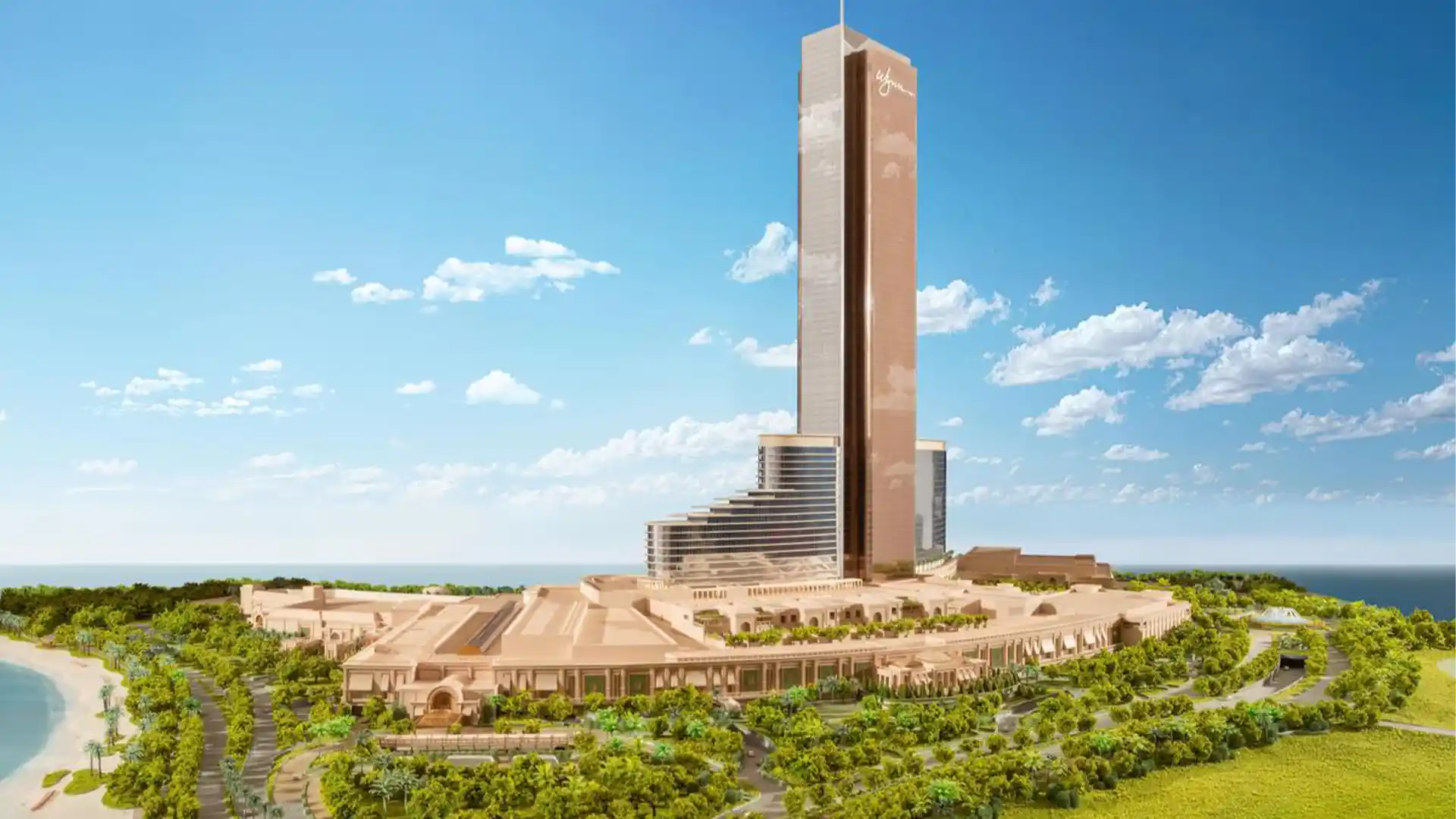
As the UAE prepares for the arrival of its first integrated resort in Ras Al Khaimah, Wynn Al Marjan Island promises to offer visitors an experience unlike any other in the region. Slated to open in the spring of 2027, the property is not merely a collection of luxury accommodations, dining venues, and entertainment spaces—it is conceived as a carefully orchestrated journey that guides guests from arrival to departure in a manner reminiscent of a cinematic experience. The chief creative officer behind the project, Todd-Avery Lenahan, has offered an unprecedented glimpse into the philosophy, design, and storytelling that underpin the resort, revealing how every element is intended to be part of a choreographed narrative.
Arrival as Scene One
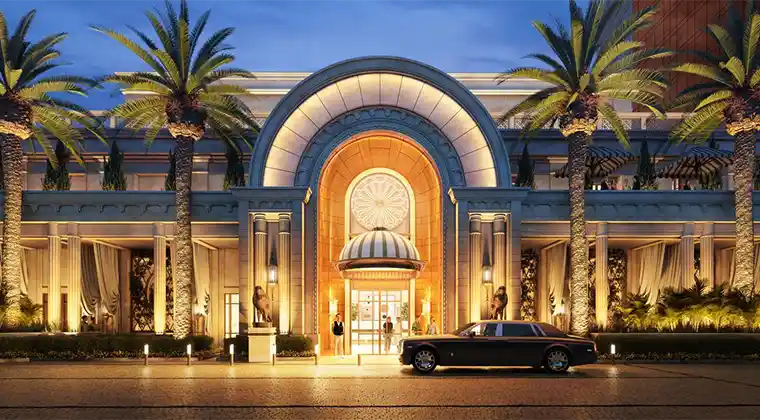
According to Lenahan, the experience begins the moment guests approach the property. “I’ve always been fascinated by how film guides an audience,” he explains. “Movement is controlled, perspective shapes emotion, and what appears to be a simple camera pan is often meticulously planned.” That same mindset informs the arrival sequence at Wynn Al Marjan Island. From the first glimpse of the resort on the horizon to the moment guests step into the lobby, each visual and spatial cue has been carefully considered to evoke anticipation, wonder, and a sense of narrative progression.
The lobby, Lenahan notes, serves as a kind of cinematic “Scene One.” “It functions almost like a set, immediately placing guests at the edge of a story,” he says. Every detail—from the arrangement of furniture to the interplay of light and shadow—is designed to create a sense of intrigue and to invite exploration. While the resort lacks a single defining centerpiece that dominates the property, the arrival experience is perhaps the closest representation of the resort’s overarching vision: a carefully staged introduction that sets the tone for what is to come.
Gradual Discovery and the Art of Unveiling
A key principle guiding the design of Wynn Al Marjan Island is the notion of gradual discovery. Rather than revealing everything at once, the resort unfolds like a carefully edited film sequence. Lenahan describes it as a “choreography of teasing and revealing,” with spaces intentionally designed to create curiosity and anticipation. Guests encounter one striking visual or spatial element after another, each moment designed to feel like a revelation, offering a promise of something even more spectacular just beyond the next turn or corridor.
This approach is evident not only in the lobby but throughout the resort. Public spaces, dining venues, and leisure areas are arranged to encourage exploration and engagement, with sightlines and circulation patterns orchestrated to guide visitors subtly from one experience to the next. “Nothing is accidental,” Lenahan emphasizes. “Every detail has been thoughtfully considered, from the scale of a doorway to the way light filters through a corridor.”
By layering experiences in this way, the resort transforms what might be a simple stay into a narrative journey. Guests are not merely observers; they become participants in a story, moving through spaces that are sequenced like scenes in a film. Each encounter is meant to provoke curiosity, create emotional resonance, and heighten the sense of being somewhere extraordinary.
Balancing Brand Identity with Place
Wynn’s design ethos is widely recognized for its emphasis on craft, composition, and attention to detail, and Wynn Al Marjan Island continues that tradition while responding to its unique surroundings. “What will feel unmistakably Wynn is the level of craft and composition,” Lenahan explains. “We design entire worlds, not just buildings. There is a clarity of proportion, a sense of theatre, and an attention to detail that is recognizably ours.”
At the same time, the resort responds to the character of Ras Al Khaimah itself. The design prioritizes space, privacy, and calm, with layouts and sightlines carefully calibrated to encourage a sense of ease and discretion rather than spectacle. The natural beauty of the coastline, the openness of the surrounding landscape, and the tranquil energy of the region are woven into the guest experience, ensuring that the resort feels rooted in its location rather than imposed upon it.
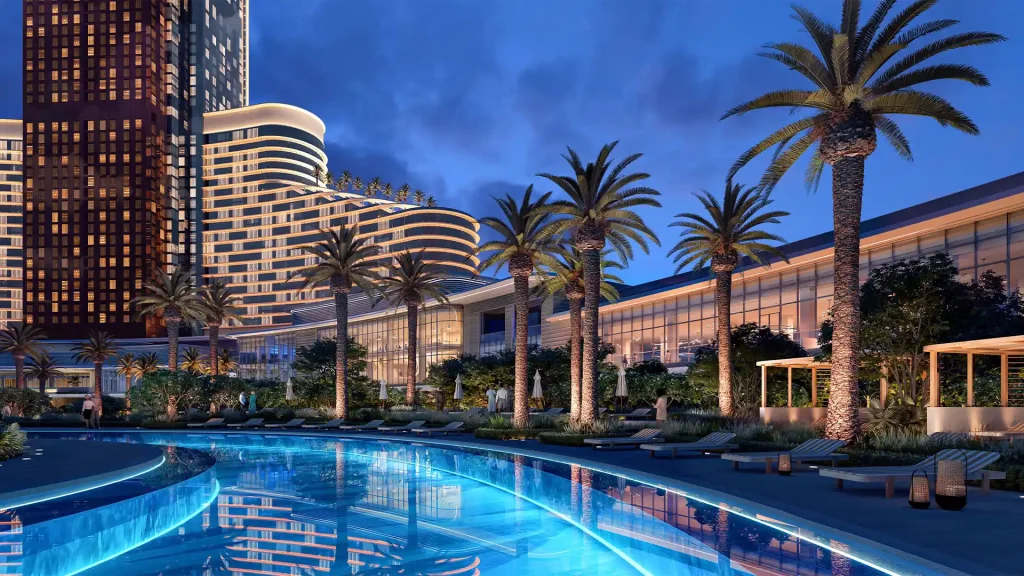
This dual approach—preserving the signature Wynn identity while responding to place—is evident in the public spaces, the landscaping, and the architecture. Outdoor terraces, pool areas, and garden pathways are arranged to maximize vistas, while corridors and lounge areas are designed to provide moments of intimacy and quiet reflection. Even the placement of trees, water features, and sculptural elements has been carefully calibrated to frame key views and reinforce the sense of narrative progression.
Guest Rooms as Layered Experiences
The philosophy of gradual revelation extends into the guest rooms themselves. Rather than treating accommodations as purely functional spaces, the design team has conceived them as layered, intimate environments that prioritize comfort, shelter, and restfulness. Lenahan describes the rooms as “spaces that feel both private and expansive, where every element has been considered to create a sense of calm and respite.”
This layering extends to the textures, materials, and finishes used in each room. From the selection of fabrics and upholstery to the arrangement of furniture and lighting, the guest environment is designed to engage the senses while providing a sense of understated luxury. Subtle design cues guide the eye and encourage discovery within the room, whether through strategically placed art pieces, carefully framed views of the sea, or the interplay of light and shadow throughout the space.
The goal, Lenahan notes, is to create environments where guests feel both cocooned and connected—where they can retreat for privacy while remaining aware of the beauty and narrative of the larger resort. It is an approach that mirrors the philosophy applied throughout the public areas: a balance of control and freedom, of revelation and anticipation, of intimacy and spectacle.
Cinematic Inspiration Beyond the Lobby
While the lobby serves as a clear introduction to the cinematic approach, the influence of film extends throughout the resort. Public spaces are treated like carefully constructed sets, with sightlines, framing, and pacing all designed to evoke specific emotional responses. Dining venues, for example, are positioned to create moments of surprise, with dramatic reveals as guests move between rooms or terraces. Similarly, leisure areas such as pools, spas, and fitness spaces are integrated into the landscape in a way that balances function with aesthetic storytelling, ensuring that each experience feels purposeful and memorable.
Lighting, both natural and artificial, plays a central role in this cinematic philosophy. Lenahan explains that light is used not only to illuminate but to sculpt, define, and sequence spaces. Changes in light—from the soft glow of early morning to the golden hues of sunset—are leveraged to enhance the emotional impact of each setting, reinforcing the sense of a journey unfolding over time.
The Role of Movement and Perspective
One of the central tenets of the Wynn Al Marjan Island design is the idea that movement shapes perception. Lenahan draws direct parallels to filmmaking, noting that how guests move through a space can profoundly influence their emotional experience. Corridors, staircases, and open-plan areas are all choreographed to create a sense of narrative flow, guiding visitors from one discovery to the next. Strategic shifts in perspective—through changes in elevation, framing of views, or sudden openings onto dramatic vistas—are used to evoke wonder and anticipation.
This careful orchestration of movement ensures that the resort never feels static. Instead, each step, turn, or pause is part of an evolving story, encouraging guests to explore, reflect, and engage with the environment in a way that feels both spontaneous and deliberately crafted.
Integration with Nature and Surroundings
Another defining feature of Wynn Al Marjan Island is its integration with the natural environment. The resort’s design respects the unique coastal and mountainous context of Ras Al Khaimah, using sightlines, landscaping, and water features to frame key vistas and connect guests to the surrounding landscape. Outdoor spaces are designed to offer both expansive views and intimate retreats, balancing openness with privacy.
Gardens, pools, and terraces are not simply amenities; they function as narrative devices, shaping the guest experience by guiding attention, framing vistas, and providing moments of reflection. Whether gazing across the Arabian Gulf or discovering a secluded garden nook, guests are invited to experience a sense of connection to the place while remaining immersed in the resort’s crafted story.
Craftsmanship, Composition, and Detail
Throughout Wynn Al Marjan Island, meticulous attention to detail reinforces the sense of narrative and luxury. Materials are selected not only for beauty but for their tactile qualities, ensuring that every surface—from marble floors to wood paneling—contributes to the overall sensory experience. Decorative elements, art installations, and bespoke furnishings are integrated into the spaces in ways that enhance storytelling, creating layers of discovery for guests to notice over time.
Lenahan emphasizes that this approach reflects a broader philosophy: “We design entire worlds, not just buildings. The clarity of proportion, the sense of theatre, and the attention to detail are what make a space feel unmistakably Wynn.” By combining these elements with responsiveness to the local context, Wynn Al Marjan Island aims to deliver a guest experience that is both globally sophisticated and locally resonant.
Conclusion: A Story Unfolding
Ultimately, Wynn Al Marjan Island is designed to feel like a story in motion. From the first steps into the lobby to the layered intimacy of the guest rooms, every aspect of the resort is orchestrated to evoke wonder, anticipation, and emotional engagement. Movement, light, perspective, and detail all converge to create a cinematic experience that unfolds gradually, inviting guests to explore and discover at their own pace.
By balancing the brand’s signature design identity with sensitivity to Ras Al Khaimah’s unique landscape, the resort promises a guest experience that is at once recognizably Wynn and unmistakably tied to its surroundings. It is a place where craft, composition, and narrative come together, offering visitors not just a stay, but a journey—a cinematic adventure waiting to be experienced in real life.
Wynn Al Marjan Island: Crafting a Distinctive Middle Eastern Identity
Wynn Resorts is a name often synonymous with the high-octane energy, theatrical design, and vibrant spectacle of Las Vegas. For many, its brand evokes dazzling lights, dramatic architecture, and visually dynamic spaces that capture attention at every turn. Yet, as Todd-Avery Lenahan, President and Chief Creative Officer of Wynn Design and Development, explains, the creative expression at Wynn Al Marjan Island in Ras Al Khaimah is intentionally distinct from that Las Vegas persona.
“People often think of Wynn as Las Vegas flair, because the environments there are highly entertaining and visually dynamic,” Lenahan says. “We are, fundamentally, an entertainment company. But that energy is not confined to one room or one venue—it is layered into every facet of our design. It exists in restaurants, nightlife, circulation, and even in how the architecture and emotional experience intertwine.”
At Wynn Al Marjan Island, that signature energy is expressed in a manner befitting the regional context. The resort maintains recognizable Wynn identity—through craft, proportion, and attention to detail—but adapts the expression of that energy to the landscape, culture, and sensibilities of the Middle East. “Here, the flair comes from scale, composition, and contrast rather than the color intensity or spectacle you might associate with Las Vegas. The lower levels carry a sense of high energy, while the upper floors provide calm, serenity, and spaciousness. Guests feel the brand, but the experience belongs uniquely to this place.”
Designing With the Sun and Sea
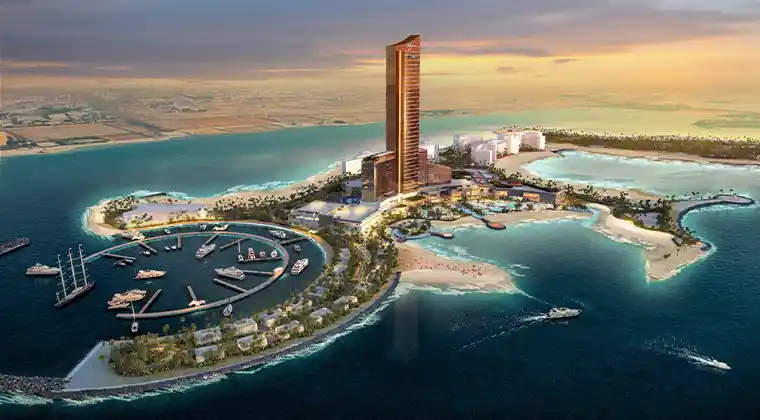
The surrounding environment was a primary consideration from the earliest stages of design. The resort’s siting along the northern coast of Ras Al Khaimah was deliberate, taking full advantage of the sweeping vistas of the Arabian Gulf. Lenahan emphasizes that the positioning of the building and its orientation were dictated by the natural landscape and the movement of the sun.
“With the beach to the north, we deliberately oriented the resort to engage with the open sea. The primary focus is the timeless majesty of the water,” he explains. The rhythm of sunlight across the Gulf, striking the water from south to north throughout the day, creates an ever-changing palette of blues and aquamarines. By aligning the building with this natural progression, each façade and terrace captures the sea’s most vivid and compelling expressions.
This attentiveness to environmental context extends beyond mere aesthetics. The interplay of sunlight, shadow, and reflection informs interior spaces, guiding the flow of natural light through corridors, public spaces, and guest rooms. Each movement through the resort is framed by these shifts, subtly affecting mood, perception, and emotional engagement.
Art as the Foundation of Space
A defining aspect of Wynn Al Marjan Island is the central role of art in shaping the resort’s environment. Rather than treating artworks as decorative afterthoughts, Lenahan’s team integrated pieces into the design from the earliest conceptual stages. “Some of the most significant acquisitions were made even before the design was fully underway,” he notes.
The approach is intentional: artwork serves as a foundation around which architecture, scale, and spatial rhythm are constructed. “When you find a work with a strong presence, it does more than decorate—it informs the space. Certain pieces became the starting point for entire rooms. They defined scale, set the color palette, and influenced proportion. The architecture grew organically from the art itself.”
As a result, Wynn Al Marjan Island is as much a living gallery as it is a resort. Each space engages in a conversation with the art within it, creating layered experiences that invite both visual and emotional engagement. Guests encounter works that range from ancient pieces to contemporary commissions, placed not according to chronology but through resonance. Ancient sculptures may sit beside modern installations, creating dialogue and contrast that energizes the environment.
A New Way of Experiencing Art
Lenahan emphasizes that the resort seeks to redefine how art is encountered in hospitality settings. “We didn’t want the experience to feel like a museum, where people observe passively behind ropes. Instead, guests are invited to interact with the art—through proximity, movement, and the spatial context around each piece.” This philosophy allows visitors to engage with art as an integrated part of the environment rather than a separate, isolated attraction.
The collection also pays homage to the region’s rich cultural legacy. The UAE and broader Middle East have inspired generations of artists, particularly during the Orientalist movement, when Western painters traveled to document unfamiliar landscapes and cultural practices. By returning these works to the region that inspired them, Wynn Al Marjan Island provides a unique opportunity for guests to see the art in its authentic context. Complementing these historical works, contemporary artists from the region are included to ensure that the collection reflects both the past and the present, reinforcing a narrative that is both global and local.
Balancing Creative Challenges
Lenahan notes that some of the most challenging creative decisions were often the least visible to guests. These decisions required conviction and foresight, impacting multiple facets of the project simultaneously. For example, determining the building’s overall orientation was a critical choice that influenced light, sightlines, and the way guests experience the property from arrival to departure. Similarly, integrating an art collection of this scale into a functional resort environment required careful planning to ensure cohesion and harmony.
“These choices don’t always manifest as dramatic moments but shape the project continuously, quietly influencing every aspect of the design,” he explains. The cumulative effect is a resort in which every detail—from circulation patterns to furniture placement—is part of a coherent and intentional narrative.
A Layered Guest Experience
The philosophy of Wynn Al Marjan Island extends beyond visual design. Guest experience is treated as a carefully choreographed journey, with layers of discovery designed to unfold gradually. As with the art integration, circulation, light, and perspective all contribute to the narrative of the stay. Public spaces, guest rooms, and outdoor areas are sequenced to create moments of surprise, reflection, and delight, ensuring that each encounter feels meaningful and unique.
Even subtle aspects—like the way sunlight shifts over the water, or how art interacts with shadows in a corridor—become part of this immersive storytelling. Guests are encouraged to explore, pause, and engage with their surroundings, creating an experience that feels both personal and cinematic.
A Regional Identity
While Wynn’s identity is globally recognized, Lenahan stresses that the resort’s design responds deeply to its location in the Middle East. “We wanted the project to feel unmistakably Wynn, but also unmistakably Ras Al Khaimah. The scale, calmness, and intimacy of the spaces respond to the region’s character, respecting the landscape, privacy expectations, and cultural sensibilities.”
This emphasis on regional adaptation ensures that Wynn Al Marjan Island resonates with local context while delivering the luxury, craftsmanship, and narrative experience for which the brand is known. Public spaces, guest rooms, and amenities are all designed with this balance in mind, combining global design excellence with a sensitivity to place.
The Interplay of Energy and Calm
One of the resort’s most distinctive features is the nuanced layering of energy. While the lower levels carry vibrant, dynamic energy—appropriate for restaurants, public spaces, and entertainment venues—this intensity softens as visitors ascend through the building. Guest rooms and upper-level terraces provide calm, intimate spaces that offer retreat, reflection, and connection to the natural surroundings.
This layering reinforces the cinematic philosophy that underpins the design: spaces unfold gradually, emotional cues shift subtly, and each stage of the guest experience is orchestrated to evoke engagement, anticipation, and wonder.
Conclusion: Crafting a Story Through Architecture
In every aspect, Wynn Al Marjan Island demonstrates a commitment to narrative-driven design. The resort’s orientation, integration of art, interplay of light and space, and layered guest experiences collectively create a cohesive, cinematic environment. Lenahan’s team has approached the project as both a work of art and a functional resort, ensuring that every element contributes to an unfolding story.
By balancing the globally recognized Wynn identity with responsiveness to the landscape, light, and cultural context of Ras Al Khaimah, the resort promises a guest experience that is immersive, memorable, and unmistakably tied to its setting. From the moment of arrival to the quiet intimacy of guest rooms and terraces, Wynn Al Marjan Island invites visitors to step into a world where art, architecture, and human experience converge in a carefully orchestrated narrative journey.