Greenland’s growing autonomy and strategic significance challenge Denmark’s control, creating a delicate balance between defending sovereignty, managing resources, and navigating geopolitical pressures as the island increasingly asserts its independence.
Greenland’s Slow Exit: Denmark’s Defense Dilemma
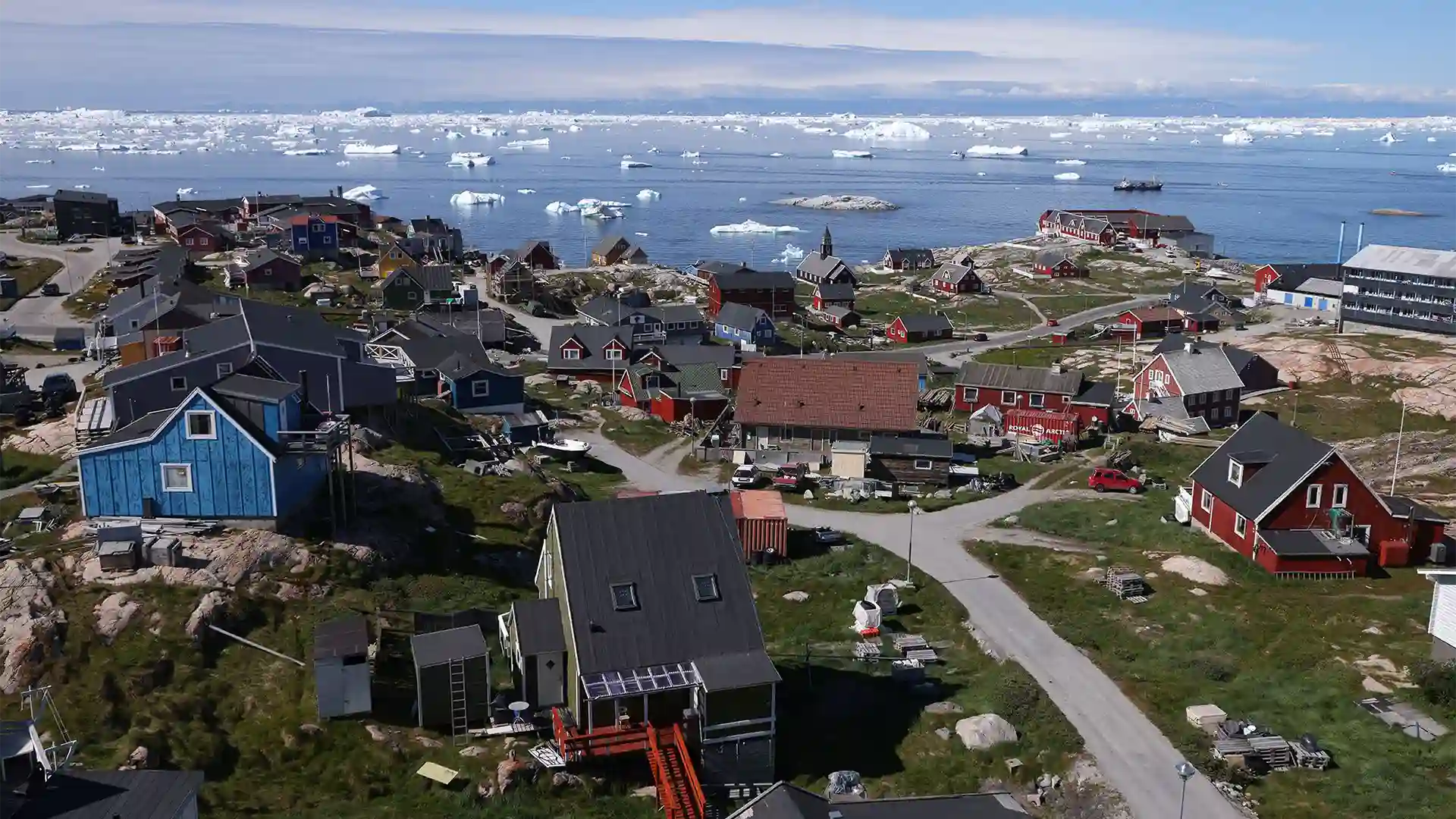
Next week, when U.S. Secretary of State Marco Rubio meets with his Danish and Greenlandic counterparts, Denmark will find itself in a challenging position: defending a territory that has been steadily moving toward greater autonomy and eventual independence since 1979.
The situation gained global attention when former U.S. President Donald Trump suggested that Greenland could be purchased or forcibly taken, prompting a surge of European support for Denmark. Yet the episode also highlighted an uncomfortable truth: Denmark is now expending diplomatic and political energy to protect a region whose population increasingly seeks independence. Greenland’s largest opposition party has even expressed interest in negotiating directly with Washington, bypassing Copenhagen entirely.
“Denmark risks depleting its foreign policy capital to defend Greenland, only to see it chart its own path later,” said Mikkel Vedby Rasmussen, a political science professor at the University of Copenhagen.
Strategic Importance of Greenland
From a strategic standpoint, Denmark cannot afford to lose Greenland without jeopardizing its influence in the Arctic. Greenland occupies a critical location between Europe and North America and hosts key sites
for U.S. missile defense systems. For Copenhagen, holding onto Greenland is not merely about national pride; it is about maintaining a foothold in a region of growing geopolitical significance.
Yet, despite Denmark’s efforts, Greenlanders may still choose independence or negotiate directly with Washington, leaving Denmark with little tangible gain for the resources and attention invested.
The issue extends beyond Denmark’s national interests. European allies have rallied behind Copenhagen not just out of solidarity but also to avoid setting a precedent that could embolden other nations to pursue territorial claims against smaller states, potentially destabilizing the post-World War II international order.
Denmark’s foreign ministry declined to comment directly on the situation but referenced a joint statement from Danish Prime Minister Mette Frederiksen and Greenlandic Prime Minister Jens-Frederik Nielsen made on December 22. “National borders and the sovereignty of states are rooted in international law,” the two leaders said. “These principles are fundamental. Greenland belongs to the Greenlanders, and no country can simply annex it.”
Frederiksen added this week, “If the U.S. were to attack another NATO member, everything stops—including NATO and the security that alliance has provided since World War II.”
The Greenland Card
For now, the Trump administration maintained that all options were on the table, including purchasing Greenland or taking control by force. Copenhagen professor Rasmussen noted that any discussion of whether Greenland is worth defending has been overshadowed by public outrage over Trump’s remarks.
During the Cold War, Greenland’s strategic location granted Denmark disproportionate influence in Washington while allowing it to maintain relatively low defense spending as a NATO member. This advantage came to be known as “the Greenland Card,” a concept highlighted in a 2017 report by the University of Copenhagen’s Centre for Military Studies.
Meanwhile, Greenlanders’ aspirations for self-determination have long been developing. Since the establishment of its own parliament in 1979 and the granting of greater autonomy, Greenland has steadily moved toward independence. A 2009 agreement explicitly recognized the right of Greenlanders to decide their own future.
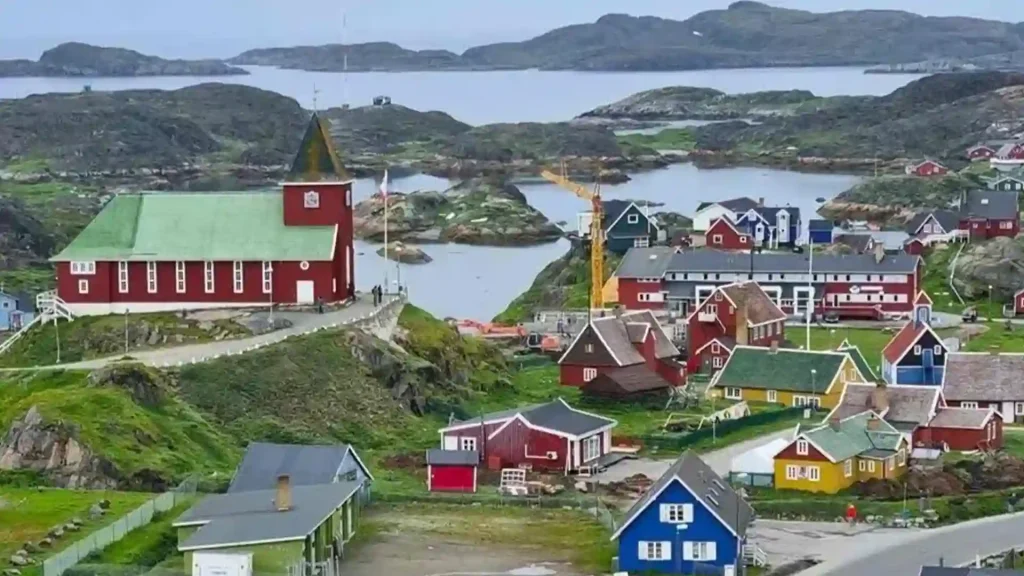
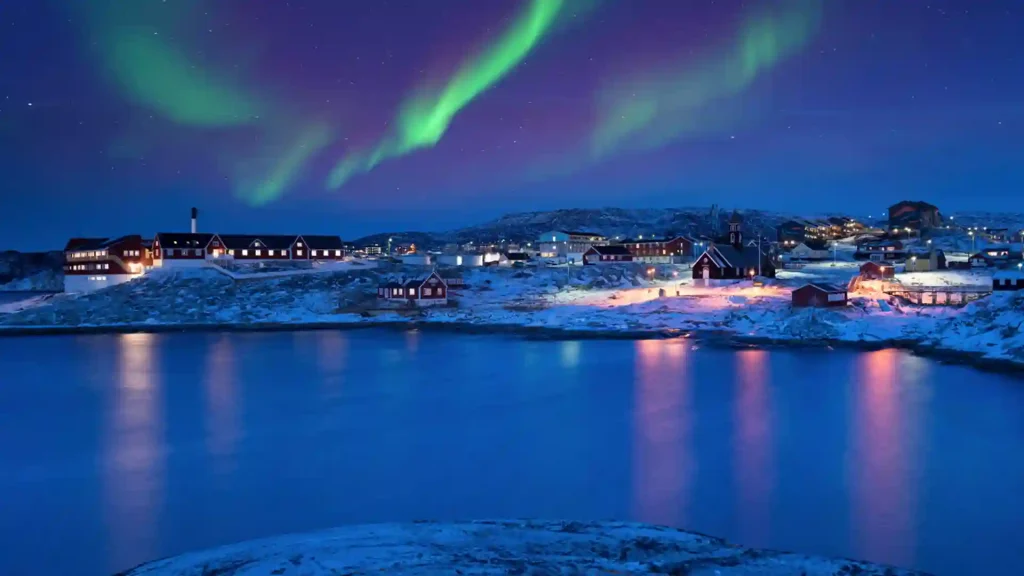
All political parties in Greenland support eventual independence, though they differ on timelines and approaches. The pressure from Washington has accelerated these discussions, forcing Copenhagen to invest political and financial resources in a relationship with an increasingly uncertain outcome.
“How much effort should we put into a relationship when Greenland seems determined to go its own way?” asked Joachim B. Olsen, a Danish political commentator and former lawmaker.
Financial Implications
Denmark provides an annual block grant of approximately 4.3 billion Danish crowns ($610 million) to Greenland, whose economy is nearly stagnant, with GDP growth projected at just 0.2 percent in 2025. The central bank estimates Greenland’s public finances face an annual shortfall of roughly 800 million crowns. Denmark also funds the island’s policing, judiciary, and defense, bringing total annual support to nearly $1 billion.
In addition, Copenhagen recently announced a 42 billion Danish crowns ($6.54 billion) Arctic defense package in response to U.S. criticism that Denmark had not done enough to secure Greenland.
Some observers argue that the relationship cannot be reduced to financial or defense calculations. “This is more than economics or security. It’s about history, culture, and familial ties,” said Marc Jacobsen, associate professor at the Royal Danish Defence College.
A Delicate Balancing Act
For Prime Minister Frederiksen, navigating Greenland’s future is a tightrope. Denmark must uphold its credibility in international diplomacy, yet a firm stance risks straining relations with the United States, especially amid a heightened threat from Russia.
Frederiksen also faces a domestic election this year, though Greenland has not emerged as a major campaign issue. Some Danes question the necessity of clinging to Greenland. “I don’t understand why we must hold onto a community that so clearly wants independence,” said Lone Frank, a Danish science writer. “To be honest, Greenland doesn’t evoke a sense of belonging for me.”
Ultimately, Denmark faces a challenging paradox: defending a territory whose people increasingly see themselves as separate, while balancing financial, strategic, and diplomatic obligations. The coming months may test Copenhagen’s ability to manage Greenland’s ambitions without compromising its own geopolitical relevance.