Norway recorded its hottest year in 2025, with national average temperatures rising 1.5°C above normal, highlighting intensifying climate change impacts across the Nordic region.
Norway Breaks Temperature Records in 2025 as Annual Average Rises by 1.5°C

Norway experienced its warmest year ever in 2025, according to data released by the Norwegian Meteorological Institute, marking another clear signal of accelerating climate change linked to human activity. Unusually high temperatures persisted throughout much of the year, driven by an intense summer heatwave and an exceptionally mild winter that arrived later than normal.
Meteorologists noted that the combination of prolonged summer warmth and a delayed, gentle onset of winter played a major role in pushing national temperature averages to record levels. “This was truly a year that stood out in our climate records,” said Hans Olav Hygen, a climatologist with the institute. He explained that many regions across the country experienced unprecedented summer heat, particularly during a powerful heatwave in July, followed by warmer-than-expected conditions in late autumn and early winter.
One of the most striking examples of the year’s abnormal warmth occurred far north in the Arctic. On December 22, temperatures in Longyearbyen, the largest settlement in the Svalbard archipelago, climbed to 4 degrees Celsius. Remarkably, this Arctic town was warmer that day than cities such as Seville in Spain and Ankara in Turkey, where temperatures hovered around 3 and 1 degrees Celsius respectively. Climate experts say such events underscore the rapid warming occurring in polar regions, which are heating up at a faster rate than the global average.
Throughout Norway, the summer of 2025 proved exceptional. July, in particular, brought sustained high temperatures that broke local records in numerous locations. According to Hygen, the severity and duration of the heatwave were significant enough to influence the overall annual climate assessment. “When you combine record summer heat with an unusually warm late autumn and early winter, the impact on the yearly average becomes very clear,” he explained.
Data from the meteorological institute show that Norway’s average temperature in 2025 was approximately 1.5 degrees Celsius higher than the norm for the 1991–2020 reference period. When compared with temperatures from the pre-industrial era, defined as 1871 to 1900, the increase was even more pronounced, reaching about 2.8 degrees Celsius. Scientists stress that this long-term comparison highlights how dramatically the country’s climate has changed over the past century and a half.
Researchers warn that what was once considered extreme may soon become commonplace. Amalie Skålevåg, another climate scientist at the institute, said current observations align with long-term climate projections. “We anticipate that temperatures similar to those recorded in 2025 will occur more often in the coming years,” she said, adding that such trends are consistent with ongoing global warming.
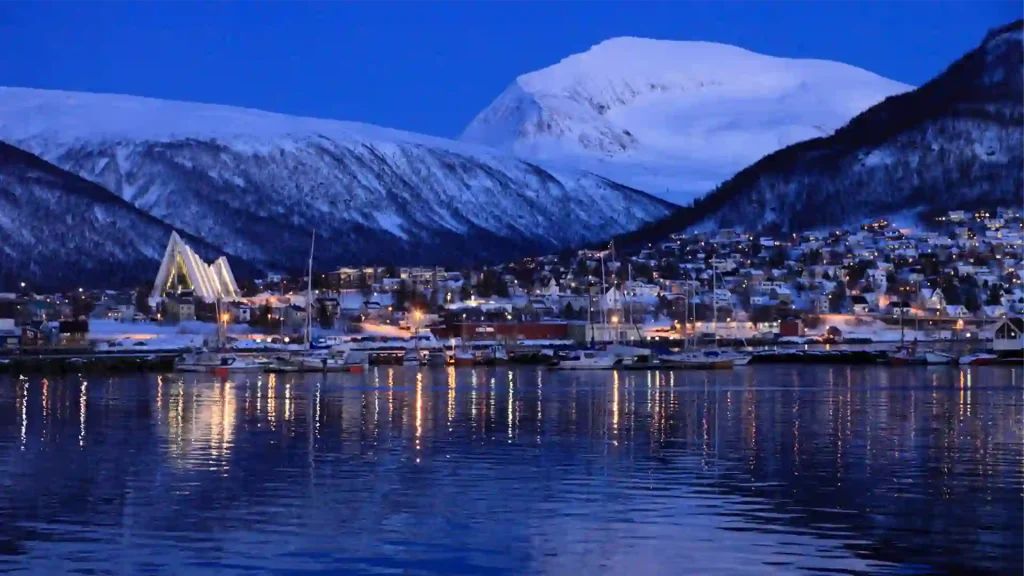

Norway was not alone in facing extreme heat during the year. Large parts of northern Europe were also affected by the intense July heatwave. In southeastern Finland, emergency services came under pressure as high temperatures posed risks to vulnerable populations. Some Finnish municipalities even repurposed ice hockey arenas into cooling shelters, offering residents a refuge from the oppressive heat.
The warmth extended well into what is traditionally Norway’s cold season. In December, many parts of the country experienced a snowless Christmas, an increasingly familiar scenario in recent years. Cities such as Oslo in the south and Trondheim further north saw bare ground instead of the usual winter landscapes. In Trondheim, temperatures reportedly climbed to around 6 degrees Celsius during the holiday period, a level far above what residents typically expect at that time of year.
For many Norwegians, the absence of snow and persistent mild weather during the festive season was both surprising and unsettling. Residents interviewed by local media expressed concern about how rapidly seasonal patterns appear to be changing, particularly in a country where winter sports and snowy landscapes are deeply embedded in national culture.
The trend of record-breaking warmth was not limited to Scandinavia. Across the North Sea, the United Kingdom also reported its hottest year on record in 2025, according to the UK Met Office. Climate experts say the simultaneous records across multiple northern countries point to broader regional and global shifts rather than isolated anomalies.
Scientists emphasize that rising temperatures carry wide-ranging consequences, from increased strain on ecosystems and infrastructure to heightened risks of heat-related health problems. In Arctic regions such as Svalbard, warming threatens glaciers, permafrost, and wildlife habitats, while in mainland Norway it can affect water resources, agriculture, and winter tourism.
As climate records continue to be broken, researchers and policymakers alike face growing pressure to adapt to changing conditions while accelerating efforts to reduce greenhouse gas emissions. The events of 2025, experts say, serve as a powerful reminder that climate change is no longer a distant concern but a present-day reality shaping weather patterns across Norway and beyond.