
The introduction of the sugar levy in the UAE has prompted many consumers to rethink their purchasing habits, with rising prices encouraging a noticeable shift toward healthier food and beverage alternatives.
UAE Sugar Levy Pushes Consumers to Opt for Healthier Alternatives.
Higher Sugar Content, Higher Prices: How the UAE’s New Excise Tax Is Reshaping Beverage Choices
Sales of sugar-heavy drinks across the UAE have begun to decline as consumers respond to higher prices triggered by a newly implemented excise tax on sweetened beverages, according to retailers and industry executives. The policy, which links tax levels directly to the amount of sugar in drinks, is already influencing purchasing habits and prompting manufacturers to rethink product formulations.
Retailers say shoppers are increasingly paying closer attention to labels and prices, opting for beverages with lower sugar content or zero-sugar alternatives to manage rising costs. At the same time, beverage companies are adapting to the new taxation framework by reformulating existing products and introducing healthier options to remain competitive.
Shifting Consumer Behaviour at Supermarkets
Since the excise tax revisions took effect, retailers have observed a noticeable change in customer behaviour, particularly in supermarkets and grocery outlets where beverage purchases are frequent and price comparisons are immediate.
Dr Dhananjay Datar, chairman and managing director of Adil Group of Supermarkets, said customers have become more aware of price differences among drinks, especially those with higher sugar content.
“Since the new excise tax came into effect, customers have started noticing that drinks with higher sugar levels are priced higher than before,” Dr Datar explained. “This has had a direct impact on purchasing decisions. Many shoppers are now either reducing their consumption of sugary drinks or switching to products with lower sugar content.”
He noted that the impact is visible across multiple beverage categories, including soft drinks, fruit juices, flavoured beverages, and energy drinks.
Decline in High-Sugar Drink Sales
According to Dr Datar, the demand for beverages containing high levels of sugar has softened since the policy was introduced. Price sensitivity has played a major role in this shift, particularly among families and regular buyers who purchase beverages in bulk.
“Affordability is a key factor,” he said. “When prices increase, consumers naturally start looking for alternatives that offer better value. In this case, low-sugar and zero-sugar drinks have become more attractive.”
Retail data from supermarkets suggests that shelves stocked with reduced-sugar beverages are seeing increased turnover, while traditional high-sugar products are moving more slowly.
Rise of Low- and Zero-Sugar Alternatives
The tax-driven price increase has coincided with growing public awareness around health and nutrition, creating a dual influence on consumer choices. Retailers say that shoppers are not only motivated by cost savings but are also increasingly conscious of the long-term health implications of high sugar consumption.
“We are clearly seeing a change at the retail level,” Dr Datar said. “Sales of drinks with high sugar content have slowed, while low-sugar and zero-sugar options are becoming increasingly popular. The combination of price adjustments and improved awareness is encouraging people to make healthier choices.”
This trend is particularly strong among younger consumers and families with children, groups that are often targeted by health campaigns promoting reduced sugar intake.
Beverage Brands Respond to the New Tax Structure
The changes in consumer demand have not gone unnoticed by beverage manufacturers. Many companies have already started adapting their product lines to align with the new excise tax framework.
Dr Datar pointed out that several beverage brands have begun reformulating products by lowering sugar levels to reduce tax liability and keep retail prices competitive. Others are expanding their portfolios to include sugar-free or reduced-sugar variants.
“At the same time, many beverage brands are adjusting to the new tax system by either cutting down sugar content or launching healthier alternatives,” he said. “This is not just about compliance — it’s also about meeting evolving consumer expectations.”
Industry observers say this could lead to long-term changes in the beverage market, with innovation increasingly focused on health-conscious offerings.
New Tax Model Comes into Effect
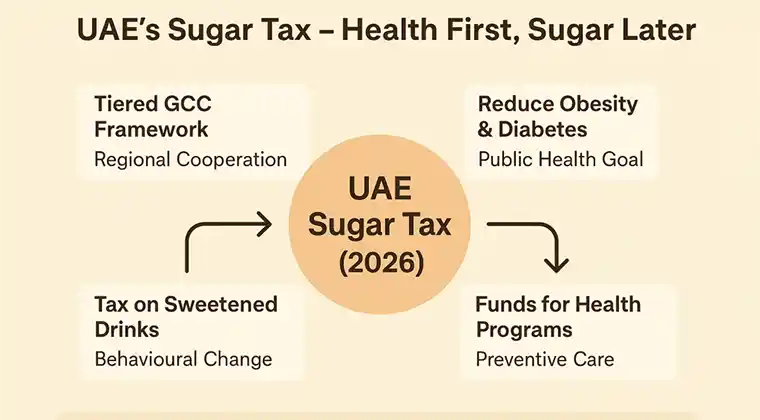
The shift in buying habits follows the implementation of a revised excise tax model by the UAE’s Federal Tax Authority (FTA). Starting January 1, 2026, the authority introduced a “tiered-volumetric model” for sweetened beverages.
Under this system, excise tax is calculated based on the total sugar content of a drink. This includes natural sugars, added sugars, artificial sweeteners, and other types of sweeteners, provided the beverage contains added sugar or sweetening agents.
The more sugar a drink contains, the higher the excise tax applied — a structure designed to discourage excessive sugar consumption and encourage healthier product formulations.
Wide Range of Products Covered
The tax applies to a broad spectrum of sweetened beverages available in the market. This includes not only ready-to-drink products but also concentrates, powders, gels, extracts, and other forms that can be converted into a sweetened drink.
Whether a beverage is sold as a bottled drink, a powdered mix, or a syrup to be diluted later, it falls under the excise tax framework if it contains added sugar or sweeteners.
This wide coverage ensures that manufacturers cannot bypass the tax by altering the format of their products while retaining high sugar levels.
Exemption for Drinks with Only Natural Sugar
However, the policy does provide some relief for certain beverages. If a drink contains only naturally occurring sugar and does not include added sugar or other sweetening agents, excise tax will not be applied.
This exemption primarily benefits products such as 100 per cent fruit juices with no added sweeteners, though such products still face scrutiny from health experts regarding overall sugar intake.
Retailers note that while these exempt beverages may avoid excise tax, they are often priced higher due to production costs, meaning consumers still weigh affordability when making choices.
Encouraging Healthier Consumption Patterns
The revised excise tax policy is part of broader public health efforts aimed at reducing sugar consumption and addressing lifestyle-related health issues, such as obesity and diabetes, which remain key concerns in the region.
By linking tax levels directly to sugar content, authorities aim to influence both supply and demand — encouraging manufacturers to reduce sugar levels while nudging consumers toward healthier options.
Retailers say the early response suggests the policy is beginning to achieve its intended effect.
“Price changes play a powerful role in shaping consumer behaviour,” Dr Datar said. “When people see that lower-sugar drinks are more affordable, they are more likely to choose them.”
Long-Term Market Impact
Industry experts believe the long-term impact of the tax could extend beyond beverage sales. As sugar reduction becomes a commercial necessity, manufacturers may invest more in research and development to improve taste profiles of low-sugar drinks without compromising quality.
Retailers, meanwhile, are adjusting shelf space and promotional strategies to reflect shifting demand. Products with lower sugar content are increasingly featured in prominent locations, while marketing campaigns highlight health benefits and reduced sugar levels.
Consumers Becoming More Informed
Another notable outcome of the new tax system is increased consumer engagement with product information. Retailers report that shoppers are reading labels more carefully, comparing sugar content, and asking questions about ingredients.
This heightened awareness, combined with financial considerations, is driving a more informed approach to beverage consumption.
“People are becoming more conscious of what they are buying,” Dr Datar said. “The tax has sparked conversations about sugar that go beyond price — it’s also about health and lifestyle.”
A Changing Beverage Landscape
As the UAE continues to implement policies aimed at promoting healthier living, the beverage sector is likely to remain an area of significant change. The early decline in sales of high-sugar drinks, coupled with growing demand for healthier alternatives, suggests a gradual transformation in consumer preferences.
While it remains to be seen how the market will evolve over the coming years, retailers and manufacturers agree on one thing: sugar-heavy beverages no longer enjoy the same unquestioned popularity they once did.
With prices rising, awareness increasing, and healthier options expanding, the new excise tax appears to be reshaping not just shopping baskets, but attitudes toward sugar consumption across the country.
Healthier Choices Take Centre Stage as Brands Adapt to UAE’s New Sugar Tax Framework
Consumer preferences in the UAE are undergoing a noticeable transformation as health awareness continues to rise, particularly when it comes to sugar consumption. Industry leaders and retailers say families across the country are increasingly mindful of what they drink, favouring beverages with lower sugar content or none at all. This growing shift in behaviour is expected to significantly influence product offerings in the beverage market in the coming years.
Retail executives believe the newly introduced sugar-based excise tax will further accelerate this transition by pushing manufacturers to develop and promote healthier products that align with evolving consumer expectations.
Growing Health Awareness Among UAE Consumers
Dr Dhananjay Datar, chairman and managing director of Adil Group of Supermarkets, said that shoppers in the UAE are becoming more conscious of the ingredients in their food and drinks, with sugar emerging as a key area of concern.
“Consumers today are paying much closer attention to what they consume, particularly when it comes to added sugar,” he said. “Many households now actively choose beverages with reduced sugar or no added sugar at all, and this preference is no longer limited to a specific age group. It’s a trend that is steadily spreading across children, adults, and seniors alike.”
According to Dr Datar, this shift reflects broader lifestyle changes, driven by increased awareness of nutrition, public health campaigns, and greater access to product information.
New Law Expected to Drive Product Reformulation
Dr Datar added that the revised excise tax structure is likely to encourage beverage companies to rethink their product formulations. With pricing now directly linked to sugar content, brands have a strong incentive to reduce added sugar to remain competitive.
“The new law will naturally push companies to expand their portfolios of lower-sugar drinks,” he explained. “As demand for these products continues to rise, manufacturers will have no choice but to adapt by offering healthier options.”
He described the tax as a constructive policy move that supports healthier lifestyles across the country.
“This measure helps curb excessive sugar consumption while encouraging brands to innovate and offer better choices,” he said. “In the long term, it benefits consumers and contributes positively to the overall health of the community.”
Retailers See Clear Shift in Demand
A spokesperson for one of the UAE’s leading retailers, which operates across the GCC region, echoed these views, noting that the new tax framework has already started influencing prices and purchasing behaviour.
According to the retailer, beverages with higher sugar content have experienced noticeable price increases since the implementation of the revised excise tax. In contrast, drinks that are low in sugar or sugar-free have seen minimal or no price impact.
“We anticipate that demand for high-sugar drinks will gradually decline, while low-sugar and zero-sugar alternatives will continue to gain popularity,” the spokesperson said. “UAE consumers are becoming increasingly health-conscious, and many are actively choosing drinks with less or no sugar.”
The spokesperson added that the new tax system is expected to motivate brands to introduce a wider range of low-sugar products, giving shoppers more variety and healthier choices on supermarket shelves.
Industry Leaders Welcome a More Targeted Tax Approach
Tom Harvey, general manager for commercial at Spinneys Dubai, described the revised excise structure as a more rational and forward-thinking approach to taxation.
“This system is far more progressive and logical,” he said, explaining that it rewards products with lower sugar content by making them more affordable. “It encourages healthier behaviours by reducing the price burden on drinks that contain less sugar, or no sugar at all.”
Speaking during an interview on Dubai Eye radio’s Business Breakfast programme, Harvey noted that under the previous tax system, consumers were often paying more regardless of how much sugar a drink contained.
“Before, the excise tax was applied at a flat rate of 50 per cent,” he said. “Now, consumers should generally be paying less for drinks with lower sugar levels, while high-sugar drinks will carry a higher cost.”
From Flat Tax to Sugar-Based Pricing
Until the end of 2025, most sweetened beverages in the UAE were subject to a uniform excise tax of 50 per cent, regardless of their sugar content. While this approach helped curb overall consumption, industry experts argued that it did not sufficiently differentiate between healthier and less healthy products.
The newly implemented system changes that dynamic. Instead of a flat rate, excise tax is now calculated based on the amount of added sugar in a drink, making the policy more closely aligned with public health objectives.
This shift marks a move from a purely price-driven tax model to one that directly targets sugar reduction.
Understanding the New Tax Tiers
Under the revised framework, sweetened beverages are categorised into different tax tiers depending on their added sugar content per 100 millilitres. The structure is designed to reward lower sugar levels while penalising higher ones.
Drinks containing less than five grams of added sugar per 100ml are exempt from excise tax. Beverages with added sugar levels between five and eight grams per 100ml are taxed at Dh0.79 per litre. Products containing eight grams or more of added sugar per 100ml face a higher tax of Dh1.09 per litre.
In addition, drinks that contain only artificial sweeteners and no added sugar are exempt, as are beverages that rely solely on naturally occurring sugars without any added sweetening agents.

Incentivising Reformulation and Innovation
Anurag Chaturvedi, CEO of Andersen UAE, said the new tax system is expected to encourage manufacturers to reduce sugar levels and reformulate products to fall into lower tax brackets.
“This change creates a clear financial incentive for producers to cut down on added sugar,” he explained. “By reformulating products, companies can reduce their tax burden and maintain competitive shelf prices.”
For consumers, this could translate into noticeable price differences, particularly for drinks with higher sugar content and for concentrated products used to prepare beverages at home or in food service settings.
Real-World Pricing Impact
To illustrate the difference, Chaturvedi provided an example of how the new tax model alters costs. A beverage with a retail price of Dh10 and an added sugar content of six grams per 100ml would now attract an excise tax of Dh0.79, compared to Dh5 under the previous flat-rate system.
“This represents a significant change in how excise tax is applied,” he said. “Lower-sugar drinks become far more affordable, while higher-sugar products remain more expensive.”
Broader Product Coverage
The excise rules do not apply only to ready-to-drink beverages. Concentrates, syrups, powders, and similar products are also subject to the tax, based on the total volume of drink they produce after preparation or dilution.
“This means manufacturers and importers must calculate tax based on the final ready-to-drink volume,” Chaturvedi explained. “It ensures consistency across different product formats.”
Compliance Challenges for Businesses
While the new system offers benefits for health and innovation, it also introduces additional compliance requirements for manufacturers, importers, and distributors.
Businesses must accurately determine which sugar tier each product falls into, often requiring laboratory testing from certified facilities to verify sugar content. These reports serve as supporting documentation during audits or regulatory reviews.
“Without proper testing and documentation, products could be classified into higher sugar categories by default,” Chaturvedi warned.
Importance of Accurate Documentation
In addition to sugar testing, companies are required to review and update product registrations within the excise tax framework. This includes ensuring that sugar levels, product categories, and supporting documents are correctly reflected in the system.
“Strong internal record-keeping is essential,” Chaturvedi said. “Ingredient lists, labels, import documents, and stock records all need to be aligned so that excise calculations are accurate and defensible.”
He added that proactive compliance will help businesses avoid penalties and ensure smoother interactions with regulators.
Long-Term Impact on the Market
As health considerations increasingly shape consumer choices, industry observers expect the UAE’s beverage market to continue evolving. The combination of rising awareness, targeted taxation, and product innovation is likely to reduce the dominance of high-sugar drinks over time.
Retailers and manufacturers alike agree that the new excise framework is not just a regulatory change, but a catalyst for broader shifts in how beverages are produced, marketed, and consumed.
By aligning financial incentives with public health goals, the policy is set to influence both what brands offer and what consumers choose — laying the groundwork for a healthier future.