Delhi’s air quality has fallen to ‘very poor’ due to heavy smog and dense fog, disrupting flights and causing travel delays as visibility drops and pollution levels rise sharply across the city.
Delhi Air Quality Drops to ‘Very Poor,’ Causing Flight Delays Amid Smog and Thick Fog”
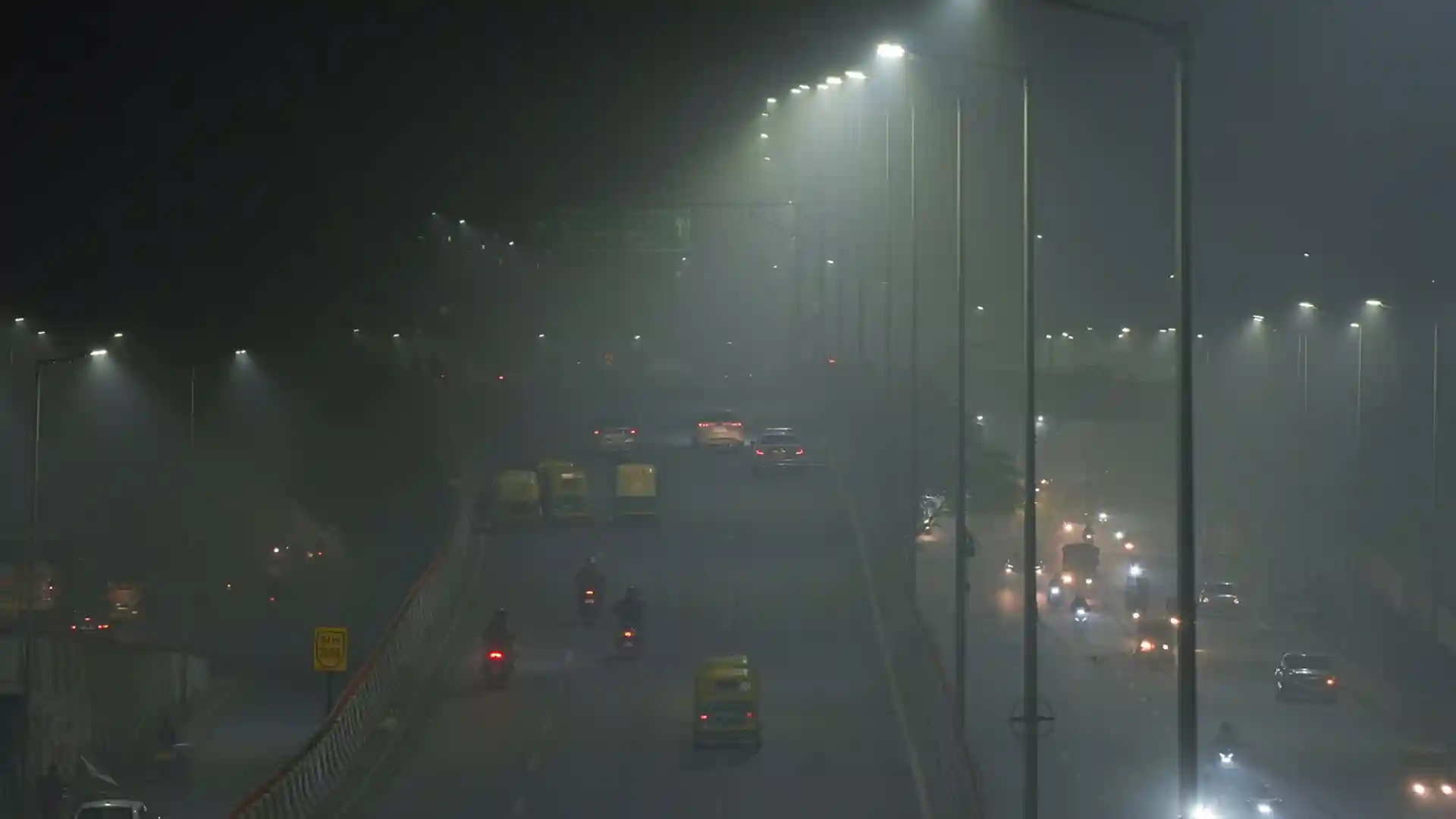
A dense layer of fog settled over Delhi on Friday, significantly reducing visibility and causing disruptions at the city’s airports. The thick haze affected air traffic, leading to delays and cancellations, and making travel more challenging for passengers across the national capital.
According to reports from ANI, the poor visibility created by the fog disrupted operations at Indira Gandhi International Airport, one of the busiest in the country. Several flights were delayed as pilots and ground staff had to adjust to the low-visibility conditions. In anticipation of the morning fog, IndiGo Airlines issued a travel advisory on January 1, warning travelers that early-morning flights might be affected due to restricted visibility.
To ease congestion and reduce waiting times at the airport, the airline preemptively canceled a few flights scheduled for Friday. “We understand that this may affect your travel plans, and we appreciate your patience and understanding,” IndiGo stated in its advisory. Airline officials also assured passengers that teams were closely monitoring weather conditions and providing assistance at all service points to minimize inconvenience.
Passengers were strongly encouraged to check the status of their flights through the IndiGo website or mobile application before leaving for the airport. Despite the dense fog, preparations for the upcoming Republic Day celebrations continued unabated. Security personnel and parade participants were seen carrying on with their drills, demonstrating determination to maintain schedules despite the challenging weather conditions.
Meanwhile, environmental authorities highlighted the poor air quality in Delhi. Data from the Central Pollution Control Board (CPCB) revealed that the overall Air Quality Index (AQI) had reached 348 around 8 a.m., placing it between the ‘very poor’ and ‘severe’ categories. Numerous monitoring stations across the city recorded AQI levels ranging from 219 to 348, indicating that pollution levels were high throughout several areas. The combination of smog and fog created a thick haze that not only affected visibility but also posed health risks, particularly for children, elderly citizens, and individuals with respiratory issues.
The weather added another layer of discomfort for residents. Cold wave conditions swept across Delhi, making mornings especially harsh. People faced difficulties in commuting and carrying out daily routines as the temperatures dropped to around 11°C on Friday morning, according to the India Meteorological Department (IMD). Dense fog was expected to linger through the day, further affecting traffic and outdoor activities, though forecasts suggested that conditions would gradually improve from Saturday.
The situation in Delhi reflects a recurring pattern during the winter months, when the combination of low temperatures, calm winds, and high pollution levels leads to the formation of dense smog and fog. These conditions not only disrupt transport and daily life but also exacerbate public health concerns. Medical experts often warn that prolonged exposure to high levels of air pollution can trigger respiratory problems, eye irritation, and other health issues, especially in vulnerable populations. Residents were therefore advised to limit outdoor activities, wear masks when stepping outside, and ensure proper ventilation indoors.
Airport authorities and airlines continue to adapt to these challenging conditions. Air traffic controllers have to manage flights carefully, ensuring that departures and arrivals occur safely despite low visibility. Ground staff must navigate the fog to assist with aircraft movement, baggage handling, and passenger guidance. Airlines also coordinate with meteorological departments to receive updated forecasts, which help in planning flight schedules and minimizing passenger inconvenience.
In addition to air travel disruptions, road traffic in the city was also affected. Drivers faced reduced visibility on major roads, requiring extra caution to avoid accidents. Commuters reported slower travel times, and public transport services experienced delays due to the fog. Despite these challenges, essential services continued to operate, and authorities urged citizens to exercise caution while traveling.
The dense fog and poor air quality came at a time when Delhi prepares for national events, adding logistical pressure on authorities. Republic Day preparations, which include parades and public gatherings, required careful coordination amidst the haze. Parade rehearsals continued with safety measures in place, reflecting the determination of organizers to stay on schedule despite the environmental challenges.
Looking ahead, meteorologists anticipate gradual improvement in Delhi’s weather over the weekend. Winds are expected to pick up slightly, helping to disperse the trapped pollutants and reduce the thick layer of fog. While temporary relief may be on the horizon, experts emphasize that air pollution remains a persistent concern in the capital, and long-term measures are needed to address the issue effectively.
In the meantime, residents, travelers, and authorities are adjusting to the dual challenges of cold weather and poor air quality. Flight delays and cancellations may continue to affect schedules, while commuters on roads must navigate through limited visibility. Health advisories remain in effect, urging precautions against exposure to smog and dense fog.
The situation serves as a reminder of the complex interplay between winter weather and pollution in Delhi. Dense fog, combined with elevated pollution levels, disrupts daily life, complicates transport operations, and poses health risks. Authorities, airlines, and citizens alike are taking measures to cope, while hoping for clearer skies and improved air quality in the coming days.