
Dubai witnessed a further decline in gold prices on the closing day of 2025, ending a year that saw unprecedented highs and record-breaking performance in the precious metals market.
Dubai: Gold prices decline even more on the final day of 2025 following a record-setting year
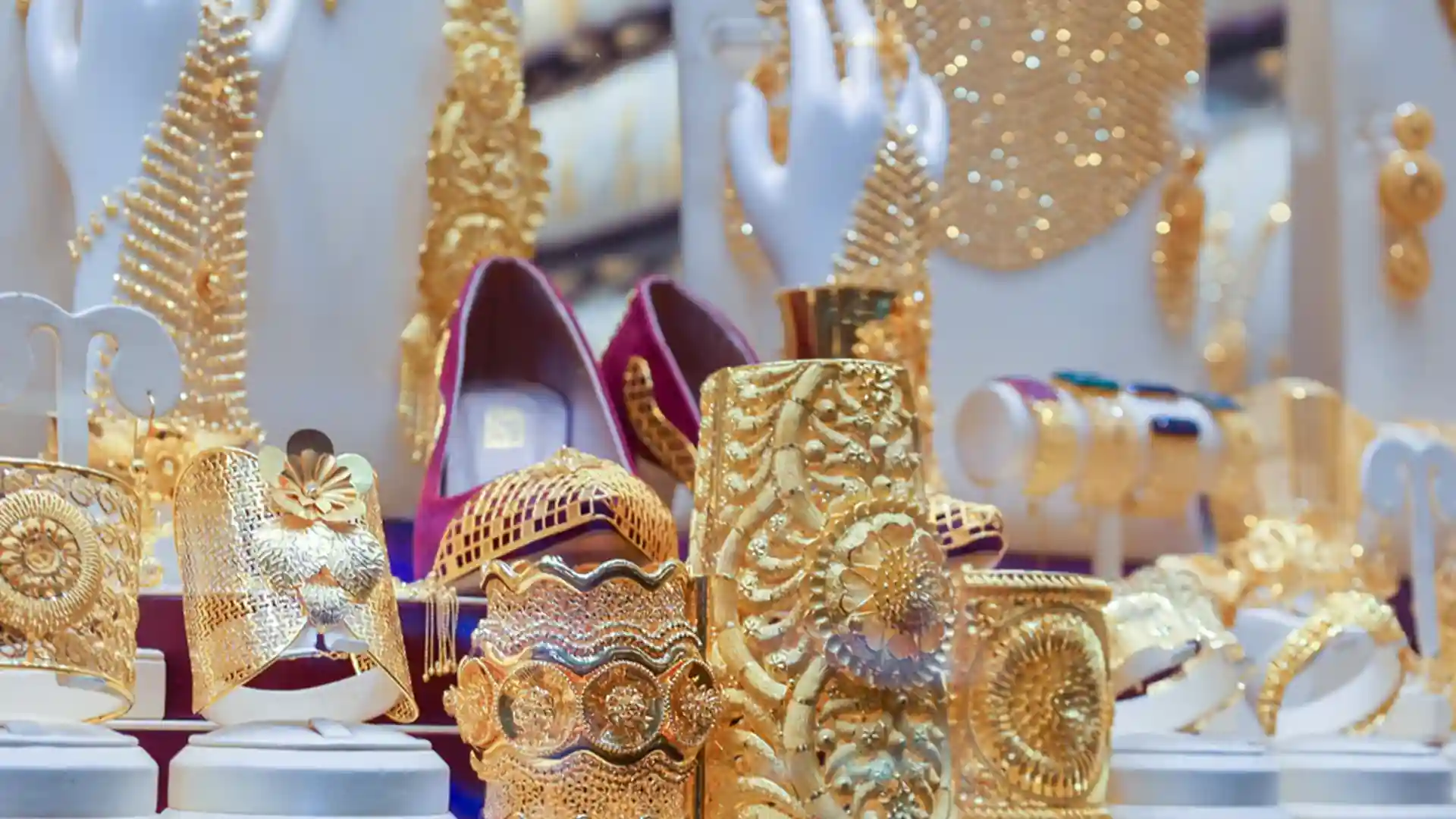
Gold prices opened lower in Dubai on Wednesday, losing Dh3 per gram, as markets prepared to close the year. According to data from the Dubai Jewellery Group, 24K gold dropped from Dh525 per gram at the previous night’s close to Dh522 in the morning session. Other gold categories also saw declines, with 22K dropping to Dh483.25, 21K falling to Dh463.5, 18K decreasing to Dh397.25, and 14K gold priced at Dh309.75 per gram.
The decline in gold comes amid broader movements in the precious metals market. Spot gold was trading at $4,332.47 per ounce at 9:30 am UAE time, reflecting a 0.88 percent dip. Analysts attribute the sudden fall to a mix of profit-taking and a market correction that has impacted prices in recent sessions. Ahmad Assiri, research strategist at Pepperstone, noted that precious metals experienced intense pressure due to a sharp sell-off, which resulted in gold losing around five percent in a single day on December 29.
According to Assiri, the speed and scale of the correction were central to the strong market reaction. “The rapid pace at which the market adjusted, as much as the overall magnitude of the decline, has been a significant factor in the intensity of this movement,” he explained. Traders and investors were largely unwinding leveraged positions while locking in profits from earlier gains. Silver, in particular, had seen a quick surge in prices before the pullback, prompting participants to secure their profits.
He further highlighted that seasonal liquidity contributed to the volatility. At the end of the year, trading volumes typically thin out, reducing market depth and making prices more sensitive to even small adjustments. “In periods like this, where the market is naturally less liquid, minor positioning changes can lead to pronounced price swings,” Assiri added. The combination of thinner trading activity and sudden profit-taking meant that gold prices reacted more sharply than usual.
Despite the recent pullback, gold continues to demonstrate resilience. Assiri noted that the metal is holding near $4,350 per ounce, which aligns with the upper limit of its previous trading range. This level has acted as a support, suggesting that the correction may not indicate a long-term downtrend but rather a temporary adjustment in an otherwise stable market. “Once volatility decreases and selling pressures ease, this retreat in prices could present fresh opportunities rather than signaling a reversal in the gold market,” he said.
The decline in Dubai’s local gold prices reflects both international and regional dynamics. Globally, gold has been facing pressure due to profit-taking after a period of gains, while domestic factors, including lower trading volumes during the holiday season, have amplified price movements. Traders in Dubai typically respond quickly to global cues, and the convergence of these factors has led to a noticeable drop in morning rates.
Breaking down the changes in different gold grades, the 24K variant, known for its purity, remains the benchmark for pricing. Its decline by Dh3 per gram underscores the immediate impact of global market corrections on local trading. Similarly, 22K and 21K gold, commonly used in jewellery, have followed suit, with declines reflecting both investor sentiment and market adjustments. Lower-karat gold, such as 18K and 14K, which are widely used in jewellery with alloyed metals, also saw their prices reduced, demonstrating that the correction affected all categories of gold uniformly.
Market watchers suggest that the recent dip in gold prices may not be entirely negative for buyers. Historically, short-term pullbacks in precious metals often provide opportunities for entry, especially for investors looking to hold gold for the long term. The ongoing support around $4,350 per ounce indicates that despite the sharp sell-off, market fundamentals remain relatively stable.
In addition to investor behavior and liquidity issues, macroeconomic factors also influence gold prices. Global interest rates, inflation expectations, and currency movements continue to play a role in shaping market sentiment. Gold often acts as a hedge against inflation and currency fluctuations, and as such, its value can see temporary dips even amid a generally bullish long-term outlook. Analysts stress that monitoring these broader factors alongside short-term market moves is key to understanding the full picture of gold’s price trends.
Overall, the market’s reaction at the end of the year highlights both the volatility inherent in precious metals and the strategic behavior of investors. Profit-taking, liquidation of leveraged positions, and thinner trading volumes combined to create a sharp, short-term decline. However, strong technical support levels and ongoing investor interest suggest that the recent fall in prices may be more of a pause than a permanent downturn.
As 2025 closes, gold’s performance in Dubai underscores the delicate balance between market forces and investor sentiment. Traders and jewellery buyers alike are closely watching how prices stabilize in the coming days, with many viewing the current dip as an opportunity to enter the market before potential gains in the new year. While the end-of-year adjustment brought some immediate losses, analysts remain optimistic about gold’s resilience and its continued role as a reliable store of value.