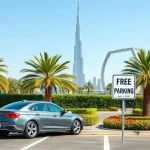
Authorities have announced that Dubai International City will implement a paid parking system beginning in February 2026, a move aimed at improving traffic flow, managing parking demand, and enhancing mobility for residents, visitors, and businesses.
Dubai International City to introduce paid parking from February 2026.
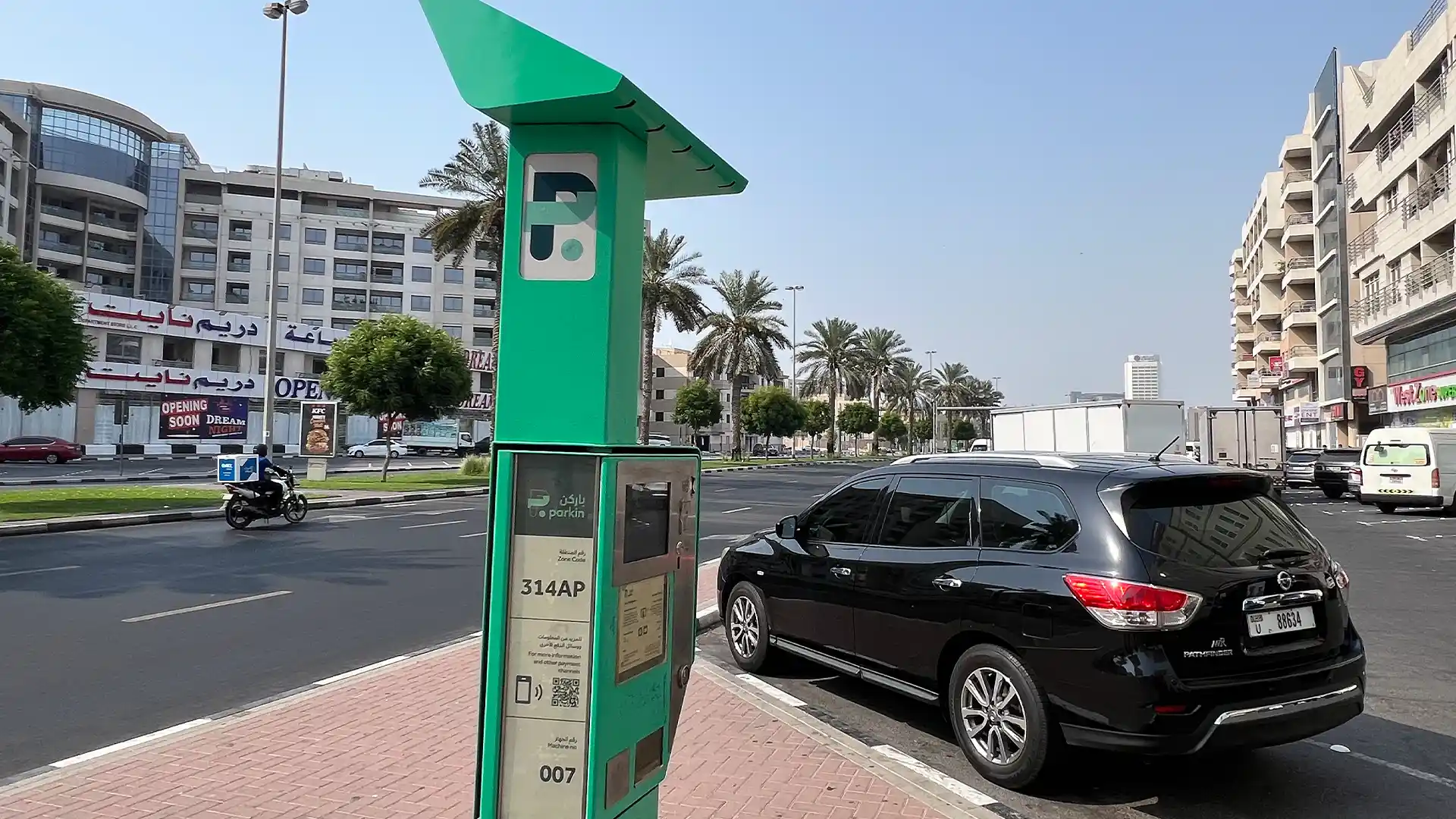
Starting February 2026, motorists visiting or living in Dubai International City will need to factor parking fees into their daily routines, as authorities move ahead with plans to introduce a paid parking system across the community. The decision marks a significant shift for one of Dubai’s largest residential areas, which has long been known for its free parking availability.
Notices recently placed around International City confirm that paid parking will officially come into effect from February 1, 2026. Although parking meters are yet to be installed, signage indicating upcoming parking regulations has already appeared in several clusters, including the France and China clusters. These signboards signal a clear transition toward regulated parking in an area where demand has steadily outpaced supply over the years.
Under the new system, parking in Dubai International City will fall under Code Q, with charges applicable daily from 8am until midnight. This means parking will remain free only during the late-night and early-morning hours. According to information available on Parkin’s official platform, parking fees will begin at Dh2 for 30 minutes, with longer durations costing progressively more, reaching Dh25 for up to 16 hours of parking.
Parking pressure reaches critical levels
For years, residents and visitors alike have struggled to find parking in International City, particularly during evening hours when the community becomes most congested. As residents return from work and businesses continue operations late into the night, parking spaces quickly fill up, often forcing drivers to circle the area repeatedly in search of a vacant spot.
The situation has been exacerbated by the presence of rent-a-car companies and businesses operating light cargo trucks, many of which choose International City due to its relatively affordable rental rates compared to other parts of Dubai. These vehicles often remain parked for extended periods, occupying spaces that residents rely on for daily use.
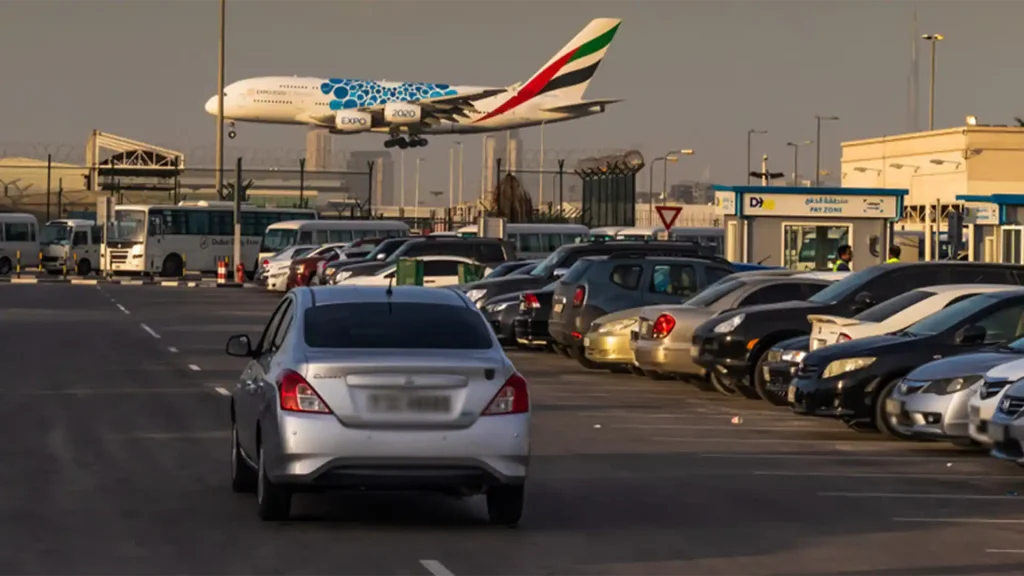
International City’s popularity as a cost-effective residential option has worked both for and against it. While the area attracts a diverse population due to lower rents, the resulting high density has placed enormous pressure on infrastructure—parking being one of the most visible challenges.
Residents welcome the change
Despite concerns about added costs, many residents view the introduction of paid parking as a long-overdue solution to an ongoing problem. Several believe the move will discourage long-term parking by non-residents and commercial vehicles, freeing up spaces for people who actually live in the area.
Waqas Khan, who works in the delivery sector and lives in International City, says parking has become a daily struggle. “I leave early in the morning and usually return home late in the evening. By that time, it’s extremely difficult to find parking anywhere near my building. Paid parking could make a real difference by preventing spaces from being blocked all day,” he explained.
According to residents like Khan, parking fees may encourage better turnover of vehicles, ensuring that parking spaces are used more efficiently rather than being occupied for hours or even days at a time.
Impact on property owners and families
For some homeowners, parking difficulties have already influenced major life decisions. Najam Ahmed, who owns an apartment in International City, shared that he relocated to Al Qusais primarily because of parking challenges and school proximity for his children.
“Parking was one of the biggest reasons I moved,” Ahmed said. “I usually return home around 10 or 11 at night, and finding a parking space at that time was nearly impossible. I also own three vehicles because of my business needs, which made things even harder.”
Ahmed believes the introduction of paid parking could prompt him to move back to his apartment in International City. “If parking becomes more organised and spaces are available, I would seriously consider relocating again. The new system gives hope that parking will finally be manageable.”
One of the last free-parking communities
International City has long stood out as one of the few major residential communities in Dubai where parking remained free. However, with rising population density and increasing vehicle ownership, maintaining unrestricted parking has become increasingly unsustainable.
Urban planners and transport authorities have repeatedly highlighted the need for regulated parking in high-density neighbourhoods to improve traffic flow and reduce congestion. The upcoming changes in International City align with broader city-wide efforts to modernise parking management and encourage more efficient use of space.
Parkin’s expanding footprint
The rollout of paid parking in International City is part of a wider expansion by Parkin, Dubai’s leading provider of public paid parking facilities. Over the past few years, the company has steadily introduced paid parking zones across several residential and commercial districts.
In November, Parkin implemented new paid parking zones in International Academic City and Dubai Sports City, shortly after launching similar zones in Studio City and Outsource City. These initiatives reflect a strategic approach to managing parking demand in rapidly growing areas.
Parkin’s experience in introducing regulated parking systems across Dubai suggests that International City will likely see improved parking availability once the system becomes fully operational.
Variable parking tariffs introduced city-wide
Adding another layer to Dubai’s evolving parking strategy, Parkin implemented the Variable Parking Tariff Policy on April 4, 2025. This policy introduced peak and off-peak pricing to better manage demand in congested zones.
Under the variable tariff system, parking fees are higher during peak hours—specifically from 8am to 10am and 4pm to 8pm—which account for six of the 14 daily chargeable hours. Off-peak rates apply from 10am to 4pm and 8pm to 10pm, while Sundays and public holidays are excluded from peak pricing.
The aim of this policy is to encourage drivers to avoid peak congestion times when possible, thereby supporting smoother traffic flow and improving access to parking in busy areas.
What residents can expect next
While signage has already appeared in parts of International City, residents can expect further updates closer to February 2026. This includes the installation of parking meters, clearer zone markings, and additional guidance on payment methods.
Authorities are expected to provide ample notice before enforcement begins, giving residents and businesses time to adjust to the new system. Many anticipate that resident parking permits or long-term solutions could be introduced in the future, as seen in other communities.
Balancing cost and convenience
Although paid parking represents an additional expense, many residents feel the benefits will outweigh the costs. Improved parking availability, reduced congestion, and better overall organisation are among the key advantages cited by supporters of the move.
For visitors, the new system may also make short-term parking more accessible, reducing the frustration of navigating overcrowded streets in search of space.
A turning point for International City
The introduction of paid parking marks a turning point for Dubai International City. As one of the emirate’s most densely populated neighbourhoods, the area has long needed a structured approach to parking management.
With February 2026 fast approaching, residents are preparing for a new chapter—one that promises greater order, improved accessibility, and a more balanced use of space in a community that continues to grow.