Veteran Bangladeshi leader and former prime minister Khaleda Zia has died at 80, ending a long political career that shaped national politics and defined decades of rivalry and governance nationwide.
Veteran Bangladeshi Leader and Ex-PM Khaleda Zia Dies at 80
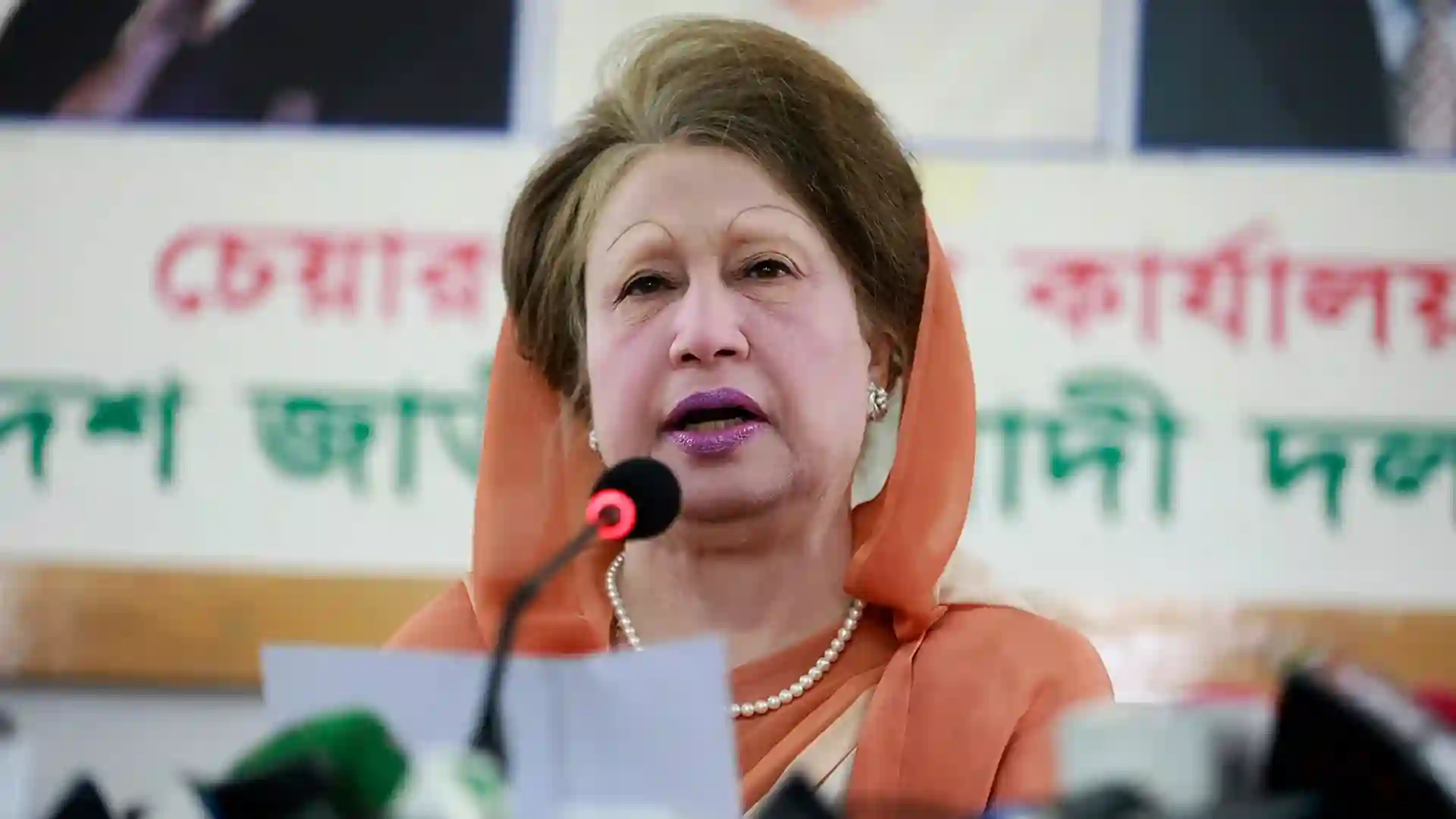
Bangladesh’s former prime minister and veteran political figure Khaleda Zia passed away on Tuesday at the age of 80, bringing an end to a long and turbulent chapter in the country’s political history. The Bangladesh Nationalist Party (BNP), which she led for decades, confirmed her death in an official statement.
According to the party, Khaleda Zia died at 6 a.m. local time, shortly after the Fajr prayer. The BNP described her as a national leader whose contributions shaped modern Bangladesh and called on citizens to pray for the peace and forgiveness of her soul. News of her passing prompted an outpouring of grief among supporters and party members across the country.
Zia’s death came at a time when many political observers believed she was preparing for a dramatic return to electoral politics. Despite years of declining health and time spent in prison, she had expressed her intention in November to take part in the general elections scheduled for February 2026. These elections are expected to be the first since last year’s mass uprising that removed her long-time political rival, Sheikh Hasina, from power.
The BNP is widely regarded as a leading contender in the upcoming polls, and Zia’s presence, even symbolically, was seen as a major factor in the party’s momentum. Her determination to remain politically active despite serious medical challenges underscored her reputation as a resilient and uncompromising leader.
However, her health deteriorated rapidly in late November when she was rushed to hospital following complications from multiple long-standing illnesses. Doctors made extensive efforts to stabilise her condition, but her health continued to worsen in the following weeks. Plans to transfer her abroad for advanced medical treatment were considered, including arrangements for a special air ambulance to London earlier this month, but her condition was deemed too fragile for travel.
In a striking reflection of her enduring political influence, BNP workers submitted nomination papers on her behalf for three parliamentary constituencies just one day before her death. The move symbolised both loyalty from party cadres and confidence in her leadership, even as she remained hospitalised.
During her final days, interim head of government Muhammad Yunus publicly appealed to citizens to pray for Zia’s recovery. He referred to her as a powerful source of inspiration for the nation, acknowledging her long and complex role in Bangladesh’s political landscape. His remarks were seen as a rare moment of unity in a deeply polarised political environment.
BNP media affairs chief Moudud Alamgir Pavel also confirmed her death to international media, stating that the party was preparing for nationwide mourning activities. Senior leaders described her passing as an irreplaceable loss to the party and the country.
Khaleda Zia’s political life was marked by both authority and adversity. In 2018, she was sentenced to prison on corruption charges during Sheikh Hasina’s tenure as prime minister. The case barred her from seeking medical treatment abroad, a restriction her supporters described as politically motivated. She remained incarcerated until last year, when she was released shortly after Hasina was forced out of office amid widespread protests.
Her personal life was closely intertwined with Bangladesh’s political trajectory. Her son, Tarique Rahman, a key BNP figure, returned to Bangladesh last Thursday after spending 17 years in self-imposed exile. His return drew massive crowds, with supporters welcoming him as the future leader of the party. Rahman is now expected to guide the BNP into the February 12 general election and is widely tipped as a prime ministerial candidate should the party secure a parliamentary majority.
Local media reported that Rahman and other close family members were present at Zia’s bedside during her final moments. Bangladesh’s leading daily Prothom Alo described her as a leader known for her steadfastness and refusal to compromise, noting that her political career was shaped by repeated cycles of power, persecution, and perseverance.
“The lives of politicians often swing between triumph and trial,” the newspaper observed. “Court cases, arrests, imprisonment, and attacks by opponents are part of the political journey. Khaleda Zia endured these challenges at their most extreme.”
As the nation absorbs the news of her death, tributes continue to pour in from supporters who view her as a defining figure in Bangladesh’s history. Her passing marks not only the loss of a former prime minister but also the closing of an era that profoundly influenced the country’s politics for decades.