“A UAE jiu-jitsu champion claimed a gold medal at the President’s Cup only 24 hours after the loss of his brother, demonstrating remarkable strength, resilience, and determination in the face of personal tragedy.”
UAE Jiu-Jitsu Champion Secures Gold Despite Tragedy, Just One Day After Brother’s Death.
What does a medal truly stand for beyond the moment it is placed around an athlete’s neck? For those who gathered in Abu Dhabi to witness the unveiling of the official medal for the Open Masters Games Abu Dhabi 2026, scheduled to take place from February 6 to 15, the answer went far deeper than competition or podium finishes. The medal was presented as a powerful expression of human experience — one shaped by sacrifice, resilience, family bonds, and a lifelong pursuit of growth. Organisers emphasised that its meaning extends far beyond a single race or match, describing it as a symbol of a journey that continues long after the finish line is crossed.
The unveiling ceremony brought together prominent Emirati sports leaders, seasoned athletes, and champions from various disciplines, creating an atmosphere that celebrated not just sporting excellence but also personal stories of perseverance. Rather than focusing solely on victory, speakers highlighted how the Games honour dedication across all stages of life, particularly for athletes who continue to compete, inspire, and challenge themselves well into adulthood. The medal, they explained, was designed to reflect that philosophy — recognising effort, endurance, and the courage to keep moving forward regardless of age or circumstance.
Central to the medal’s concept is the idea of the finish line, reimagined not as an endpoint, but as a gateway to new beginnings. Instead of symbolising closure, the design portrays the finish line as a moment of transformation — where one chapter ends and another begins. This perspective aligns with the spirit of the Open Masters Games, which celebrate lifelong participation in sport and the belief that personal achievement is not confined to youth or a single moment in time.
The visual elements of the medal draw strong inspiration from Abu Dhabi’s natural environment, weaving local identity into its global message. The flowing lines and textures echo the surrounding sea, representing movement, continuity, and depth. Subtle references to desert dunes reflect strength, patience, and the endurance required to navigate life’s challenges. Above it all, the open sky serves as a symbol of boundless ambition and possibility, reinforcing the idea that personal growth has no limits.
Together, these elements create a design that speaks to connection across generations. The medal is not only a reward for athletic performance but also a tribute to the support systems — families, mentors, and communities — that shape every athlete’s journey. It acknowledges the losses endured, the obstacles overcome, and the determination required to return to the starting line time and again.
By unveiling the medal months ahead of the Games, organisers aimed to spark reflection and anticipation, inviting participants to see their involvement as part of a larger narrative. In this way, the medal becomes more than a keepsake; it is a reminder that sport is a lifelong path, defined not just by winning, but by resilience, continuity, and the enduring human drive to move forward.
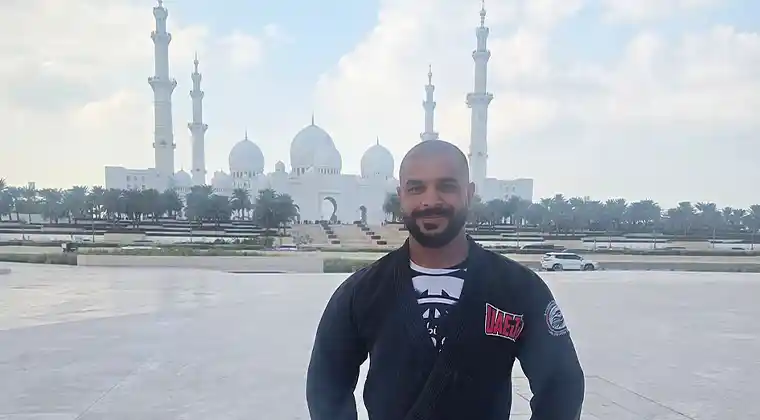
The meaning behind the medal became deeply personal for many of the athletes who shared their stories with Insider 18, as its symbolism echoed their own experiences of sacrifice, resilience, and emotional endurance. Standing beneath the newly revealed design, several athletes reflected on moments that shaped not only their sporting careers but also their lives. Among them was UAE jiu-jitsu champion Omar Al Hosani, who spoke about one of the most emotionally challenging chapters of his journey — competing in a major tournament just hours after learning of his brother’s death while on duty in Yemen.
For Al Hosani, the memory remains vivid and deeply moving. He explained that grief is an unavoidable human response, especially when the loss is so close and personal. His brother was not only family but also someone who shared his passion for sport and physical discipline. “There is no one who would not feel pain for a brother,” Al Hosani reflected, describing the bond they shared as inseparable, rooted in blood, love, and shared ambition.
Only days before his brother departed for duty, the two had spoken about Al Hosani’s competitive goals. His brother, an active sportsman who trained in jiu-jitsu, CrossFit, cycling, and running, had asked him a straightforward but meaningful question about his next target in competition. Al Hosani answered confidently that he was aiming for the President’s Cup. His brother’s response was simple yet powerful — he told him that he wanted that medal. At the time, it seemed like a casual exchange between siblings, but it later became a promise that carried immense emotional weight.
When the devastating news reached him, Al Hosani found himself at a crossroads. The pain was overwhelming, and the sense of loss was profound. Yet, alongside the grief was a sense of responsibility — to honour the promise he had made and the belief his brother had placed in him. He described how the sorrow he felt did not disappear but instead transformed into something else. The determination to compete, to keep going, and to fulfil that promise became a source of inner strength.
Drawing on that resolve, Al Hosani stepped onto the mat at the President’s Cup at Al Jazira Club in 2017. Over the course of the competition, he fought five matches in succession, each demanding intense physical effort and mental focus. Despite the emotional burden he carried, he emerged victorious, securing the gold medal. Looking back, he considers that tournament to be the most powerful performance of his career — not just because of the result, but because of what it represented.
Reflecting on that experience years later, Al Hosani described the competition as unmatched in intensity and meaning. He believes that no other match he has played has come close to the emotional and mental strength required on that day. For him, the medal was never just an award; it was a symbol of love, loss, and perseverance, forged under extraordinary circumstances.
As he examined the newly unveiled Open Masters Games medal, Al Hosani found that it resonated strongly with his own story. He described it as one of the most striking and meaningful medals he had ever seen. To him, its design captures the unseen side of competition — the exhaustion, the struggle, and the countless hours of effort that athletes invest long before they reach the podium. He said it reflects the reality that medals are earned through hardship and sacrifice, not handed out easily.
In Al Hosani’s view, the medal embodies the spirit of athletes who compete not only for victory, but for personal reasons that often remain untold. It represents the emotional weight, resilience, and determination that define true sporting journeys. Standing there, he saw not just a piece of metal, but a reminder that every athlete carries a story — and that sometimes, the hardest battles are fought far beyond the arena.
Another story that left a strong impression was that of Zaafaranah Al Hosani, a 71-year-old Emirati mother whose life has been deeply shaped by her unwavering commitment to sport and to empowering her daughters, as well as countless other young athletes. For decades, she has been a constant presence on the sidelines, behind the scenes, and on the road — quietly ensuring that no obstacle stood in the way of opportunity.
Her daughters, Maryam and Hamda, embody resilience and determination in their own unique ways. Maryam, who has Down syndrome, has established herself as a successful bowling athlete, earning medals at international competitions held in countries such as Greece, Germany, Syria, and beyond. Hamda, who lives with epilepsy, has also carved out an impressive sporting path, competing in power games and athletics, where she has gone on to break both national and international records. Together, their achievements reflect years of dedication, discipline, and steadfast family support.
Zaafaranah explained that her responsibilities extended far beyond those traditionally associated with motherhood. She was not only a caregiver, but also a driver, organiser, motivator, and mentor. She recalled being involved in every stage of her daughters’ journeys, accompanying them consistently and ensuring they never felt alone. Her support was not limited to her own children — she regularly transported other girls as well, collecting them daily by bus and taking them to training sessions so that no one would miss out due to logistical challenges.
Her involvement often meant travelling abroad with teams, attending competitions, and even participating in training whenever possible. Throughout it all, she made a conscious effort to treat her daughters no differently from their seven siblings. She emphasised that equality within the family was a principle she held firmly. Meals, clothing, routines, and rest were shared equally, with no distinction made. Her goal, she said, was to ensure that no child ever felt excluded or diminished because of their condition.
Today, Zaafaranah is preparing for a new chapter of her own. She plans to take part in the Open Masters Games, not with the aim of standing on a podium, but to share the experience alongside her daughters. She said she intends to participate by walking in the running events, smiling as she explained that running is not her objective — being present is.
When speaking about the newly unveiled medal, she described it as striking and deeply connected to Abu Dhabi’s identity. She expressed a quiet hope that one day she or her daughters might earn it, seeing it not just as a prize, but as a meaningful symbol of perseverance, inclusion, and the lifelong journey that sport represents.

‘My mother gave me strength’
For Hamda Al Hosani, listening to her mother address the audience during the ceremony was more than an emotional moment — it became a source of fresh inspiration and motivation. She said hearing her mother’s words filled her with pride and renewed purpose, strengthening her determination to continue pushing herself both as an athlete and as an individual.
“It made me feel very proud,” Hamda shared. “It gave me energy, confidence, and a stronger sense of determination to move forward.”
Hamda’s journey in sport began in 2002 when she joined the Zayed Higher Organisation. At the start, she was assessed across different disciplines, including basketball, before discovering that athletics was the best fit for her abilities and health. Over time, she steadily developed her skills and built a competitive career defined by discipline and persistence. One of her most notable achievements came during a competition in Tunisia, where she recorded a personal best of 13 seconds in the 100-metre sprint — a milestone she continues to take pride in.
As she now prepares for the Open Masters Games, Hamda says her focus is not on competing against others, but on challenging herself. Her primary goal is to surpass her own previous performances and set new personal records, proving that progress is always possible with commitment and belief.
Speaking about the newly unveiled medal, Hamda said its appearance immediately caught her attention. Unlike traditional medals she had seen before, this one stood out for its distinctive design and cultural significance. She explained that it reflects the heritage of the UAE and represents something original and innovative. “It feels different,” she said. “It is something unique — something that hasn’t been done before.”
She added that she and others had expected a more conventional medal, similar to those displayed from previous Masters Games host cities, typically featuring a simple logo or standard layout. Instead, the detailed and meaningful design came as a surprise, leaving a strong impression on her and reinforcing the value placed on the athletes’ journeys.
Cycling as a way of life
Also attending the ceremony was Yousef Mirza, one of the UAE’s most well-known cycling figures, who reflected on the remarkable evolution of cycling in the country since he first began riding at the age of nine. He recalled a time when cycling was far from popular in Abu Dhabi, with limited participation and no prominent local role models in the sport.
“Back then, cycling was rare,” he said. “There were no stars, and it wasn’t something people saw as part of daily life.”
Now 38, Mirza pointed to a major shift that began around 2017, when professional cycling teams were established, infrastructure improved, and international events brought greater visibility to the sport. Dedicated cycling tracks were introduced, allowing riders to train safely away from traffic and encouraging more residents to take up cycling recreationally.
For Mirza, the goal was always bigger than winning races or collecting medals. He wanted cycling to be inclusive and accessible — a lifestyle embraced by the wider community rather than a sport limited to elite athletes. He believes this vision has helped Abu Dhabi gain recognition on the global stage as a city that supports and promotes cycling.
He added that events such as the Open Masters Games play an important role in reinforcing this culture, helping to inspire participation across different age groups and backgrounds.
More than a finish line
As organisers emphasised throughout the ceremony, the Masters Games medal is not intended to symbolise an ending, but rather an ongoing journey. It represents lives shaped by perseverance, shared purpose, and personal sacrifice — stories that continue long after the competition ends.
When the medal is finally placed around athletes’ necks in February 2026, organisers say it will serve as a lasting reminder of their achievements — a tangible memory of a defining moment, meant to be cherished for a lifetime rather than marking a final destination.