A UAE scientist-astronaut dreams of a future where space travel is no longer extraordinary, aiming for a time when journeying beyond Earth becomes as routine and accessible as taking a commercial flight anywhere in the world.
UAE scientist-astronaut envisions space travel becoming as common as flying.
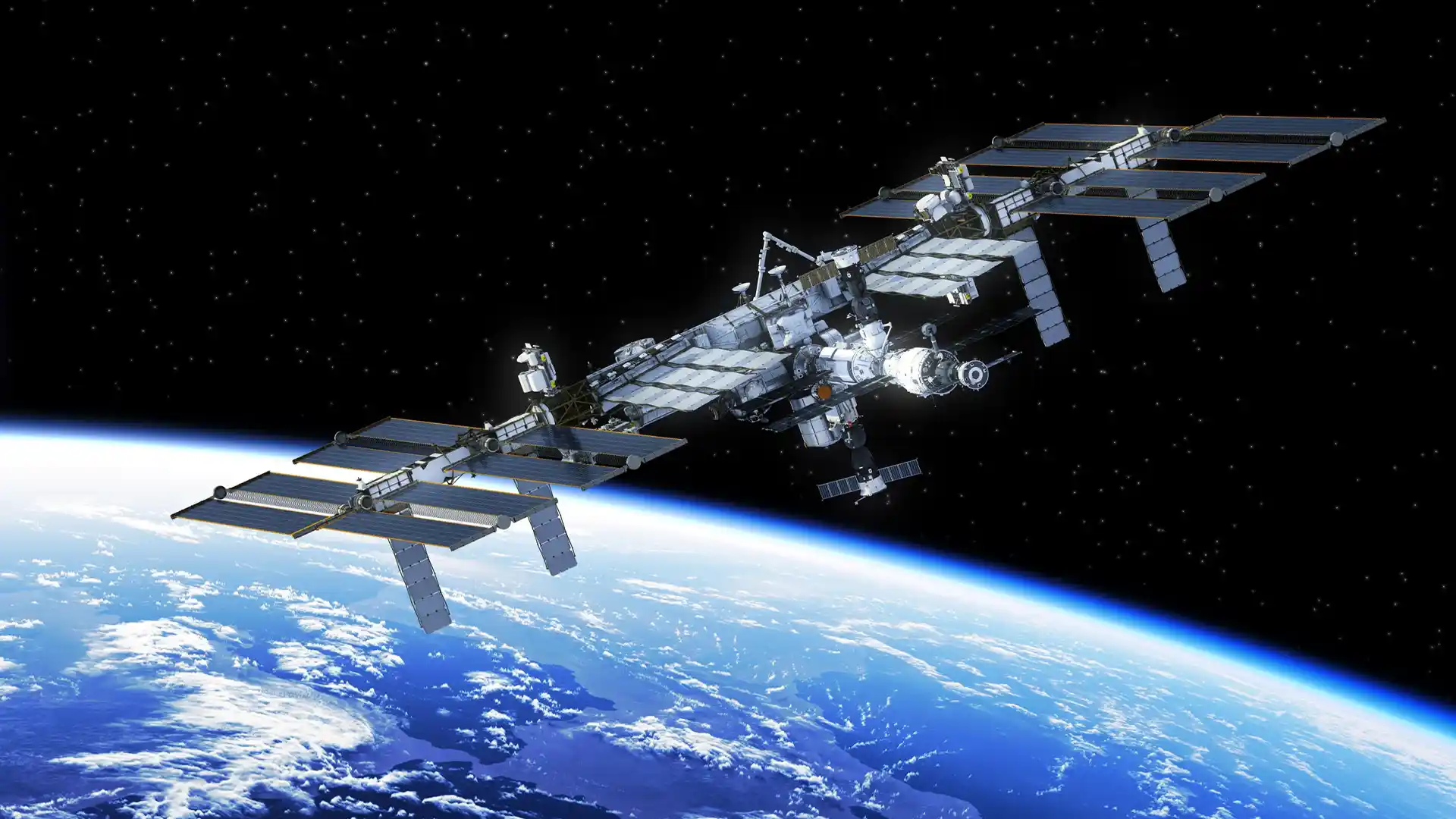
Imagine a future where space is not reserved for elite astronauts or government programs, but is open to anyone who wants to venture beyond our planet. This is precisely the vision that UAE scientist-astronaut Malik “Mac” Malkawi is passionately pursuing. He is working to make space travel as accessible, routine, and commonplace as boarding a commercial flight. The idea might sound like science fiction to many, yet Malkawi sees it as a realistic goal and is actively laying the groundwork to transform it into a tangible reality.
Malkawi, a philanthropist and founder of Borderless Labs Inc (Blinc), believes the UAE can play a pivotal role in making commercial space travel a global norm. Through Blinc, he aims to create the infrastructure, regulatory framework, and technological innovation necessary to make spaceflight not only possible but efficient, safe, and commercially viable. The vision is bold: to turn the extraordinary adventure of leaving Earth into an experience as routine as traveling from Dubai to Abu Dhabi.
He draws inspiration from the history of aviation. “Our job is to make astronautics and space the new aviation,” Malkawi told INSIDER 18. He explained that in the early days of flight, air travel was limited to a select few due to cost and technological barriers. The Wright brothers’ first flights were pioneering but inaccessible to the public. Yet, as infrastructure developed and demand grew, commercial airlines flourished, making air travel commonplace. People began booking tickets as easily as they do today, connecting cities, countries, and continents. Malkawi’s ambition is to replicate this trajectory for space.
The key, he emphasises, is building the supporting ecosystem. Space travel cannot become routine without a network of launch facilities, trained personnel, safety regulations, and commercial operations that cater to civilian passengers. Malkawi envisions a time when spaceports in the UAE and beyond will operate much like airports, complete with boarding procedures, safety briefings, and scheduled departures. Passengers might check in, go through pre-flight training, and step into spacecraft designed for comfort and reliability—all while knowing that the journey is as standardized and dependable as a flight on a commercial airline.
He points to the milestones already achieved in commercial spaceflight as proof that this vision is achievable. In June 2023, Virgin Galactic successfully launched the first commercial suborbital flight, reaching an altitude of 80 kilometers above the Earth’s surface. This historic launch demonstrated that civilian space travel is no longer theoretical; it is already happening, though still limited in scale. Malkawi sees these early missions as the “first flights” in a longer journey toward widespread accessibility. Just as the earliest airplane trips were expensive and rare, the initial commercial spaceflights are pioneering steps that will gradually pave the way for mass participation.
Malkawi emphasises that the mission is about more than just adventure. It is about creating an entirely new industry that will drive scientific innovation, economic growth, and international collaboration. The UAE, with its forward-thinking policies, strategic investments in technology, and growing space program, is positioned to become a central hub for commercial space travel. By establishing infrastructure, training personnel, and attracting private investment, the country can help make space accessible not only to tourists but also to researchers, engineers, and entrepreneurs.
The challenge, according to Malkawi, lies in developing the systems required to support routine spaceflight. Unlike airplanes, which operate within the familiar atmosphere, spacecraft must navigate complex technical, environmental, and safety considerations unique to space. This includes ensuring spacecraft can withstand extreme temperatures, microgravity conditions, and the vacuum of space, while also maintaining passenger safety and comfort. Developing these capabilities requires collaboration between scientists, engineers, regulators, and private companies—a task Malkawi embraces with strategic focus and urgency.
He also stresses that space travel, much like early aviation, will gradually become more affordable as technology advances and economies of scale are achieved. While initial flights may remain costly, Malkawi believes that with innovation and investment, ticket prices will decrease over time, allowing a broader segment of society to experience space firsthand. Just as commercial airlines expanded from a niche luxury service to a routine mode of transport, he sees a similar trajectory for space.
Malkawi’s vision is not purely technological; it is also philosophical. He hopes that making space travel commonplace will change how people view the planet, humanity, and their role in the universe. Experiencing Earth from orbit, even briefly, can instil a sense of global perspective, environmental awareness, and inspiration. In this sense, democratizing spaceflight is about expanding human imagination and fostering a new generation of innovators, explorers, and thinkers.
Ultimately, Malkawi’s goal is to transform what seems extraordinary into something ordinary. By establishing the infrastructure, regulations, and commercial networks necessary for civilian space travel, he aims to create a world where booking a flight to space is as natural as reserving a ticket for a weekend getaway. The UAE, with its commitment to innovation and strategic positioning, could become a key player in this emerging frontier, helping humanity transition from dreaming about space to routinely exploring it.
In short, Malkawi is striving to make the impossible accessible. He envisions a future in which space is no longer a remote destination for a select few but an everyday experience for people across the globe. By combining technological innovation, strategic planning, and international collaboration, he hopes to usher in an era where humanity takes its next steps beyond the atmosphere with the same ease, safety, and familiarity as stepping onto a plane. The dream of routine space travel is no longer just science fiction—it is a goal actively being pursued today, with the UAE poised to lead the charge.
According to the nonprofit Space Foundation, the global space industry generated revenues of approximately US$570 billion in 2023, with commercial activities representing nearly 80 percent of total operations as of July 2024. PwC predicts that the worldwide space economy could expand significantly, reaching around $2 trillion (about Dhs 7 trillion) by 2040.
Abu Dhabi-based Blinc focuses on astronaut training, human spaceflight experiences, and educational initiatives. The organisation is particularly committed to STEAM (Science, Technology, Engineering, Arts, and Mathematics) education, aiming to support underserved communities across the MENA region.
On Sunday, Blinc conducted its inaugural test flight in the UAE in collaboration with ActionFlight Ras Al Khaimah, a provider of advanced aviation experiences. Among their offerings is the G-force aerobatic flight, which simulates the intense forces astronauts encounter during rocket launch and atmospheric re-entry. During this type of training, participants can experience up to 4.5 Gs, temporarily feeling several times their actual body weight. “Astronauts must perform tasks while under immense pressure, which is why this training is crucial,” Malkawi explained.
When asked why Blinc chose the UAE as its operational hub, Malkawi said that outside of regions like the Americas, Europe, Russia, and parts of Asia, there are few established space programs, leaving the Middle East relatively underserved. “The UAE has the vision, leadership, and infrastructure to make space initiatives successful,” he said.
He also pointed to the country’s unique terrain. Malkawi explained that certain areas of UAE soil are ideal for planetary geology training, even more suitable than the soil in Arizona traditionally used by NASA astronauts. “This is one reason why former NASA officials and astronauts have visited the UAE to explore training possibilities,” he noted.
Blinc plans to expand its operations throughout the UAE, with classrooms in Abu Dhabi, analog astronaut simulations in Sharjah, underwater spacesuit experiences in Dubai, and aviation and G-force training in Ras Al Khaimah, creating a comprehensive national network for space education and training.
STEAM-focused philanthropy
BLINC started in 2015 as a philanthropic endeavour, long before astronaut training programs or commercial space travel. Its early mission was to deliver STEAM education to refugee camps and disadvantaged communities, offering resources such as scientific equipment, lab access, and guidance from mentors.