UAE gold prices surged to a new all-time high after jumping more than Dh10 in 24 hours, driven by strong global demand, market uncertainty, and rising investor interest in safe-haven assets.
UAE Gold Prices Surge to New All-Time High After Dh10 Daily Jump
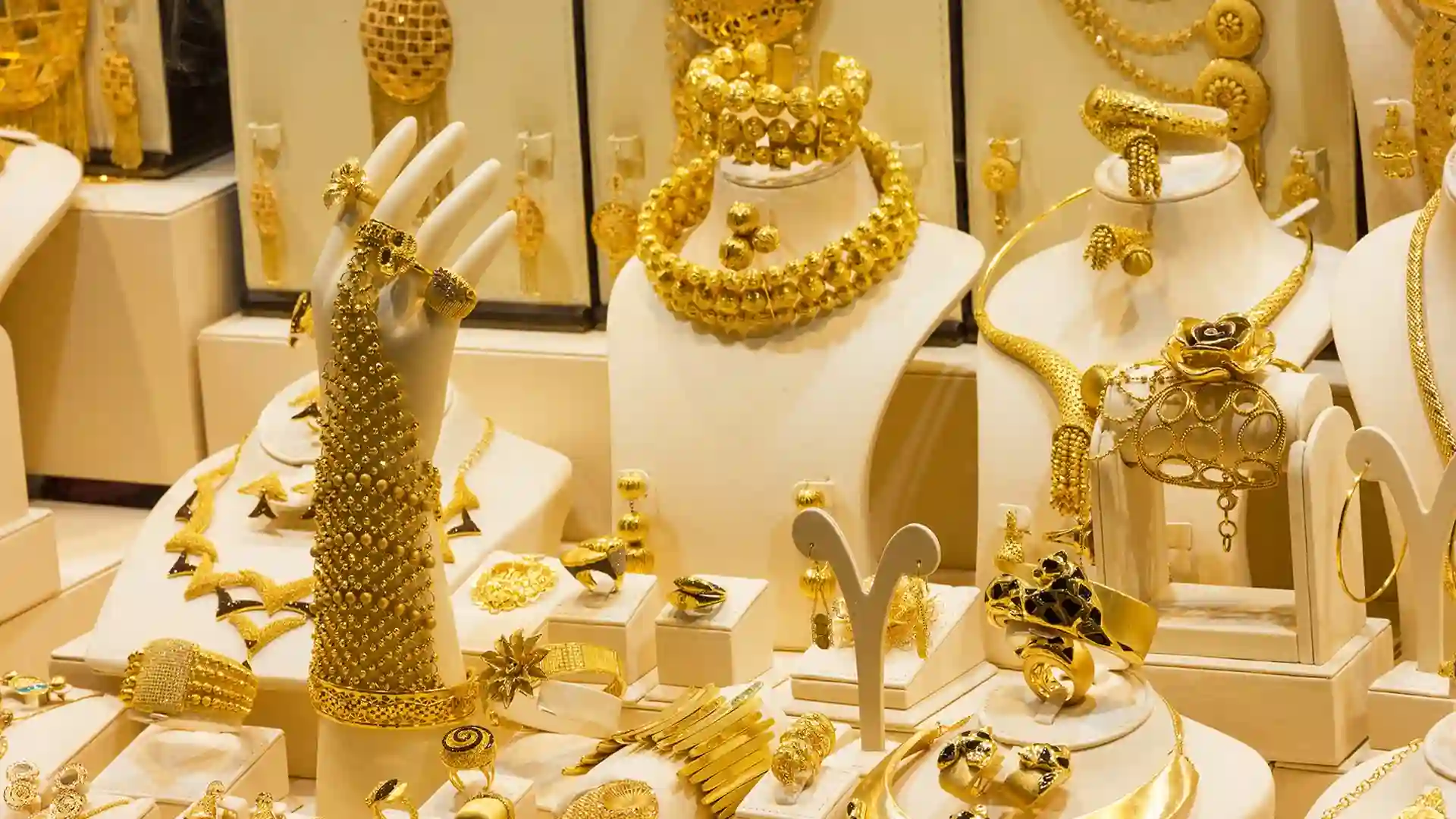
Gold prices in the UAE continued to surge after hitting fresh record levels twice in a single day. When trading began on Tuesday, December 23, the price of 24-karat gold climbed to Dh540, marking a jump of more than Dh10 from Monday morning’s level of Dh529.75. Other gold variants also saw notable gains, with 22K priced at Dh500, 21K at Dh479.50, 18K at Dh411, and 14K at Dh320.50. In global markets, spot gold was trading at $4,475.44 around 10:30am, nearly 1 per cent higher compared to Monday. Silver followed a similar trend, breaking past its previous record to reach $69.43.
Vijay Valecha, Chief Investment Officer at Century Financial, described the current upswing as one of the most powerful gold rallies witnessed since the 1970s. He noted that the surge highlights gold’s dual role as both a store of value during uncertain times and a safeguard against inflation. However, Valecha pointed out that prevailing global conditions are pushing investors more toward caution, allowing gold’s safe-haven appeal to take center stage over its inflation-hedging function. He added that rising geopolitical risks, ongoing trade tensions, and broader economic instability are driving investors toward precious metals, fueling the sharp rise in gold prices.
Gold demand in the UAE
He explained that gold demand patterns in the UAE are quite distinct from those seen in many other countries, largely due to the nation’s position as a major international trading centre. While interest in gold remains steady, buyers are approaching purchases with greater caution. He noted that jewellery demand across the Middle East reached 33.8 tonnes during the third quarter, with the UAE accounting for about 20 per cent of that total, placing it second only to Saudi Arabia in the region. According to him, the softer demand environment is not limited to the UAE alone, as similar trends have been observed in developed economies. In the United States, for instance, jewellery demand slipped to 24.6 tonnes, making it one of the weakest third-quarter performances on record.
Despite the slowdown in jewellery purchases, he highlighted that demand for gold bars and coins in the UAE remained relatively resilient. Bar and coin buying stood at approximately 3.4 tonnes in the third quarter. Although this figure showed a slight decline compared to the same period last year, the drop was far less severe than what was witnessed in developed markets. This contrast underscores the unique nature of investor behaviour in the UAE, where physical gold continues to play an important role as a store of value.
He pointed out that in the United States, demand for bars and coins fell sharply, plunging by more than 60 per cent, as many investors chose to capitalise on the recent rally by booking profits. Europe, however, presented a different picture. There, renewed interest in gold emerged as investors took advantage of price corrections, stepping back into the market during dips. This divergence reflects how regional economic conditions and investor sentiment can significantly influence gold-buying patterns.
He further explained that a substantial portion of the gold purchased in Dubai is not intended for long-term domestic consumption. Instead, much of it is re-exported to South Asia, Africa, and nearby regions. This makes the UAE less dependent on local end-users and more focused on its role as a conduit for global gold trade. As a result, movements in demand within the country often reflect broader international flows rather than purely domestic consumption trends.
According to him, this structural characteristic sets the UAE apart from both traditional developed and emerging markets. On one hand, consumer behaviour within the country resembles that of developed economies, where purchases are more measured and sensitive to price movements. On the other hand, the UAE’s strategic importance in the global gold ecosystem mirrors that of an emerging-market hub, playing a central role in moving large volumes of the metal across borders.
He added that this dual identity gives the UAE a unique advantage. Its gold market remains highly liquid, supported by well-established infrastructure, strong logistics networks, and deep trading relationships with multiple regions. These factors allow the country to absorb shifts in global demand more effectively than many others, even during periods of volatility.
In simple terms, he described the UAE as quietly pivotal to the global gold trade. While local consumption may fluctuate in line with global economic conditions, the country’s broader role as a trading and distribution hub ensures that gold continues to flow through its markets. This balance between cautious domestic demand and robust international trade activity makes the UAE’s gold sector structurally strong and resilient, even when other markets experience sharper downturns.