Dubai Airports are increasing flights and seating capacity to meet rising demand as winter travel peaks, connecting more destinations and enhancing passenger convenience during the busy holiday season.
Dubai Airports Boost Flight and Seat Capacity Ahead of Winter Travel Surge
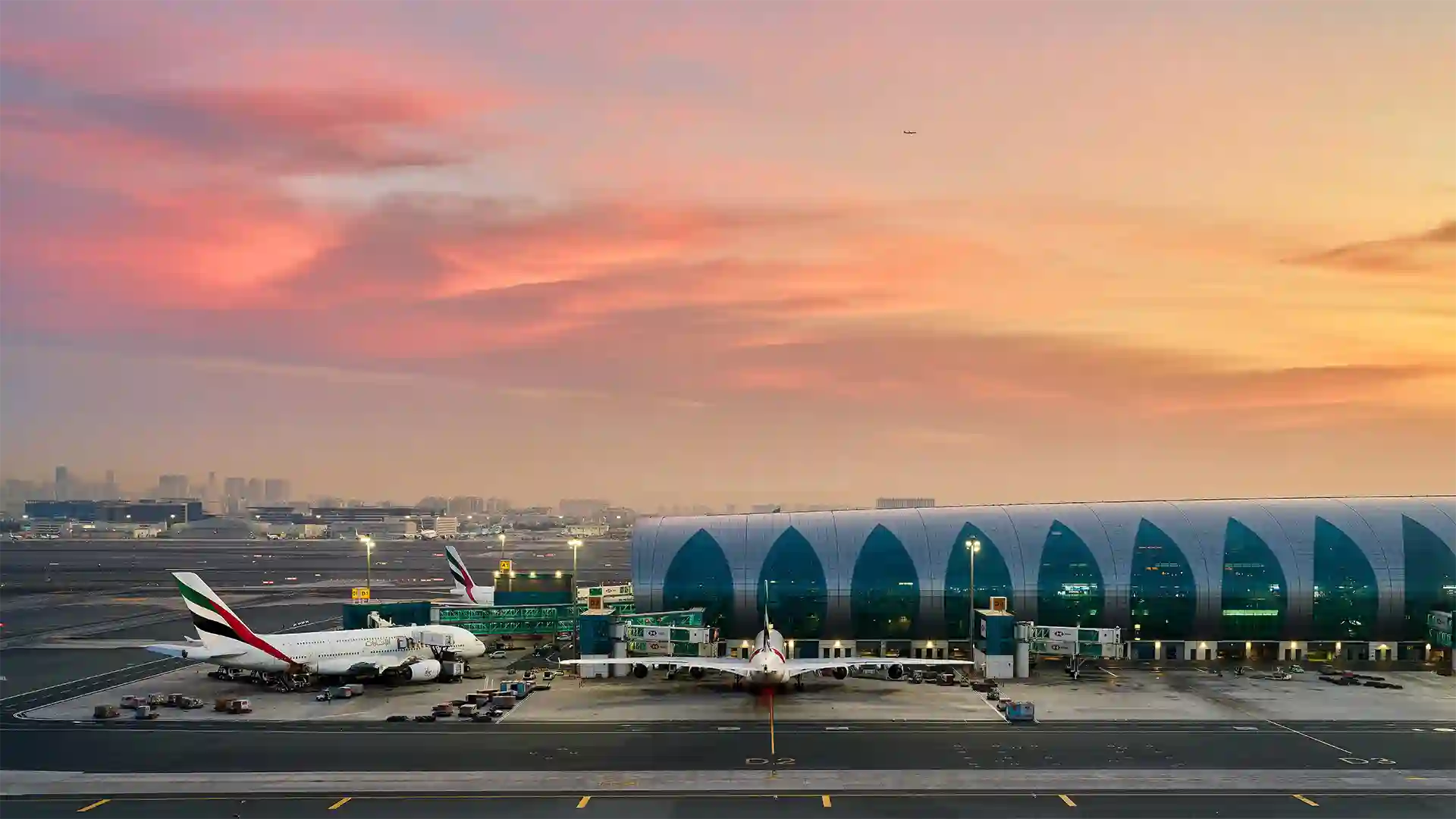
Dubai International (DXB) and Dubai World Central – Al Maktoum International (DWC) are heading into the winter season with their most extensive combined flight network to date, supported by new routes and increased flight frequencies.
For passengers, this expansion means improved connectivity and a wider range of travel options during one of the year’s busiest periods. Multiple airlines have strengthened their winter presence in Dubai, offering added choice and capacity. FlyArystan has entered the network with two weekly flights from Aktau in Kazakhstan, introducing a new link to Central Asia.
Austrian Airlines has restarted daily flights from Vienna, enhancing connections with Central Europe. Virgin Atlantic has upgraded its Dubai service by operating the A350-1000, delivering a 52 per cent rise in available seats. British Airways has brought back its A380 operations from London Heathrow, while Varesh Airline has launched twice-weekly services from Sari in Iran. Fly Jinnah has also expanded access with two weekly flights from Lahore.
Saudi Arabia Traffic
Saudi Arabia has emerged as one of the most significant sources of passenger growth for Dubai’s airports during the winter travel season, reinforcing its position as a key regional market. It already ranks as the second-largest country market for Dubai International Airport (DXB), accounting for 7.8 per cent of total passenger traffic on a year-to-date basis as of October. This strong performance reflects the deep travel links between the two countries, driven by business travel, tourism, visiting friends and relatives, and religious journeys.
Across both Dubai International and Dubai World Central – Al Maktoum International (DWC), passenger traffic to and from Saudi Arabia reached a combined total of 6.3 million travellers. This represents a year-on-year increase of 1.3 per cent, demonstrating steady and sustained demand despite broader global pressures on aviation and travel. The continued rise in passenger volumes highlights the importance of Saudi Arabia as a cornerstone market within Dubai’s aviation network.
Growth has been especially striking at DWC, where passenger numbers surged by an exceptional 459 per cent, reaching 173,000 travellers. While DXB continues to handle the majority of Saudi-bound traffic, the sharp increase at DWC signals a shift in how regional travel demand is being distributed across Dubai’s two airports. DWC’s expanding role is supported by additional airline services, increased flight frequencies, and its growing attractiveness for short-haul and regional routes.
This surge in Saudi traffic also reflects wider regional trends, including closer economic ties, expanding tourism initiatives, and greater airline capacity between the UAE and Saudi Arabia. As winter travel demand peaks, Dubai’s dual-airport strategy is proving effective in accommodating rising passenger volumes, improving connectivity, and offering travellers more choice. With Saudi Arabia continuing to drive growth, both DXB and DWC are well positioned to manage increasing regional travel flows in the months ahead.
DWC Ups Game
Dubai International Airport (DXB) continues to serve as the city’s main global gateway, but this winter Dubai World Central – Al Maktoum International (DWC) is assuming a more prominent role in handling passenger traffic, particularly for travellers flying to and from destinations in Eastern and Western Europe. As airlines expand schedules and add capacity for the peak season, DWC is increasingly being positioned as a complementary hub that supports Dubai’s broader aviation strategy.
During the first ten months of the year, DWC processed 1.1 million passengers, representing a robust 36.6 per cent increase compared with the same period last year. This growth reflects rising demand for regional and medium-haul travel, as well as the airport’s ability to absorb additional capacity during busy periods. Alongside passenger growth, aircraft movements and cargo volumes have also continued to climb, underlining DWC’s expanding operational role not only for travellers but also for logistics and freight activity.
A key contributor to DWC’s winter momentum has been the expansion of services by European airlines, including German carrier Eurowings. The airline has strengthened its Dubai network by launching daily flights from Stuttgart to DXB, while also operating three weekly services from Düsseldorf directly to DWC. These routes enhance connectivity between Dubai and major German cities, catering to both inbound tourism and outbound travel demand.
Eurowings has further expanded its footprint by increasing flight frequencies to Berlin, Cologne and Hannover. Notably, the airline has introduced its Premium Bizclass product on the Berlin route, offering enhanced comfort and services for business travellers while also appealing to premium leisure passengers. Together, these developments highlight DWC’s growing importance within Dubai’s aviation ecosystem, as the airport continues to attract new airlines, support network expansion, and provide travellers with more choice and flexibility during the busy winter season.