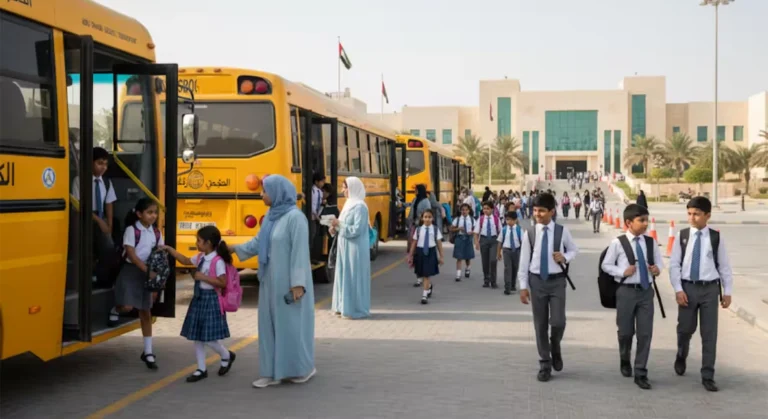
In the UAE, children who experience slow learning progress and difficulties expressing themselves may be showing early warning signs of underlying vision issues that require attention, assessment, and timely support.
UAE: Delayed learning and weak communication could indicate your child has a vision problem.

Experts emphasise that common childhood eye conditions—such as nearsightedness, astigmatism, and misalignment of the eyes—affect far more than a child’s ability to see clearly. These issues can quietly shape many aspects of a young person’s development, influencing how they interact with the world, how they express themselves, and how confident they feel in everyday situations. Good vision plays a crucial role in early learning, from recognising shapes and letters to interpreting facial expressions. When that visual input is disrupted, even slightly, it can create barriers that ripple into other areas of a child’s life.
For example, a child with untreated myopia may struggle to view the board in class, leading them to miss important instructions. Over time, this can result in hesitation, reduced participation, and a sense of falling behind peers. Astigmatism, which causes distorted or blurred vision at various distances, may force children to exert extra effort just to focus, often resulting in headaches or fatigue that make learning more challenging. Strabismus, a condition in which the eyes do not align properly, can not only interfere with depth perception but also lead to feelings of self-consciousness if other children notice the visible misalignment. These emotional and social effects can be just as impactful as the physical symptoms.
Eye specialists note that children rarely recognise or articulate that something is wrong with their vision. Many adjust to the way they see, assuming it is normal. As a result, learning difficulties or behavioural changes may be the first signs that an underlying visual problem exists. A child who avoids reading might not dislike books; they may simply find the print too blurred to decode comfortably. One who appears inattentive may actually be struggling to focus their eyes rather than their mind. Mislabelled as disinterested or disruptive, these children often face unnecessary academic and social challenges when early detection and treatment could have made a significant difference.
Beyond individual cases, visual impairments in childhood represent a global public health issue. According to estimates from the World Health Organisation, nearly 19 million children around the world live with some form of visual impairment. This number reflects a substantial population whose daily experiences—from learning in school to interacting with family and friends—are influenced by how clearly they can see their environment. The impact is not limited to reading or recognising objects; vision plays a crucial role in communication. Children rely heavily on visual cues, such as facial expressions, gestures, and body language, to understand emotions and social interactions. When these cues are blurred or difficult to interpret, it may hinder relationship-building and emotional development.
Moreover, early vision problems, if left untreated, can have long-term consequences. Poor sight during key developmental stages may alter how a child perceives themselves, impacting self-esteem and shaping their identity. Something as simple as difficulty catching a ball or drawing within the lines may influence how competent a child feels compared to their peers. These subtle but persistent moments accumulate, forming the foundation of their confidence and emotional resilience.
Recognising and addressing eye conditions early can therefore play a transformative role in a child’s overall growth. Regular eye exams, attentive caregivers, and awareness of behavioural changes can help ensure that vision issues are caught at a stage when intervention is most effective. When children are given the support they need to see clearly, they are often better equipped not only to learn but also to communicate, connect, and thrive in every aspect of their lives.
When children struggle with vision problems that go undiagnosed or untreated, the impact often extends deeply into their educational experience. Tasks that rely heavily on visual clarity—such as recognising letters, reading text on a page or a board, copying notes, or completing written assignments—can become frustrating and time-consuming. As these challenges persist, many children may fall behind their peers, not because of a lack of ability or effort, but simply because their eyes are not providing the clear input they need to learn effectively. This gap can widen over time, influencing test performance, classroom participation, and overall academic confidence.
However, the consequences are not confined to schoolwork alone. Vision difficulties can also shape a child’s social world. Children who cannot see clearly may misinterpret facial expressions or struggle to follow group play, making it harder to form friendships. Some may be perceived as clumsy or withdrawn, drawing unwanted attention or teasing from classmates. Bullying is a common issue faced by children with noticeable visual issues or those who appear different due to squinting, holding books very close, or wearing strong prescriptions. These experiences can gradually chip away at a child’s emotional wellbeing, fostering feelings of anxiety, insecurity, and low self-worth. Over time, untreated visual impairments can significantly influence both personal development and social confidence.


Emotional challenges
Dr. Alina Mugnani Deza, specialist ophthalmologist at Barraquer Eye Hospital, notes that the early years of a child’s life are particularly delicate. During this stage, children rely heavily on visual information to form connections, understand their surroundings, and prepare for learning. When that visual input is limited, it can subtly influence social development, bonding with caregivers, and readiness for school. As parents search for the root of their child’s struggles, mental-health experts caution that vision problems that remain undiagnosed or untreated may quietly contribute to long-term behavioural and emotional difficulties.
Dr. Deza highlights that vision plays a central role in how children explore their world, communicate with others, and learn new skills. When eyesight is compromised, the likelihood of emotional challenges increases considerably. She points out that certain developmental stages are particularly sensitive:
Infancy (0–2 years): Reduced visual input can influence early bonding, motor development, and curiosity.
Preschool age (3–6 years): Children become more aware of differences between themselves and others, heightening emotional vulnerability.
Early school years (6–12 years): Increased academic demands and more complex peer relationships can lead to frustration, anxiety, or avoidance.
Dr. Deza adds that difficulties with vision can shape a child’s personality over time. Some may develop a fragile sense of self-worth, become overly dependent due to excessive parental protection, or avoid activities for fear of failure. Others, when supported consistently and positively, may grow strong coping skills and resilience.
Psychological and behavioural indicators often linked to visual impairment include persistent anxiety, withdrawal from social situations, irritability, delays in expressive or social communication, slower developmental progress, and even disruptions in sleep. Interactions with peers can also be challenging, as children with visual limitations may find it harder to interpret facial cues, keep up with group play, or respond quickly to social dynamics. These difficulties can lead to isolation, misunderstandings, or a sense of being left out.
Emotional support
She highlighted that the stability and support of a child’s family play a crucial role in safeguarding emotional wellbeing. When the home environment encourages autonomy, offers consistent reassurance, and prioritises timely eye care, children are far less likely to experience psychological strain.
On the other hand, certain parental behaviours can unintentionally make matters worse. Excessive shielding, dismissing or minimising the vision issue, sending mixed messages about expectations, or postponing necessary treatment can all heighten a child’s stress and emotional burden.
Early detection
Early warning signs that a child may be struggling include avoiding play with others, reluctance to attend school, increased irritability, becoming unusually dependent on caregivers, slipping academic performance, and physical complaints like frequent headaches. When these indicators appear, timely developmental support can make a substantial difference. Interventions such as vision rehabilitation, occupational or speech therapy, psychological support, and structured guidance for parents can greatly enhance a child’s long-term progress. Schools also play a vital part by ensuring learning materials are accessible, offering assistive tools, adapting classroom expectations, training teachers, and providing counselling services.
Dr. Deza cautioned that vision problems can easily be misinterpreted as behavioural issues or learning disorders, which may further undermine a child’s confidence and academic success.
She explained that screening children from around two and a half years of age helps detect visual difficulties before they interfere with key developmental milestones. According to her, the use of supportive technologies—including screen-enlarging software, smart devices, projectors in classrooms, and text-to-speech resources—can empower children by improving their independence, communication skills, and ability to engage socially.
Types of Visual Impairment
Ms. Gayatri Govind Gajjam, a Clinical Psychologist at the Aster DYU Child Development Centre, described the profound ways different forms of vision loss can influence a child’s emotional health. She explained that no two visual impairments are the same—each type shapes a child’s behaviour, coping strategies, and emotional reactions differently.
According to her, children with partial vision often become easily frustrated, especially when academic tasks demand clarity they cannot achieve. This can gradually erode their confidence and lead them to withdraw socially. In contrast, children who are completely blind—whether from birth or later in life—may need extra time to develop mobility skills, imitation abilities, and foundational communication. Yet with consistent sensory-based intervention, many of these children learn to adapt with impressive effectiveness.
Loss of peripheral vision, she noted, frequently heightens anxiety because children fear bumping into obstacles they cannot see. When central vision is compromised, tasks requiring detail—reading, writing, or recognising faces—become challenging, causing many children to feel slower or less capable than their peers. She added that progressive visual deterioration is particularly emotionally heavy, as children must cope repeatedly with each decline in their sight. Neurological visual impairment, which varies depending on fatigue or environmental stimulation, can also lead to misunderstanding social cues, resulting in emotional tension.
Gajjam explained that much of the emotional burden stems from a lack of predictability. Children with reduced sight rely intensely on familiar routines and controlled environments. When their surroundings feel unpredictable or overstimulating, especially in noisy settings, their anxiety often rises. Social challenges commonly occur as well, such as trouble reading expressions, difficulty joining group activities, or fear of making mistakes in front of others. Limited imitation and fewer opportunities for incidental learning can slow communication development, and when children feel unsure of their abilities, they may lean heavily on caregivers.
Despite these hurdles, she emphasised that visually impaired children can develop exceptional strengths when given the right support. Many demonstrate strong resilience, creativity in problem-solving, and heightened use of touch and hearing. Early exposure to mobility training, sensory-rich learning activities, and modern assistive devices can lay the foundation for strong social-emotional and academic growth.
Mistakes to Avoid
Gajjam also pointed out several common parental missteps that can unintentionally increase a child’s stress. Overprotecting a child, postponing assistive tools because of stigma, focusing solely on medical treatment and overlooking emotional needs, or comparing the child with peers who have full vision can all worsen psychological strain. Early stress may show up as fear of unfamiliar spaces, irritability, avoidance of new tasks, changes in sleep patterns, or feelings of inadequacy.
She recommends a multidisciplinary approach for optimal development—this may include mobility and orientation training, modified behavioural strategies, tactile-based play therapy, speech support, sensory-integration work, and family-focused counselling. For full inclusion, schools must also ensure accessible materials, appropriate seating, sensitisation of classmates, supportive technologies, and adjusted expectations.
Recommendations
Experts agree that early eye screenings, empowered families, and access to supportive technologies create the greatest positive impact. When vision challenges are identified early, children can receive interventions that prevent or minimise developmental, emotional, and academic barriers.
A nurturing home that balances independence with reassurance, combined with predictable routines, helps build self-confidence and emotional strength. Meanwhile, inclusive and flexible school environments ensure that educational and psychological needs are addressed equally.
With timely diagnosis, thoughtful support, and tailored tools, children with visual impairments are fully capable of flourishing—socially, academically, and emotionally.