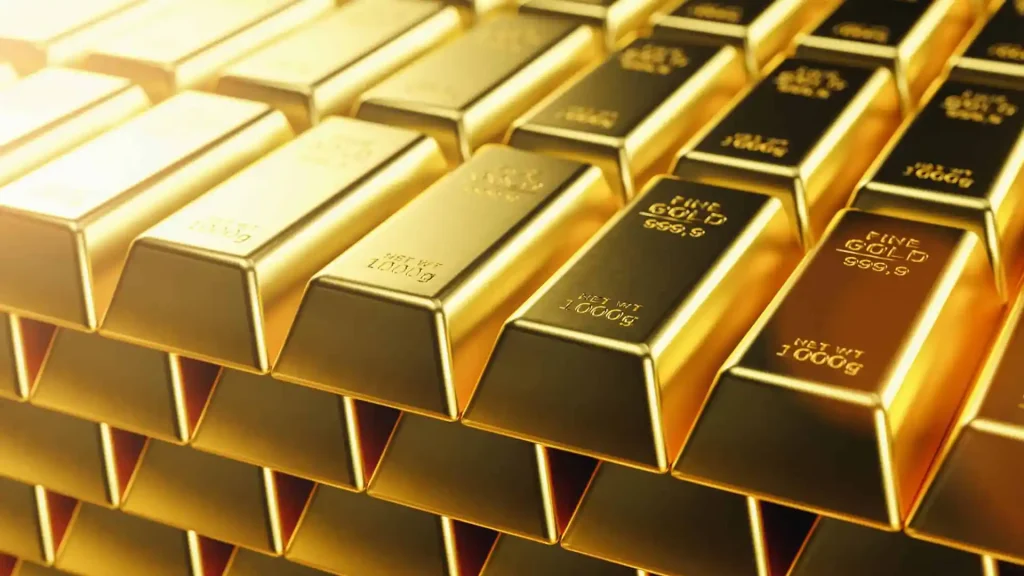
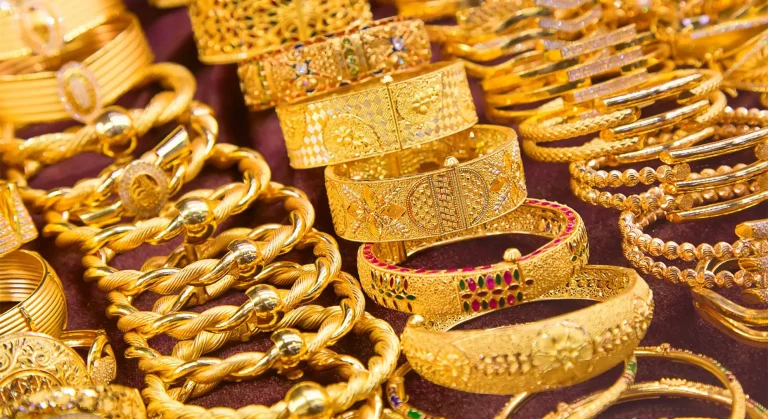
Gold rates in Dubai have regained earlier losses, posting a fresh increase of Dh5 per gram as market conditions improve and buyer sentiment strengthens following recent fluctuations in international prices.
Dubai: Gold prices recover losses, rise Dh5 per gram.

Dubai’s gold market opened Wednesday on a stronger footing, with prices edging higher by Dh5 per gram after a brief dip the previous day. The mid-week session began with renewed optimism among traders, as the latest uptick effectively countered most of Tuesday’s pullback. The rebound reflects a stabilizing trend in regional bullion trading, where small daily fluctuations often mirror shifts in global sentiment, currency movements, and investor positioning.
Jewellery buyers and investors alike welcomed Wednesday’s increase, viewing it as a sign that demand remains resilient despite recent volatility. Analysts noted that the recovery suggests the local market is responding quickly to changes in international gold rates, which have been influenced in recent days by economic data releases and expectations around interest-rate policies. With the price correction largely reversed, market participants are watching closely to see whether further gains will follow as the week progresses and global trading cues become clearer.
Gold prices in Dubai saw a noticeable lift on Wednesday as market activity resumed, with updated figures from the Dubai Jewellery Group indicating a broad recovery across all major purity categories. The most prominent movement was seen in 24K gold, which opened the day at Dh508.75 per gram, marking a clear increase from Dh503.75 per gram recorded during Tuesday’s market close. The renewed strength in 24K reflects heightened interest among investors who typically lean toward the purest form of the metal, especially when international prices experience volatility.
The upward trend was not limited to 24K alone. Other purities of gold followed suit, reinforcing the overall positive tone in the market. 22K gold, often preferred for its balance of durability and purity, climbed to Dh471.25 per gram, offering consumers a slight but meaningful price shift. Similarly, 21K, a widely purchased option in Dubai due to its popularity in jewellery, rose to Dh451.75 per gram, indicating steady demand among residents and tourists alike. 18K, which appeals to buyers seeking both affordability and style diversity, increased to Dh387.25 per gram, reflecting consistent consumer interest.
A newer addition to Dubai’s retail gold offerings—the 14K variant—also experienced a modest rise. It was priced at Dh302 per gram, up from Dh299 at Tuesday’s closing level. Though this category remains relatively niche, its affordability continues to attract budget-conscious shoppers and those purchasing everyday wear pieces.
Market analysts suggest that the across-the-board increase illustrates Dubai’s sensitivity to global bullion shifts, often reacting swiftly to movements in international markets. The simultaneous rise in all categories highlights the emirate’s robust jewellery sector, where pricing adjustments are quickly reflected in retail rates. With the mid-week bounce, traders are now watching to see whether this upward momentum will extend further as global trading continues to evolve.

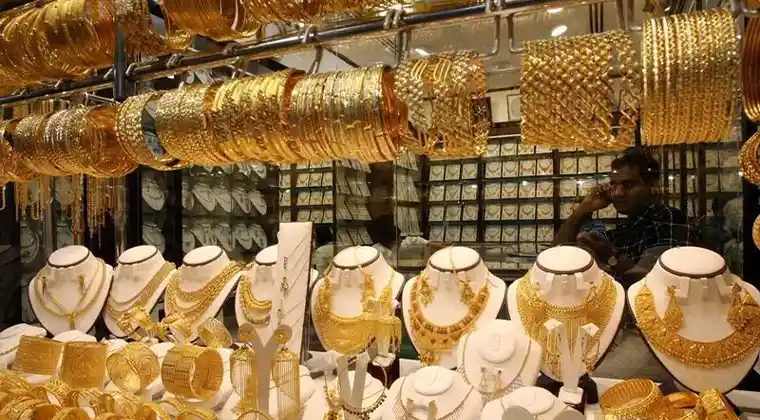
Gold prices rebounded on Wednesday morning as investor sentiment in the precious metals market remained buoyant, reflecting both global economic developments and shifting expectations regarding central bank policies. According to market data, spot gold was trading at $4,221.76 per ounce at 9:10 a.m. UAE time, marking an increase of 0.77 percent compared with the previous session. The recovery came after a slight pullback on Tuesday, when gold fell to $4,198 per ounce, down 0.45 percent, following a brief rally to a five-week high on Monday.
The recent movements in gold prices have been closely linked to the evolving outlook for U.S. interest rates. Investors have increasingly factored in the possibility of a Federal Reserve rate cut in response to softer economic indicators. In particular, weaker-than-expected Purchasing Managers’ Index (PMI) data in the U.S. reinforced the anticipation of looser monetary policy. Analysts suggest that this softening in economic activity has contributed to rising expectations that the Fed may ease rates next week. According to the CME FedWatch tool, the probability of a rate cut currently stands at 87 percent, signaling that market participants are overwhelmingly pricing in the potential policy adjustment.
Commenting on the latest developments, Vijay Valecha, Chief Investment Officer at Century Financial, noted that the combination of softer U.S. economic data and supportive global conditions has provided a favorable backdrop for gold. “The weaker data favors gold prices, as investors look for safe-haven assets amid uncertainty regarding economic growth,” he said. Valecha also highlighted that movements in other markets, such as Japanese government bonds, have had an indirect impact on bullion prices. “Rising yields on Japanese bonds have helped curb downward pressure on gold, while the yen’s appreciation against the U.S. dollar further supports the precious metal’s value,” he added.
Another significant driver has been inflows into gold-backed exchange-traded funds (ETFs). These inflows indicate continued strong interest in gold as a preferred non-fiat asset, as investors seek protection against currency fluctuations and global market volatility. The trend underscores gold’s enduring appeal among both institutional and retail investors looking for a hedge against economic uncertainty. Valecha emphasized that, technically, gold’s ability to hold above the $4,200 per ounce level is an important support zone, providing a stable foundation for potential further gains.
The broader context of global economic conditions also supports gold’s resilience. While the U.S. shows signs of cooling in manufacturing and service sector activity, other major economies are navigating similar pressures, including uncertainties around growth and inflation. These dynamics contribute to a safe-haven demand for gold, which traditionally benefits during periods of policy uncertainty and market volatility.
On the technical front, analysts are closely monitoring gold’s price action and market sentiment. The rebound above $4,200 suggests that the metal has found short-term stability, while investor positioning in derivatives markets indicates heightened expectations of further upside if central banks adopt accommodative measures. Additionally, the interplay between global currencies, particularly the dollar and yen, continues to play a significant role in shaping bullion prices. A stronger yen relative to the dollar, for instance, can make gold more attractive to investors holding other currencies, helping maintain upward momentum.
Market participants are also paying attention to geopolitical and macroeconomic developments, which can amplify the traditional drivers of gold demand. With persistent uncertainty in international trade, financial markets, and energy prices, gold remains a key asset for diversifying risk. Investors are increasingly considering it not just for its intrinsic value, but also as a strategic component of portfolios seeking stability amid fluctuating conditions.
Looking ahead, gold is likely to remain sensitive to announcements and data releases from the U.S. Federal Reserve. A rate cut could further fuel bullish sentiment, encouraging both short-term speculative activity and longer-term investment flows. Meanwhile, global economic indicators, currency movements, and capital flows into ETFs will continue to provide important signals for market direction. Analysts suggest that, while volatility is expected in the near term, the underlying support levels and inflows into bullion-related products indicate a generally positive outlook for the metal.
In summary, gold has started the day on a strong note in Dubai and global markets, rising above $4,220 per ounce after a minor decline the previous session. Factors driving this movement include softer U.S. PMI data, expectations of an imminent Fed rate cut, supportive bond market dynamics, yen appreciation, and continued inflows into ETFs. Technical analysts point to the $4,200 level as a key support for the yellow metal, while macroeconomic uncertainty continues to make gold an attractive safe-haven investment. As central bank decisions and economic reports unfold, gold is expected to remain closely watched by both institutional and retail investors, maintaining its role as a cornerstone of hedging strategies and portfolio diversification worldwide.