“The Arabian Saluki, bred for speed and endurance, has been a loyal and skilled hunting partner for centuries, combining elegance, intelligence, and instinct to remain a timeless companion in the hunt.”
“Born to Hunt: Why the Arabian Saluki Remains the Ultimate Hunting Companion”.

The first-ever Al Ain International Hunting and Equestrian Exhibition 2025 opened its doors with a remarkable celebration of the region’s cultural legacy, and among the many attractions showcased, none drew admiration quite like the Arabian Saluki. Visitors entering the exhibition grounds were immediately met with an atmosphere that blended tradition, craftsmanship, and the deep-rooted passion the Arab world holds for hunting and equestrian pursuits. Yet, despite the diversity of displays, it was the Saluki that seemed to effortlessly command attention, standing as a living emblem of endurance, nobility, and the intimate bond between humans and their canine companions.
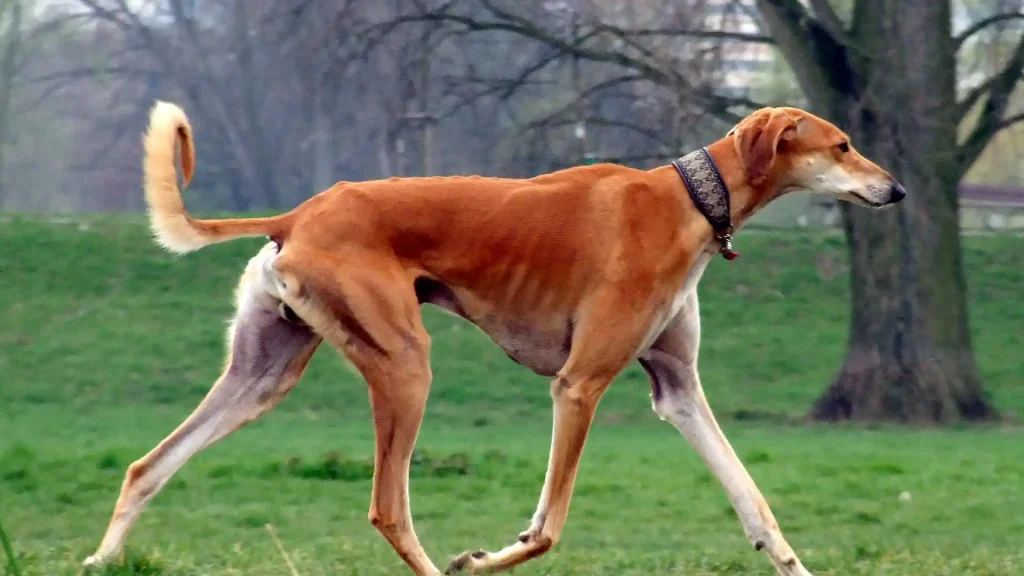
For centuries, the Arabian Saluki has been cherished across the desert landscapes for more than just its physical beauty. Its slender, aerodynamic frame, expressive eyes, and fluid movements tell the story of a breed sculpted by both nature and culture to survive harsh terrains while maintaining unmatched elegance. The exhibition highlighted this through various demonstrations and showcases, reminding audiences that the Saluki is not merely a pet but a historic partner in the age-old art of hunting.
Participants from the UAE and neighboring countries gathered to discuss the breed’s unique qualities, celebrating its keen awareness, sharp instincts, and remarkable intelligence. Hunters described how the Saluki’s ability to read the terrain and react swiftly makes it indispensable in traditional desert pursuits. Breeders, on the other hand, emphasized the careful lineage preservation and selective breeding practices that have kept the Saluki’s defining strengths alive throughout generations. These conversations echoed throughout the venue, creating a shared appreciation for the breed’s steadfast loyalty and refined skills.
The event also offered visitors — from seasoned enthusiasts to families attending out of curiosity — an opportunity to observe the Saluki up close. Many were fascinated by how the breed combines athleticism with a calm, almost regal demeanor. Children watched in awe as the dogs showcased their agility and speed in controlled displays, while adults engaged with experts to better understand the Saluki’s temperament, care requirements, and historical role in Arabian culture. Through these interactions, it became clear that the Saluki embodies both tradition and modern relevance, continuing to bridge the past with the present.
Beyond its hunting abilities, the Saluki was celebrated as a symbol of endurance, loyalty, and heritage. Its presence at the exhibition served as a reminder of the deep connections between the people of the region and the land they inhabit — connections shaped by survival, cooperation, and respect for nature’s rhythms. The Al Ain International Hunting and Equestrian Exhibition provided a stage where these values could be revisited and shared with new generations, ensuring that the legacy of the Saluki remains vibrant.
By the end of the event, it was evident that the Saluki had not only captured attention but had also rekindled pride. Whether admired for its beauty, respected for its skill, or cherished for its history, the Arabian Saluki stood unmistakably as one of the most celebrated icons of the exhibition, continuing its journey as a timeless companion woven deeply into the cultural fabric of the region.
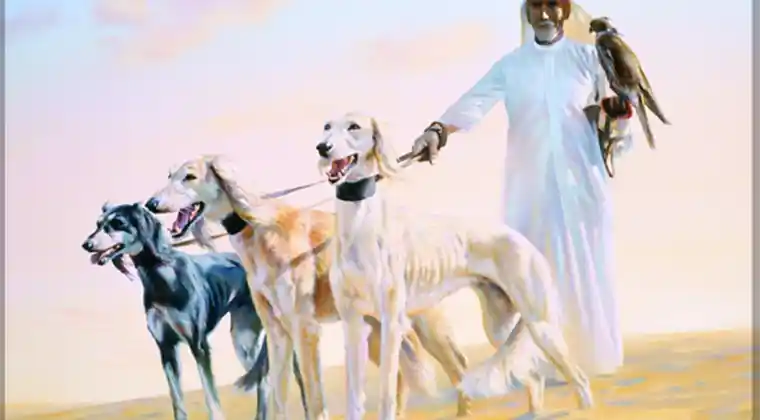
Across the vast deserts of the Arabian Peninsula, few creatures have earned as much admiration as the Saluki. For countless generations, this distinguished breed has served not only as a skilled hunter but also as a trusted companion woven deeply into the daily lives of Bedouin tribes. Its presence in Emirati history is not simply tied to its ability to chase down fast-moving prey, but to the bond of respect and partnership it formed with those who relied on it for survival.
What set the Saluki apart in ancient times — and still does today — is its remarkable adaptation to the harsh, shifting landscapes of the desert. Its lean frame allows for swift and effortless movement across sand, while its stamina enables it to pursue game over long distances without faltering. Hunters often spoke of how the Saluki could anticipate changes in the terrain, adjust its course instinctively, and outmaneuver prey with a level of agility unmatched by most modern breeds. This intuitive intelligence, combined with its striking speed, made the Saluki a vital part of traditional hunting expeditions.
Yet the significance of the Saluki extends far beyond its physical abilities. It has long been regarded as a creature of loyalty and quiet dignity. Families treated their Salukis with deep affection, often granting them a status higher than that of ordinary animals. They were companions during long journeys, guardians of the camp, and symbols of nobility within the tribe. Stories of their devotion have been passed down through generations, further solidifying their role in Emirati heritage.
In contemporary times, the legacy of the Saluki is carefully preserved by committed breeders who value the historical importance of the breed. These experts dedicate themselves to maintaining the Saluki’s purity, ensuring that both its physical traits and its cultural significance endure. Through their efforts, the Saluki remains not just a relic of the past but a vibrant symbol of endurance, loyalty, and tradition in the modern UAE.
Among the many participants taking part in the exhibition, one name repeatedly draws the attention of visitors and Saluki enthusiasts alike — respected breeder Abduljalal Samina. Known across the region for his deep understanding of the breed and his lifelong dedication to preserving its finest qualities, Samina speaks about the Saluki with the pride of someone who has spent decades studying, raising, and competing with these extraordinary dogs. In his view, a Saluki’s true essence cannot be taught or manufactured. Rather, he believes the dog is “born with the passion for the chase,” carrying within its bloodline the instincts and drive needed for the demanding art of desert hunting.
Samina explains that evaluating a Saluki is far more nuanced than simply looking at its price tag. He stresses that the real worth of these animals cannot be measured in currency alone. Instead, he says, their value lies in a combination of lineage — the ancestral pattern that preserves the breed’s purity — and the dog’s proven performance in traditional or modern competitions. Beyond pedigree and ability, he places equal importance on the bond formed between the dog and its handler. According to him, the relationship built through trust, mutual respect, and daily interaction enhances the Saluki’s capability, allowing it to reach its full potential. “Some dogs are priceless,” he emphasizes, noting that exceptional Salukis can excel equally in beauty contests and speed-based events, earning recognition at both national and regional levels.
Walking through the exhibition space, visitors are met with a diverse selection of Salukis representing different training styles, physical forms, and breeding purposes. The floor is organized into distinct categories to help visitors understand the many dimensions of the breed. On one side are the show-quality dogs, admired for their refined appearance, symmetry, and poise — animals bred with an emphasis on elegance, coat texture, ear shape, and overall presentation. Nearby are Salukis trained specifically for high-speed hunting, dogs with powerful muscles, toned bodies, and the sharp instincts required to pursue quarry across open desert. Another section features racing Salukis, renowned for their explosive acceleration and the ability to maintain top speed over long stretches of track.
Each category highlights a different facet of the Saluki’s abilities, and judges take great care in their assessments. The evaluation process is meticulous, involving a close study of multiple physical and behavioural traits. Judges observe the body structure to ensure it aligns with traditional Saluki standards — the long, lean frame, the balanced proportions, the chest depth, and the strength in the hindquarters. They assess the stride and agility, watching how fluidly and gracefully the dog moves when guided by its handler. Muscle tone, flexibility, and overall conditioning play a major role, especially in the hunting and racing divisions.
However, the assessment goes beyond anatomy. A Saluki’s composure, responsiveness, and interaction with its handler are equally significant. Judges look for signs of attentiveness, discipline, and natural confidence. The way a Saluki stands, the alertness in its eyes, the smoothness of its gait, and the ease with which it transitions between commands are all essential indicators of a well-rounded dog. These behavioural elements demonstrate not just training, but the depth of connection between the handler and the animal — a connection that, according to breeders like Samina, is as important as any physical quality.
The exhibition, in showcasing all these dimensions, offers visitors an in-depth understanding of why the Arabian Saluki continues to be admired across the region. It is not merely a dog of beauty or speed, but a creature shaped by heritage, instinct, and the devotion of breeders who work tirelessly to preserve its legacy. Through showcases, expert conversations, and live demonstrations, attendees gain insight into what makes the Saluki a treasured symbol of Emirati culture — a breed that embodies both tradition and excellence, standing proudly at the intersection of past and present.
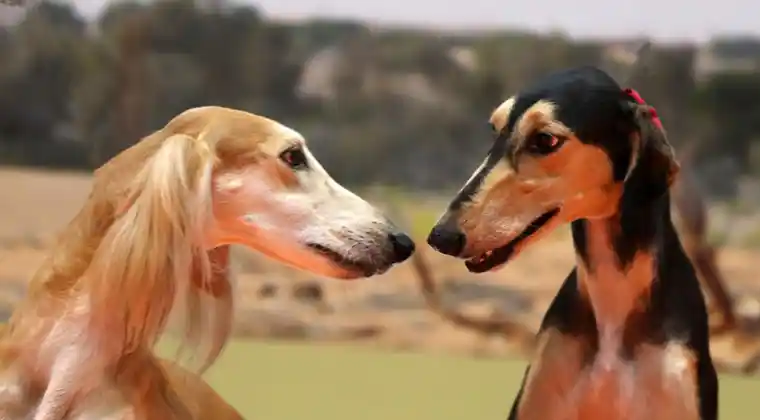
Breeders who have dedicated their lives to studying the Arabian Saluki often remark that its beauty is only one part of what makes the breed extraordinary. While many people admire the Saluki for its refined features — the long legs, the feathered ears, the graceful silhouette — those who work closely with the dogs understand that their true brilliance lies in their incredible stamina. This balance between elegance and power has been shaped over centuries, molded by the desert’s demands. A Saluki is not merely a creature of aesthetic appeal; it is a tireless athlete capable of covering great distances with ease. Whether racing across vast dune fields or pursuing swift desert wildlife, the Saluki has proven itself time and again as one of the world’s most gifted hunting companions. Its seamless blend of speed, endurance, and instinct gives it a natural advantage in terrains where other breeds would quickly tire.
Yet the exhibition goes far beyond celebrating the Saluki’s physical capabilities. It devotes significant attention to the cultural and emotional significance of the breed within Emirati society. In many households across the UAE, the tradition of raising Salukis is deeply rooted in family heritage. For some families, the knowledge of caring for and training the dogs stretches back several generations, passed lovingly from parents to children. The Saluki is seen not only as a working dog but as a symbol of cherished values — patience, determination, loyalty, and a profound connection to the land. These dogs accompanied Bedouins on hunting journeys, traveled long distances with them, and guarded their camps. As a result, they became intertwined with stories passed down through time, stories that reflect both the challenges and the beauty of desert life.
This cultural reverence for the Saluki is evident as visitors make their way through Hall 2 of the exhibition. Instead of simply browsing animals on display, they find themselves surrounded by living embodiments of Emirati history. Each Saluki present — whether standing alert beside its handler, trotting gracefully in a demonstration ring, or resting calmly at a showcase booth — represents a legacy far older than the exhibition itself. Every dog carries a narrative that stretches back into the past, shaped by the journeys of ancestors who helped hunters survive in unforgiving environments. These stories may not be written in books, but they are reflected in the Saluki’s eyes, its movements, and the way it responds to its handler. Through these dogs, visitors gain a glimpse into the lifestyle, pride, and traditions of the people who once roamed the Arabian Peninsula’s open desert.
The exhibition also shines a light on the modern efforts being made to safeguard the future of the breed. With rising interest in competitive events such as beauty shows, sprint races, and heritage festivals, breeders feel a stronger responsibility to preserve the traits that define the Saluki. Maintaining the purity of the bloodline, ensuring the dogs receive proper training, and promoting ethical breeding practices are all essential to keeping the Saluki’s legacy intact. Exhibitions like the Al Ain International Hunting and Equestrian Exhibition serve as platforms where specialists exchange knowledge, refine standards, and celebrate the achievements of the breed. They ensure that the Saluki remains both a symbol of national identity and a living reminder of the deep connection between the people of the region and the desert that shaped them.
As interest in the Saluki continues to rise — both among seasoned breeders and curious newcomers — events like this play an increasingly important role. They do more than display dogs; they preserve a cultural tradition that might otherwise fade with time. The exhibition becomes a space where history is not confined to photographs or museum artifacts but moves, breathes, and interacts with the public. The Saluki, with its centuries-old legacy, stands proudly as a bridge between the past and the present, embodying the spirit of endurance and elegance that the UAE values deeply.
In the end, the Arabian Saluki remains far more than a remarkable hunting dog. It is a cultural treasure, a loyal partner, and a symbol of the UAE’s enduring relationship with the desert. Through exhibitions like the one in Al Ain, this legacy continues to flourish, ensuring that the Saluki’s story will be told for generations to come.