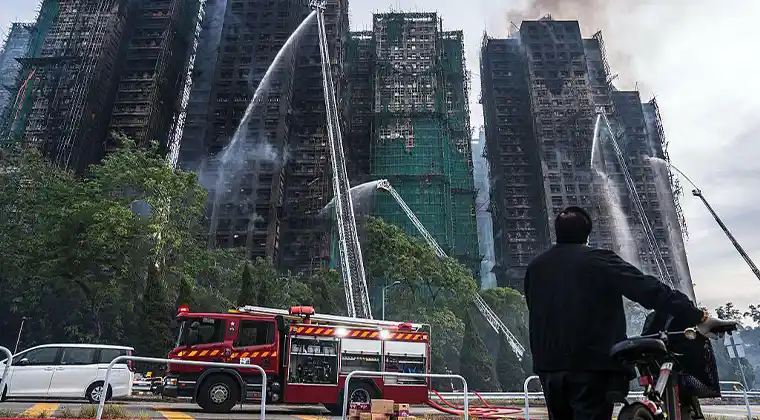
A massive fire in Hong Kong has been burning for almost 20 hours, leaving authorities reporting a rising death toll that has now reached 55, according to officials.
Hong Kong Blaze Continues Nearly 20 Hours Later, Death Toll Rises to 55.
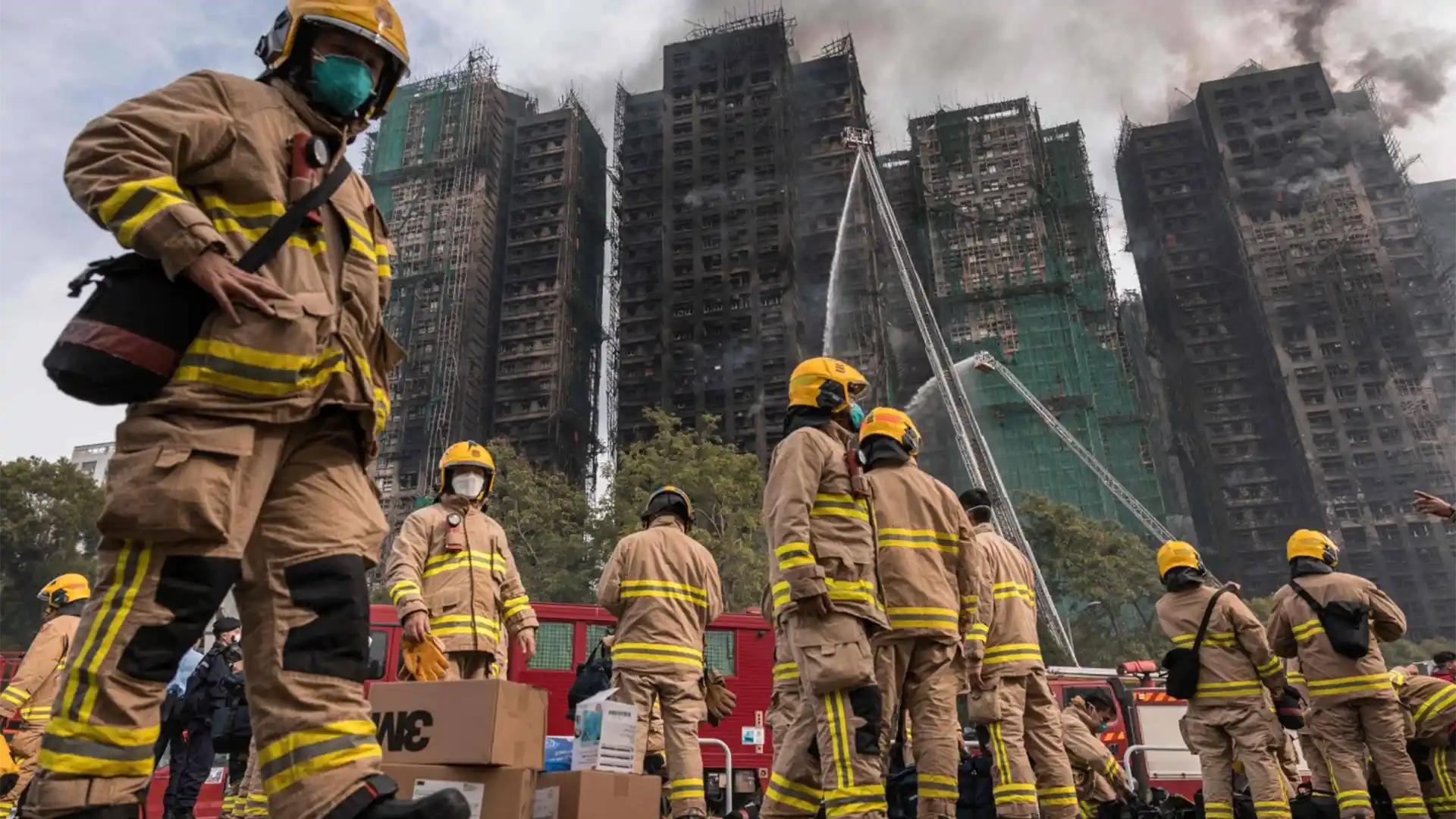
Hong Kong was left reeling on Thursday after a devastating high-rise fire tore through one of the city’s densely populated residential complexes, claiming at least 55 lives, injuring dozens, and leaving hundreds unaccounted for. Authorities confirmed that 72 people were hospitalized with various injuries, ranging from burns to smoke inhalation, while police reported the arrest of three suspects in connection with the incident, although investigations were still ongoing. The scale and intensity of the disaster have made it one of the deadliest fires in Hong Kong in decades, sending shockwaves through the Chinese financial hub.
The blaze erupted on Wednesday afternoon in a sprawling residential complex comprising eight interconnected buildings that collectively house approximately 2,000 apartment units. Residents described scenes of chaos and panic as thick smoke and towering flames rapidly engulfed the upper floors, prompting emergency evacuations. Hong Kong’s narrow streets and densely packed infrastructure made firefighting efforts extremely challenging, slowing the response despite the city’s well-equipped fire services. Eyewitnesses reported hearing frantic calls for help from trapped residents, some of whom were forced to leap from windows in desperate attempts to escape the inferno.
Officials emphasized the extraordinary density of Hong Kong’s residential towers, which rank among the tallest and most crowded in the world, as a significant factor in the fire’s devastating impact. The city, known for its vertical living arrangements and high population density, faces unique challenges when disasters strike high-rise buildings, particularly those that are decades old or lack modern fire-prevention upgrades. Investigators are now working to determine how the fire started, while authorities focus on identifying the missing and providing assistance to survivors.
The arrests of three individuals have raised questions about potential criminal involvement in the fire, though police have not released details about their connection to the incident. Officials cautioned that the investigation remains in its early stages and that the situation is fluid, with rescue and recovery operations continuing around the clock. Emergency services have deployed dozens of fire engines, ambulances, and specialized rescue teams to search the wreckage and tend to the injured, with authorities warning that casualty figures may rise as more information becomes available.
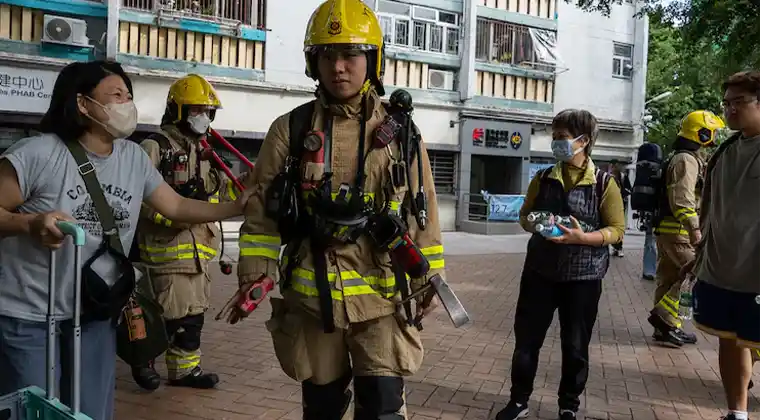
The human toll has been heartbreaking, with entire families affected by the tragedy. Local hospitals reported an influx of patients suffering from burns, smoke inhalation, and psychological trauma, straining medical resources in the city. Relief centers have been established to provide support for displaced residents, many of whom lost their homes and possessions in the fire. Community volunteers and aid organizations have mobilized to assist survivors, distributing food, clothing, and temporary shelter.
As Hong Kong mourns the victims of what officials are calling the deadliest fire in decades, questions are being raised about fire safety regulations in high-rise residential complexes and the city’s preparedness for such catastrophic events. The incident has drawn international attention, highlighting the vulnerability of densely populated urban centers to large-scale fires. While rescue teams continue their tireless work, the city faces a long and difficult recovery, grappling with both the immediate humanitarian crisis and the longer-term challenges of rebuilding and preventing similar tragedies in the future.
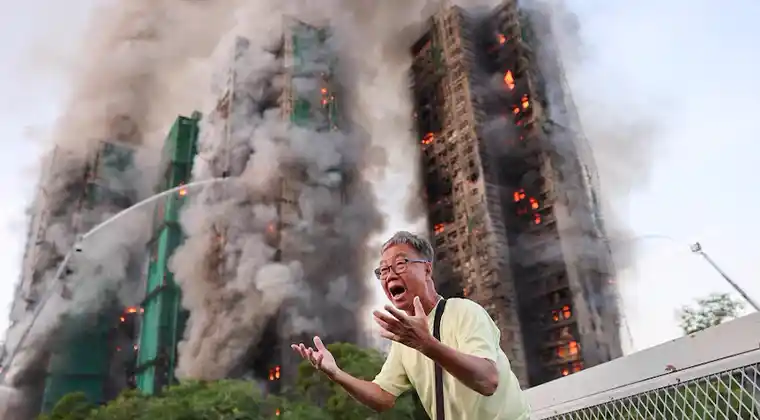
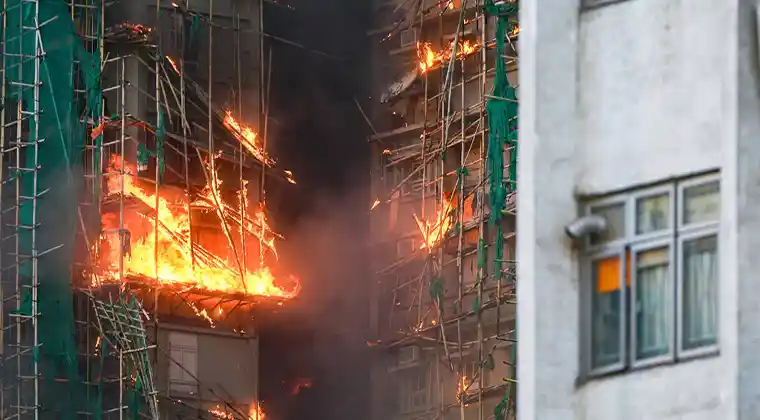
In an early morning press conference, Hong Kong’s fire department updated the public on the devastating high-rise blaze, confirming that the death toll had risen to 44 at that point. Officials described the situation as still unfolding, with rescue and recovery teams continuing to work through the night and into the morning, navigating dangerous conditions to reach trapped residents and assess the extent of the damage. Smoke and structural instability made the operation particularly challenging, and authorities warned that casualty figures could continue to rise as more information became available.
In a separate advisory, Hong Kong police announced the arrest of three men in connection with the incident, citing suspicion of manslaughter. Authorities, however, provided few details regarding the nature of the allegations or the individuals’ specific actions that may have contributed to the fire. The announcement prompted widespread speculation and concern, as residents and observers awaited further clarification on whether the arrests were linked to deliberate negligence, accidental actions, or another form of criminal involvement. Police emphasized that the investigation was ongoing and that they would release additional information as the inquiry progressed.
The dual updates from both the fire department and police highlighted the gravity and complexity of the incident. While first responders focused on emergency operations, law enforcement began piecing together the circumstances surrounding the fire, balancing the urgent need for public safety with the legal requirement to conduct a thorough investigation. The arrests signaled that authorities were considering potential accountability in addition to addressing the immediate humanitarian crisis, reflecting the seriousness with which the city is approaching this unprecedented disaster.
Residents, families of victims, and officials alike awaited further announcements, as the community grappled with the emotional impact of the tragedy while trying to understand how the blaze, which claimed dozens of lives, could have occurred and what role the three suspects might have played.
The devastating fire in Hong Kong’s northern Tai Po district initially erupted on bamboo scaffolding that had been erected across multiple apartment buildings within the Wang Fuk Court complex. Reports indicate that the scaffolding was part of a large-scale, estate-wide maintenance project that was underway at the time, intended to facilitate renovations and repairs. However, what was meant to be a routine construction activity quickly turned catastrophic when flames ignited the bamboo framework, allowing the fire to spread rapidly across the residential towers.
Eyewitnesses at the scene described the chaos as the blaze intensified. An AFP reporter who arrived at the site on Wednesday afternoon recounted hearing loud, sharp cracking noises, likely caused by the bamboo scaffolding catching fire and collapsing in parts. Thick, black smoke rose relentlessly into the sky, obscuring nearby buildings and creating an eerie, apocalyptic scene for residents and emergency personnel. Ash and embers were carried by gusts of wind, falling onto streets and balconies below, heightening the danger for those attempting to escape the inferno.
The fire quickly engulfed large sections of the multi-story complex, with towering flames visible from a distance. Residents were forced to evacuate rapidly, many relying on stairwells and narrow passageways to flee the intense heat and smoke. Firefighters worked under extremely hazardous conditions, battling the blaze amid the precarious bamboo structures and the congested urban environment, which complicated access to upper floors.
Authorities confirmed that the incident occurred during ongoing maintenance work, but the precise cause of ignition was still under investigation. The dramatic visuals captured at the site—flames leaping skyward, plumes of smoke curling into the skyline, and debris falling from the buildings—underscored the severity of the disaster and the unique risks associated with construction scaffolding in densely populated high-rise environments. The fire has raised urgent questions about safety measures, emergency preparedness, and building protocols in Hong Kong’s older residential complexes.
A devastating fire at Hong Kong’s Wang Fuk Court has left residents reeling, particularly among the elderly population living in the high-rise complex. One long-term resident, a 65-year-old man surnamed Yuen, told AFP that he had called the complex home for more than forty years and was deeply concerned about his neighbors, many of whom were elderly or had limited mobility. “The windows were closed because of the maintenance work, and some people didn’t even realize a fire had started,” Yuen explained. He recounted that, in several cases, residents only learned of the emergency through phone calls from neighbors, who alerted them to evacuate.
Yuen expressed profound grief over the tragedy. “I’m devastated,” he said. “There is a terrible loss of property, and even more heartbreakingly, lives have been lost. I also heard that a firefighter has died trying to save residents.” His words reflected the deep emotional toll on the community, where residents are not only coping with the loss of loved ones but also facing uncertainty regarding those still missing.
Authorities reported that more than 900 people had sought refuge in temporary shelters set up across the district, according to Lee, a local official. These facilities were providing food, water, and basic necessities while residents struggled to contact family members and account for everyone from the affected buildings. A police officer stationed at one of the shelters told AFP that it remained unclear how many people were still unaccounted for, as many residents continued to arrive late into the night to report missing relatives. The chaotic and prolonged nature of the evacuation highlighted the challenges faced by first responders in a densely populated high-rise environment.
In response to the fire, city officials announced that a full investigation would be launched to determine the cause of the blaze and examine the construction and maintenance materials used on the buildings’ exterior. Authorities are particularly interested in whether the cladding and scaffolding may have contributed to the rapid spread of flames, as initial observations suggest the fire escalated more quickly than expected. The probe aims to uncover both immediate and systemic factors that may have exacerbated the disaster, including safety compliance and evacuation procedures.
The tragedy has drawn attention to the vulnerability of Hong Kong’s older residential complexes, where maintenance work, high population density, and limited mobility among residents can create deadly conditions during emergencies. While rescue operations continue and temporary shelters serve as a lifeline for hundreds of displaced individuals, the city grapples with the emotional and logistical challenges of accounting for missing residents, supporting survivors, and understanding the root causes of one of its most devastating fires in decades. The incident underscores the need for improved safety protocols and preparedness measures in densely populated high-rise housing, particularly when major maintenance or construction projects are underway.
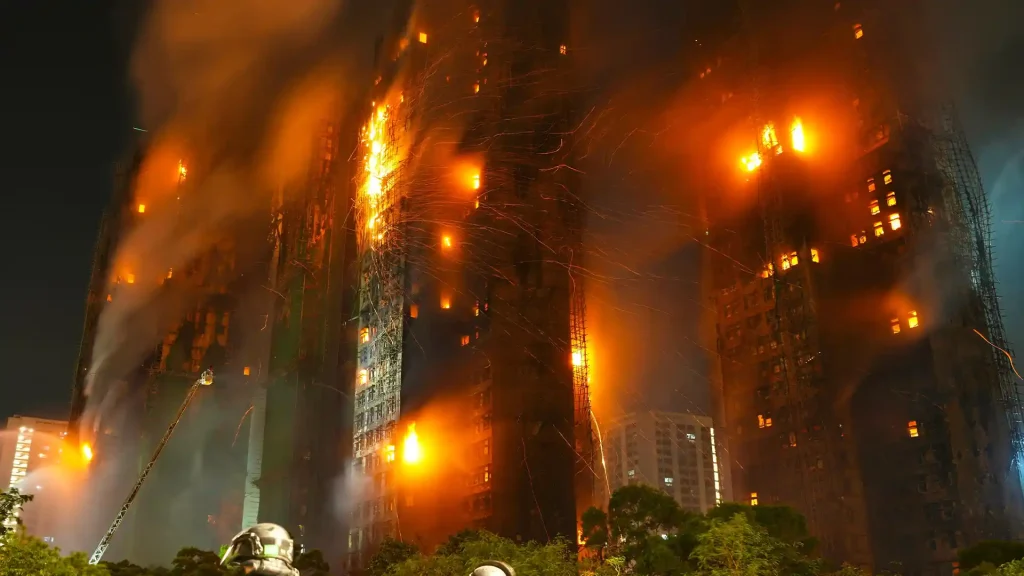
As the fire continued to rage at the Wang Fuk Court residential complex in Hong Kong, scenes of destruction and chaos unfolded across the densely populated high-rise towers. Chunks of scorched scaffolding, weakened by the intense heat, fell from the buildings, while flames poured into apartments, escaping through shattered windows and gaps in the exterior. The fiery glow illuminated the night sky with a menacing orange hue, casting long shadows on nearby structures and giving the surrounding neighborhood an almost apocalyptic appearance. Residents and onlookers watched in horror as the fire consumed the upper floors, with smoke and sparks carried by gusts of wind to neighboring buildings, complicating firefighting efforts and spreading panic throughout the district.
Derek Armstrong Chan, deputy director of fire service operations, spoke to reporters at the scene, describing the extreme conditions faced by rescue teams. He said the temperatures inside the affected buildings were dangerously high, preventing firefighters from reaching certain floors where residents had called for help. “The temperature at the scene is very high and there are some floors where we have been unable to reach people who requested help, but we will keep trying,” Chan said, highlighting the ongoing challenges for first responders navigating both fire and structural hazards. He added that preliminary observations suggested that wind and falling debris may have facilitated the fire’s rapid spread from one building to another, though investigators continue to examine the exact origin and cause of the blaze.
The tragedy has drawn attention from the highest levels of leadership. Chinese President Xi Jinping extended his condolences to the victims, including the firefighter who lost his life while attempting to save residents. According to state media reports, Xi offered his sympathies to the families of the deceased and to those whose lives were upended by the fire. He urged authorities to make every effort to contain the blaze, minimize casualties, and reduce property losses. State broadcaster CCTV emphasized the president’s call for comprehensive emergency response measures and highlighted the national concern over the human and material toll of the disaster.
Hong Kong city leader Lee expressed deep sorrow over the loss of life and destruction, vowing that all government departments would coordinate to provide support to those affected. He described the scale of the disaster as deeply troubling and underscored the commitment of local authorities to ensure that residents displaced or injured by the fire received immediate assistance. The city mobilized emergency services, medical teams, and temporary shelters to aid hundreds of families who lost their homes or were forced to evacuate, while investigations into safety protocols and building materials continued in parallel.
The fire at Wang Fuk Court has become one of the most devastating incidents in Hong Kong in decades, highlighting the vulnerability of densely populated high-rise residential areas to such catastrophic events. From the falling charred scaffolding and leaping flames to the urgent efforts of firefighters and officials, the disaster has exposed the challenges of emergency response in urban environments where buildings are closely packed and residents may face mobility limitations. As authorities continue rescue operations, investigate the cause, and provide relief to affected families, the city grapples with both the immediate and long-term consequences of this unprecedented blaze.
The aftermath of the devastating fire at Wang Fuk Court in Hong Kong has left residents in shock and grief, as they confront the human and material toll of the blaze. Among those affected is 57-year-old Tai Po resident Mr. So, who described the scene as “heartbreaking.” Speaking to AFP, he reflected on the limited choices available to residents in the immediate wake of the disaster. “There’s nothing that can be done about the property,” he said quietly, his voice tinged with sadness. “We can only hope that everyone, no matter if they are old or young, can return safely.” For So and many others, the priority is survival and the wellbeing of family members, friends, and neighbors, rather than material possessions, which were largely destroyed by the fire.
Another resident, an apartment owner in his 40s who requested anonymity, voiced similar concerns, emphasizing the urgent need for government support for those left homeless. “The fire is not yet under control and I dare not leave,” he said, echoing the fear and uncertainty experienced by many. “I don’t know what I can do.” His words captured the anxiety of residents trapped in or near the affected buildings, facing a disaster that escalated far faster than anyone could have anticipated. For many, the fire became a test of patience, resilience, and hope as they waited for emergency services to contain the blaze and ensure their safety.
Emergency operations in the area have been extensive. Local media reported that residents were being evacuated using large coaches, as authorities worked to move people out of danger. Adjacent blocks were also cleared as a precaution, given the risk of the fire spreading further due to wind and the height of the buildings. Parts of a nearby highway were closed to facilitate the firefighting effort, allowing fire engines, ambulances, and rescue personnel to navigate the area efficiently. The scale of the operation reflected the magnitude of the fire and the challenges posed by high-density urban environments.
Fires of this severity have a historical context in Hong Kong. For decades, the city’s densely packed neighborhoods, particularly in older or lower-income districts, were highly susceptible to destructive fires. In the past, such incidents were a relatively common threat, with multiple lives lost and entire communities disrupted. The combination of narrow streets, tall residential blocks, and flammable construction materials often led to rapid fire spread and difficulty for rescue services to intervene. These dangers were especially pronounced in areas with older buildings that had not been retrofitted with modern safety features.
Over the years, however, Hong Kong has made significant strides in fire safety and emergency preparedness. Regulatory changes, updated building codes, and improved firefighting infrastructure have dramatically reduced the frequency and severity of deadly fires in the city. Mandatory installation of smoke detectors, fire alarms, and sprinkler systems, along with regular safety inspections, has helped prevent smaller incidents from escalating into large-scale disasters. Public awareness campaigns and training programs have also played a role in preparing residents for emergencies, teaching evacuation procedures and encouraging prompt reporting of potential hazards.
Despite these improvements, the Wang Fuk Court fire underscores that high-rise, high-density living still carries risks, particularly during maintenance projects or when temporary construction materials, such as bamboo scaffolding, are in use. The scale and speed of the blaze demonstrated that even with modern safety measures, densely populated areas can still experience catastrophic events, requiring rapid and coordinated responses from both emergency services and local authorities.
The human impact of the fire is evident in the scenes captured around Tai Po. Residents have been displaced, many losing not only their homes but also personal belongings accumulated over decades. Shelters have been set up to accommodate those forced to evacuate, offering food, water, and temporary lodging, though the emotional trauma of the incident remains profound. The combination of fear, uncertainty, and grief has left many residents struggling to process the scale of the tragedy, with concern for missing friends and neighbors adding to the tension.
While the destruction wrought by the fire has been immense, the response highlights the city’s ongoing commitment to disaster management and community support. Emergency personnel, volunteers, and government agencies have worked tirelessly to evacuate residents, control the blaze, and provide aid to those affected. At the same time, the incident has sparked renewed discussions about fire safety in Hong Kong, particularly regarding the use of scaffolding and other temporary construction materials in residential areas, and how high-rise communities can be better prepared for emergencies.
In the midst of the devastation, residents like Mr. So continue to focus on human survival and the hope that everyone will emerge safely. Their words serve as a reminder that in disasters of this scale, the preservation of life and wellbeing takes precedence over material loss. While Hong Kong has largely overcome the frequent fires of previous decades through regulatory improvements and modern safety practices, the Wang Fuk Court blaze demonstrates that vigilance and preparedness remain essential in a city where high-rise living is the norm, and where the margin for error in densely packed neighborhoods is slim.