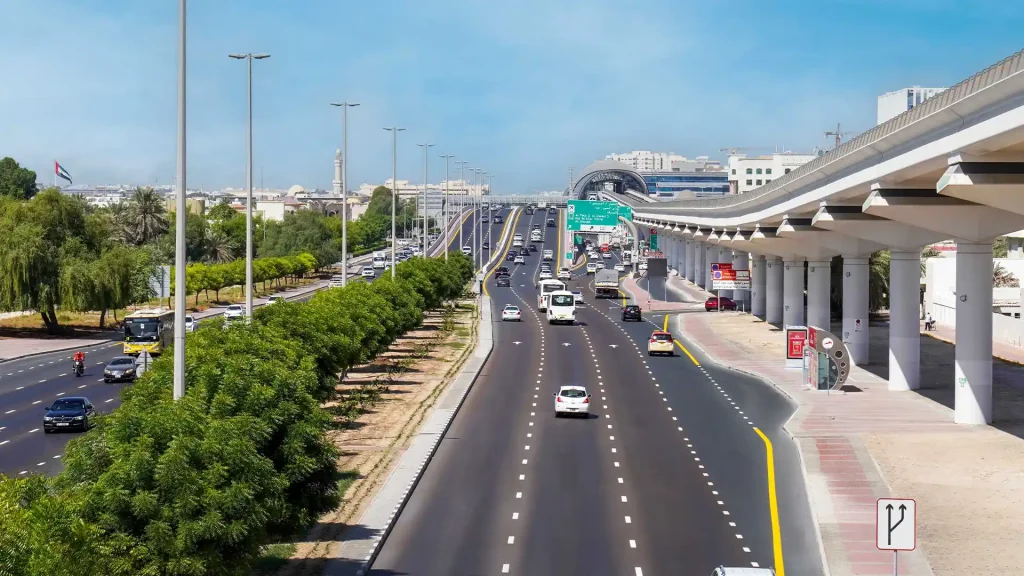
Dubai’s recently introduced continuous lane markings have unexpectedly confused many routine commuters, leaving drivers unaware of the change and consequently facing penalties issued by traffic authorities for accidental violations there.
Dubai: New continuous lane markings catch daily commuters off-guard, resulting in fines.
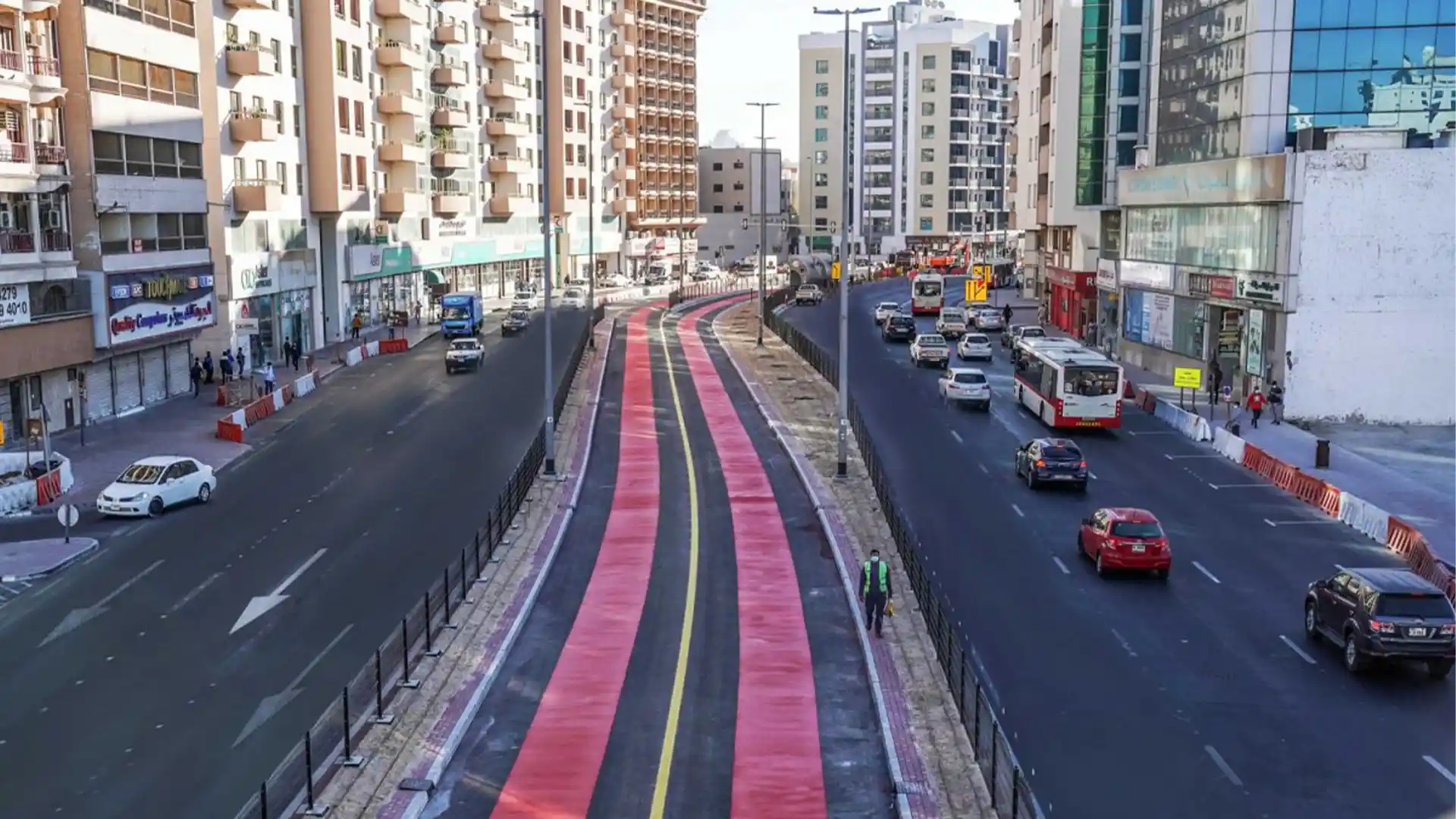
Dubai drivers have recently begun spotting a combination of newly installed overhead cameras and freshly painted solid-line markings across several major roads, drawing considerable attention from people who commute through the city every day. These continuous lines—often referred to as no-overtaking or no-lane-changing zones—have now been placed along prominent routes such as Ittihad Road, Baghdad Street, the Airport Tunnel, as well as on key stretches of E311 and E611. Their presence signals a broader effort by traffic authorities to organize vehicle movement more effectively and reduce sudden lane-shifting, which often contributes to congestion and minor collisions during peak hours.
Many motorists have acknowledged that the updated system appears designed to improve the overall flow of traffic by encouraging drivers to maintain their lanes in areas where constant weaving typically slows down movement. The clear, bold markings make it easier to identify spots where lane changes are restricted for safety reasons. Drivers say that when everyone follows the new rules, certain sections of the roadway feel noticeably smoother and more predictable.
However, despite the apparent benefits, some frequent road users admit that adapting to these changes has not been entirely seamless. Because the solid lines have appeared quite suddenly in familiar areas, a number of commuters have found themselves unintentionally crossing them out of habit. This has resulted in fines for some drivers who are still learning to adjust their routines and navigate the updated road layout. Several motorists say they simply need more time to become fully aware of where these restricted zones begin and end, especially in places where they previously changed lanes regularly without consequence.Overall, while the new markings are intended to enhance safety and organization, the transition period has proven a bit challenging for everyday drivers who must now rethink long-established driving habits as they travel around the city.
Basha S., a long-time Sharjah resident who commutes daily to his workplace in Al Quoz, explained that the introduction of the new solid-line markings came as an unexpected change along the routes he drives most often. His daily journey typically takes him either through Ittihad Road or the Airport Tunnel, both of which he knows well after years of traveling the same corridors. Because he was so familiar with these roads, he said he had become accustomed to their usual layout and traffic patterns, and he did not anticipate any major modifications being implemented without broader awareness among drivers.
One morning, while following his usual routine, he noticed that fresh continuous lines had been painted in sections where lane changes were previously common. At first glance, he assumed the markings might be temporary or related to ongoing maintenance work. With traffic moving quickly and the markings appearing new, he did not immediately realize that they were part of a newly enforced rule prohibiting overtaking or shifting lanes. What added to his confusion, he said, was the lack of prior warning or signage indicating that drivers needed to adopt a different approach in those specific stretches.
As someone who travels long distances daily for work, Basha explained that commuters often rely heavily on muscle memory. Drivers tend to make decisions automatically based on years of experience on the same road. He admitted that on that particular day, he reacted out of habit, shifting lanes in a spot where he had done so countless times before—unaware that the rule had changed. A week later, he was surprised to receive a notification informing him that he had been fined Dh400 for crossing a solid line, an action newly categorized as a traffic violation in that area.
Basha expressed that the fine was not merely unexpected but also frustrating, considering that the change happened suddenly and without sufficient time for regular commuters to adjust. He emphasized that he supports measures that help improve road safety and traffic discipline; however, he believes that drivers should be given clearer communication before new regulations are enforced, especially on major commuter routes. Advance notice—through temporary signs, public announcements, or even digital alerts—would have allowed motorists to familiarize themselves with the revised system and avoid unintentional violations.
Despite his frustration, he said he is now paying much closer attention to the updated road markings and hopes that other motorists will also become more aware so that similar incidents can be avoided.
He explained that because he drives along these routes every single day, the sudden appearance of the new markings caught him completely off guard. Although he understands the general rule behind solid lines, he said these particular ones were unfamiliar and seemed to have been introduced without any advance notice or cautionary signage to alert motorists of the change. According to him, everything happened so quickly that he only realised he had crossed one of the continuous lines after he had already shifted lanes, acting instinctively based on his long-standing driving habits. The situation became clear only later when he received the fine and understood what had happened.
Basha also pointed out that the placement of the new markings adds another layer of difficulty. Many of them, he said, are located very close to road exits where drivers often need to make quick decisions, especially during peak hours. For those who travel the same routes daily and rely on familiar patterns to navigate the traffic, these new restrictions can create confusion and pressure. He believes that commuters need more time to adapt to the revised layout, and clearer guidance would help prevent accidental violations.

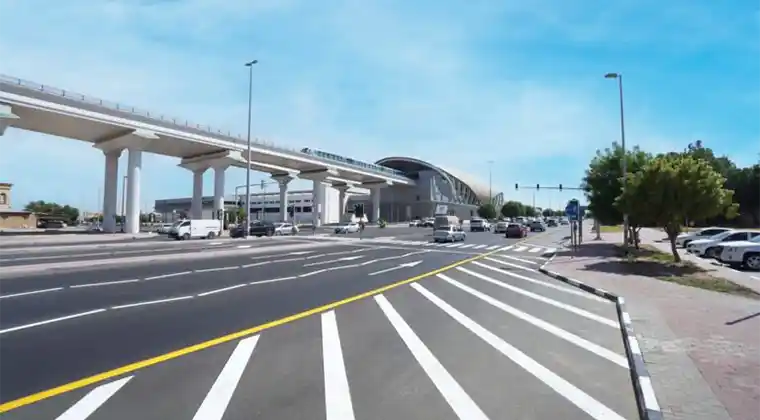
The rule behind the new road markings is straightforward but strict. According to the Roads and Transport Authority’s (RTA) Light Vehicle Driving Guide, a no passing line is represented by a continuous white line on the road. Motorists are strictly prohibited from crossing these lines under any circumstances—whether to overtake another vehicle, change lanes, or even make a turn. These lines are considered regulatory road markings, meaning they carry legal authority, and failing to obey them can result in fines or other penalties. The purpose of these lines is to regulate traffic flow, prevent unsafe lane changes, and reduce accidents in areas where sudden maneuvers can be particularly hazardous.
C George, a commuter from Muhaisnah who drives on E311 daily, shared his experience with the new markings. He admitted that he had unintentionally crossed one of the continuous lines near Exit 63, which led to a fine. According to him, there are at least two such zones on E311 near Muhaisnah, positioned on both sides of the road. In addition, he noted another solid-line stretch near the Global Village area. George emphasized that there were no visible warning signs or official announcements to alert drivers to these changes, making it easy for habitual commuters to violate the rule unknowingly.
He further highlighted that a similar solid-line section exists on E611 near the Dubai–Sharjah border, suggesting that these regulatory markings are being introduced across multiple key routes simultaneously. Many motorists told Khaleej Times that while they appreciate initiatives aimed at improving road safety, the sudden implementation of these lines caught them off guard. They feel the authorities could have eased the transition by giving drivers advance notice, putting up temporary signs, or running awareness campaigns, which would have helped prevent accidental fines while still maintaining traffic discipline.
Overall, drivers acknowledge the safety benefits of the no-passing lines but also stress the need for a more gradual and well-communicated rollout, particularly on heavily traveled routes where commuters rely on familiar driving patterns.
Ahmed Salah, a daily commuter who drives along Airport Tunnel Road, recently shared his experience navigating the newly introduced solid-line road markings. He admitted that when the lines were first painted, he had no idea what they signified. It was only after his friends pointed out their meaning that he realized these sections were no-passing zones, allowing him to adjust his driving in time and avoid a potentially costly fine. Salah emphasized that without such guidance from others, it would have been easy for an unsuspecting driver to inadvertently violate the rules.
He pointed out that the placement of the new solid lines can be tricky, particularly in areas approaching curves. “The solid line appears right before a bend in the road,” he explained. “If you happen to miss your exit, there’s really no option but to continue along the road and circle back. It’s a bit of a challenge for those of us who are used to older patterns.” On noticing the cameras that monitor these stretches, he said he immediately slowed down, reflecting on how sharply the traffic enforcement system has been designed to capture violations.
Salah praised the accuracy of the overhead cameras, noting that they seem to record every lane change or infraction in these newly regulated zones. However, he added that clear advance warning could make a significant difference for commuters who may not be aware of the updates. A simple sign stating “No Lane Change Ahead” or alerting drivers about the new solid lines would help reduce confusion and ensure motorists comply with the rules before accidentally committing a violation. According to him, not everyone who drives through these areas regularly is familiar with the changes, and such signage could prevent unnecessary fines while still maintaining road safety.
Many motorists agree with Salah’s observations. While they fully support measures that enhance traffic safety, they also stress the importance of communication and awareness. Changes like these are more effective and better received when drivers are informed ahead of time, giving them an opportunity to adapt gradually. Instant enforcement without prior notification, while legally justified, can be frustrating for commuters who have established routines over years of daily driving.
Basha, another driver who has been navigating these routes daily, shared a similar perspective. He acknowledged that the new solid-line markings ultimately contribute to road safety and are a positive addition for everyone on the road. However, he emphasized that a clear, visible sign or alert indicating that lane markings have changed would be extremely helpful. According to him, such measures allow drivers to adjust their behavior safely and reduce the chances of accidental violations. Both Salah and Basha’s experiences highlight a common sentiment among Dubai’s motorists: while regulatory updates like no-passing lines are essential for organized and safer traffic, their implementation is more effective when paired with clear communication and signage to guide drivers through the transition.
In conclusion, the new solid-line markings along Airport Tunnel Road and other major routes have been welcomed for improving traffic discipline and safety. At the same time, motorists continue to advocate for better notifications, visible signs, and public awareness campaigns. These steps would help commuters understand and respect the rules
without facing unnecessary fines, striking a balance between enforcement and education.