Dubai Airport is exploring the possibility of eliminating the traditional check-in procedure for passengers who travel solely with hand luggage, allowing them to proceed directly to security and boarding.
“Dubai Airport Considers Doing Away with Check-In for Travelers Carrying Only Hand Luggage”
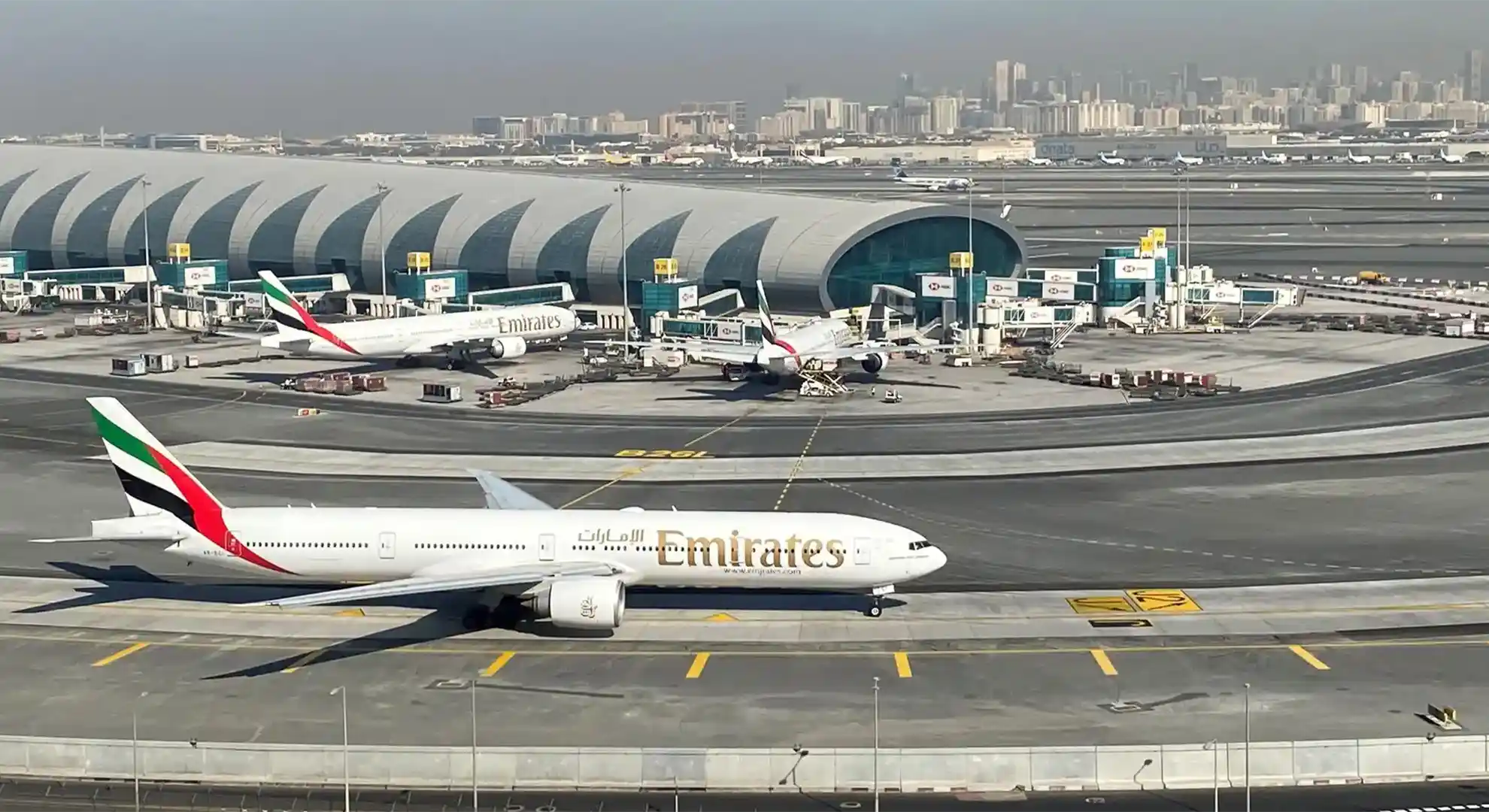
Dubai Airports is actively pursuing initiatives aimed at significantly enhancing the travel experience for passengers passing through its terminals. The organization’s leadership is focusing on streamlining operations and introducing innovative procedures that reduce wait times, minimize congestion, and make the journey from arrival to boarding as seamless as possible. In a statement released on Tuesday, the Chief Executive highlighted one of the key strategies currently under consideration: the potential removal of the traditional check-in process for travelers who are carrying only hand luggage.
This initiative reflects a broader commitment by Dubai Airports to modernize airport operations and leverage technology to create a more efficient passenger flow. By allowing passengers with only carry-on bags to bypass the conventional check-in counters, the airport aims to reduce unnecessary delays, freeing up both travelers and staff for faster, more convenient processing. Such changes are expected to benefit frequent flyers, business travelers, and tourists alike, enabling them to move more quickly through security checks and directly to boarding gates.
According to the executive, this move is part of a larger vision to implement multiple improvements that together will transform the way people experience air travel at Dubai’s airports. From enhanced self-service kiosks to digital document verification and automated baggage systems, the airport is exploring a combination of technological solutions and operational adjustments designed to optimize efficiency without compromising safety or security.
Ultimately, Dubai Airports is signaling a shift toward a more passenger-centric approach, where convenience and speed are prioritized alongside traditional airport services. By rethinking and streamlining procedures like check-in for travelers with only hand luggage, the organization hopes to set new standards for airport experiences, ensuring that passengers spend less time waiting and more time enjoying the benefits of a smooth, modern journey through one of the world’s busiest aviation hubs.
During a recent discussion about the future of air travel, Paul Griffiths, the Chief Executive of Dubai Airports, offered insights into upcoming changes aimed at making the passenger experience smoother and more efficient. Griffiths emphasized that for modern travelers, the most precious resource is time. Long gone are the days when people were willing to spend hours navigating through airport procedures. Travelers today expect efficiency, convenience, and a journey that feels as seamless as possible. According to him, airports must rethink traditional processes that consume time and energy, often without adding significant value to the travel experience.
Griffiths pointed out that one of the most outdated practices is the insistence on passengers standing in line for hours at check-in counters. He described the traditional process: travelers arrive at the airport, join lengthy queues, interact with staff at the check-in desk, and then attach paper luggage tags to their bags before handing them off to the baggage system. From there, they face additional queues at immigration and security checkpoints. In many airports, this sequence continues with passengers being instructed to remove shoes, belts, watches, and even electronic devices, often amid strict enforcement and loud instructions. Griffiths noted that this chain of procedures, while intended to ensure safety and security, often leaves travelers feeling stressed, frustrated, and undervalued.
“Time is the most valuable commodity for passengers,” Griffiths explained, “and forcing them to follow rigid, outdated processes wastes it unnecessarily. Modern travelers want a system where they can move through airports quickly and effortlessly, without unnecessary interruptions.” He also criticized the intrusive nature of some security checks at airports around the world. While acknowledging the importance of safety, he emphasized that excessive or inefficient procedures can feel invasive and diminish the overall experience of air travel.
Griffiths suggested that airports need to adopt smarter, more automated solutions that prioritize efficiency while maintaining security standards. Innovations such as self-service check-in kiosks, automated document verification, and streamlined baggage handling could dramatically reduce waiting times. Additionally, rethinking security checkpoints with advanced scanning technologies could make the process faster and less disruptive for passengers. The goal, according to Griffiths, is not to compromise safety but to make it a more discreet, user-friendly experience.
Ultimately, Griffiths argued that airports must evolve to meet the expectations of today’s travelers. The days of lengthy lines, repetitive procedures, and intrusive security checks should give way to a system that respects passengers’ time and comfort. By embracing technology and redesigning outdated processes, airports can create a smoother, more enjoyable experience that allows travelers to focus on their journey rather than the hurdles they face along the way.
“We are living in an extraordinary era where technology and innovative processes can simplify travel, making it faster and removing unnecessary lines and delays. Our goal is to build a truly seamless experience. At DXB, we are actively pursuing this vision, and over the coming years, we plan to introduce more initiatives—not by adding complexity, but by removing steps that slow people down,” he explained.
Griffiths highlighted that Dubai Airports has already transformed the immigration process, replacing traditional checks with facial recognition cameras that scan every traveler automatically.
“Our collaboration with security teams focuses on maintaining the highest safety standards while making the experience much smoother. Travelers won’t have to unpack or display their belongings unnecessarily. We’re also working on removing the need for check-in for passengers carrying only hand luggage, as it simply isn’t required,” the aviation expert stated during his keynote.
He emphasized that by implementing these measures, Dubai Airports will accomplish several key objectives that enhance efficiency, convenience, and overall passenger satisfaction.



“Firstly, we’ve prioritized our passengers’ time. Secondly, we’ve designed a faster, smoother flow that allows travelers to move through the airport much more efficiently. The most remarkable part is that if we can process four times as many people in the same area in just a quarter of the usual time, we effectively quadruple capacity without having to construct any new facilities.”
On the second day of the Dubai Airshow 2025, during his keynote address themed ‘Global Connectivity in Action: Leading the Crossroads of Continents,’ Paul Griffiths spoke about the ambitious future plans for Dubai International Airport (DXB) and its upcoming relocation to Al Maktoum International Airport in 2032. He described this transition as a monumental milestone in global aviation, calling it “the world’s largest transition” in terms of scale and complexity.
Griffiths shared key projections for passenger traffic over the next decade, highlighting the rapid growth of Dubai as a global aviation hub. “In just two years, we expect to surpass the 100 million passenger mark, reflecting the incredible demand and connectivity that DXB provides,” he said. He further outlined that by 2031, the airport anticipates accommodating approximately 114 million travelers, demonstrating both the ongoing expansion and the airport’s ability to efficiently manage increasing volumes of passengers.
Looking ahead to 2032, Griffiths emphasized the significance of the move to Al Maktoum International Airport. He described it as not merely a relocation but a transformative leap for global air travel infrastructure. “This transition will be unprecedented in scale. Every process, every technology, and every system we are implementing today at DXB is being designed with the future in mind. By the time we move to Al Maktoum, these innovations will be applied on a massive, industrial scale, enabling a seamless and highly efficient passenger experience,” he explained.
He underscored that the shift is not only about handling more passengers but also about integrating advanced technologies to enhance speed, convenience, and security at every stage of the journey. Griffiths concluded by highlighting that the relocation will mark a major milestone for Dubai’s aviation sector, reinforcing its position as a central hub connecting continents and driving global connectivity for decades to come.
When Al Maktoum International Airport becomes fully operational in 2023, it is expected to accommodate an initial passenger capacity of 150 million, marking a significant leap in Dubai’s aviation infrastructure. Paul Griffiths, Chief Executive of Dubai Airports, highlighted that this development is just the beginning of a much larger vision for the emirate. According to him, the airport is being designed with long-term growth in mind, ensuring that it can scale to unprecedented levels of passenger traffic over the coming decades.
Griffiths elaborated that by around 2057, Al Maktoum International is projected to handle up to 260 million passengers annually, positioning it as the largest airport in the world. This milestone, he explained, would represent a remarkable achievement for Dubai’s aviation sector, cementing the emirate’s role as a global hub connecting continents and serving travelers from every corner of the globe. The expansion plan is not merely about numbers; it also reflects a commitment to integrating cutting-edge technology, operational efficiency, and passenger comfort at an industrial scale.
In a lighthearted yet heartfelt remark during his keynote address, Griffiths joked about the personal significance of witnessing this achievement. “By that time, I’ll be 100 years old,” he said with a smile. “And if there are enough spare parts to keep me going, I want to make sure I’m here to personally welcome all 260 million travelers passing through what will be the world’s largest airport.” His comment underscored both his dedication to the long-term vision of Dubai Airports and the ambitious scale of the project, which aims to redefine global aviation standards.
Griffiths’ remarks not only highlighted the immense growth trajectory of Al Maktoum International but also reinforced Dubai’s unwavering commitment to innovation, infrastructure development, and maintaining its status as a premier international aviation destination for decades to come.